
Nakahara Miki 愛のイエスタディ

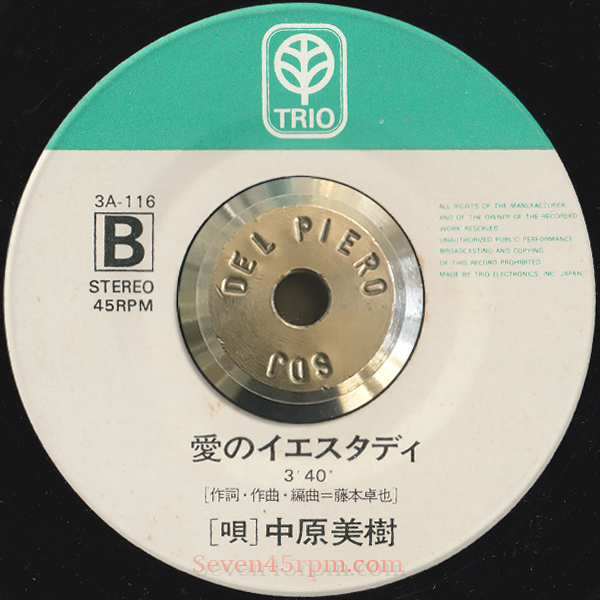
Trio Records – 3A-116 Released Oct 21, 1973 JAPAN
TRACK B: 愛のイエスタディ (Yesterday)
So here’s another one I am filing under “Mysterious & Unknown”. Another one that has become an obsession, and has that alluring dreamy, misty gentleness. Embracing like a hallucinogenic lullaby from a faraway lost world in another time. But again, that place is Japan, and the year was 1973. Can anyone out there tell me anything about Nakahara Miki?
I can’t explain it, or describe it. There’s something I adore about hazy and quirky foreign and unknown releases from the sixties and seventies. I can’t place them in a category or genre. Somewhat seductive, and with both an outer space and under water atmosphere, and dripping with over the top romanticism. And part of not knowing what the song is about only adds to the desire and intrigue. This track sits nicely alongside the Naomi Chiaki – Asa Ga Kurumaeni track I featured a little while ago.
I could only find one isolated release from Kiki, this only 7″ single. Recorded through the same label as Tonpei Hidari – Hey You Blues , and released the same year of 1973. This makes me really want to dig into the Trio label’s archives to see if I can dig out any other lovely but odd jewels. I have done a bit of searching into the Japanese label’s catalogue, but there’s a fair bit to sift through, and it is ever so varied, with some very strange releases, and definitely not exclusive to Japan only artists.

The feature track is the B side of Kiki’s (possibly) only release. Side A 花嫁の手紙 (Bride’s Letter), is more of a typical soft rock ballad where Kiki uses her range to crescendo through soaring strings along the standard pop beat. She does do a thing I do like, that whole bridge thing where the singer narrates over the top, maybe telling a story or encounter perhaps. It’s kinda cheesy, but it is completely allowed by me if it’s coming from this kind of Japanese context. Hidari also does it in Hey You Blues. I know it was a “thing”, in a time, and in a lot of foreign countries. It’s just adorable!
But the Side B Track 愛のイエスタディ (Yesterday), is astonishingly beautiful… to me. Nothing typical here. So much melancholy from the very start, but it’s pure and just so lovely. The kind of sweetness bordering on”Lynchian”. The chorus is so distant and dream like. And yes again, we get some of that great narration. I suppose I could use some kind if AI app to translate it all. But I don’t need it. I love it all, with or without knowing the story or lyrics.
So if that is it from Nakahara Miki recording wise, then the next thing I do is search the trusty IMDB for any possible clues of film work, via music talents or other. “Nakahara Miki” does come up as an actress that possibly worked on approximately 7 films, between 1974 to 1991. But without any photo evidence and hardly any write ups of any of the films, I’m just not a good enough detective to confirm this is the same artist featured here.
So I’m going to leave this all here, and just wait in hope for someone out their to please enlighten me on Miki. The woman behind this truly beautiful, divine and poetic song I have deeply fallen for. And I hope someone out also feels the same way about it.
– del Piero
If you fancy this, you may dig these…
Tonpei Hidari – Hey You Blues


Trio Records – 3A-118 Released 1973 Japan
Track A – とん平のヘイ・ユウ・ブルース Hey You Blues
I have promised myself to do a post on Hidari’s “Hey You Blues”, since the day of his passing back in 2018. That was 7 years ago! Why do these things take me so long to get to? I recently pulled this record out for a radio show I put together celebrating some Japanese gems, but this time I promised myself not pack this one away until I finally share it here on this blog.
But now that I am back researching Tonpei Hidari, I am remembering why I put his story aside, which was because of the lack of information I was able to find on him at the time. Well, I’m still not finding a lot about him, but I won’t let that stop me from sharing this great release from him, and as always, just maybe, I’m hopeful, someone, anyone, that reads this who is far more knowledgeable, can share more truths and tales about the wonderful Mr. Hidari.
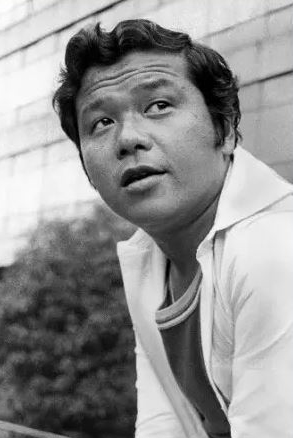
Tonpei Hidari (real name Hiromichi Hidaki) was born on May 30, 1937 in Tokyo, Japan. He was the youngest of three brothers and the house where he was born was a restaurant and sushi shop. In 1953 he entered Setagaya High School. At that time, inspired by the performances of the Dassen Trio and Hisaya Morishige, who were very popular at that time, he decided he wanted to be a comedian. In 1954, while still at school, he entered the Yoyogi Actors’ School. In 1956, he graduated from high school and helped out in the family sushi shop. In 1957 he formed a theatre group with his friends and in 1960 he joined Kiyoko Tange’s Etcetera Theatrical Troupe. He has appeared in films from 1963 onwards during the 60s and was under contract to Toei’s theatrical section and appeared in many plays for them. In 1962 he was married.
So to his recording career. This featured single, was his first release, and on the label TRIO Records, in 1973. The label was known for its jazz releases, and was established by the audio manufacturer later known Trio Kenwood Corporation. I always wanted a Kenwood in the seventies! This A side is killer! “Tonpei’s Hey You Blues” (Tonpei No Hei Yū Burūsu), strides through the verses with a soul jazz groove, where Hidari speaks more like in conversation than sings. But suddenly there comes the cresendos to the explosive chorus where Hidari shouts out in English “Hey you! What’s your name?” I have never known the story behind the lyrics in this song and what is behind the punch of the chorus.
With many of the non English songs I research, I like to go to the comment sections, where ever I can find the song posted, and hope to find meanings or peoples personal reactions. And here I could a few things. Firstly, this song is very well known to the Japanese people, and many remember singing this chorus at schools when they were young. And many Japanese people respond to the meaningful lyrics. One commentator translates the lyrics which I will include here, and I trust it is correct, and will leave the reader to take in what they think it all means. This is one comment from a listener… “It’s a masterpiece that children who laugh and listen to without understanding the meaning eventually grow up and listen to it while crying.” And another comment… “He asks for the names of those who despise him, degrade him, and ruin him. But he must know that the name belongs to him. But I can’t help but scream. The blues of such a sad man’s soul. Even a professional soul singer would not be able to sing to this level.”
But I also find a few more exciting comments, from a Ken Muraoka, The actual Saxophonist that recorded on this track, and also the flip side track called “Tokyo Is A Great City” (Tōkyō tte ī machida na). “I’m Muraoka, who played saxophone on this song. I was invited by Mickey Curtis that day to record at a disco in Roppongi. Hey You Blues got the OK on the first take, and he said we were going to record one more song, so I wrote out the chords and we started playing and recording, and that’s how “Tokyo is a great city” on the back was completed. I had fun filling in both songs with guitar-like saxophone, right? I wonder if Mickey is reading this, hahaha.”
It is also apparent that at this time of release, the rise of new soul such as Isaac Hayes’ “Shaft” in 1971, and Curtis Mayfield’s “Superfly” in 1972, and also The Phillly Soul Sound, was not only sweeping the United States, but was spreading across the world, and influencing musicians and music lovers. Ken Muraoka also mentions that he himself got to play with Curtis Mayfield when he toured Japan, and played in Shibuya in 1984.
The B side track “Tokyo Is A Great City”, is far more smooth, but again no actual singing from Hidari, but instead it’s more spoken and narration. Well the music is smooth, but it is sounding like Hidari ends up in some kind of angry argument, and without knowing the context, it’s difficult to know the story that is being told.
The following year in 1974, Hidari released a second 7″ titled “Tonpei’s Alcoholic Life” (Tonpei no sakebitari jinsei). This is an odd show tune sound and Hidari is sounding slightly intoxicated. In 1975 he released possibly his final single with the A Side Busuna on’na (Ugly Woman) and the flip “Koyubi No Warutsu” (Pinky Waltz). He actually sings on the A side, there’s kitsch strings and the soul is, well far less deep that the featured track. It is said that he also recorded a single years later called “Ningen te nandaro” or translated to “What are humans?” But I could not for the life of me, find anything on this after a deep dive. Is this true?
After a short recording career, Hidri would become a well known actor in Japan. In the 1970s, he became through various dramas such as “It’s Time”, “Terauchi Kantaro Ikka” and “Mu Ichizoku” and he played a Japanese Columbo-style detective in “Hijo No Licence”. He gave “passionate” performance as a detective in Nippon Television’s “Female Coroner Muroo Akiko”, which began in 1986, and would run for more than 20 years. In later years, he spent most of his time doing talk shows, but featured in comedies such as “Oedo degozaru”. Hidari also appeared on the big screens, working in films such as “The Ballad of Narayama” (1983), which won the Palme d’Or at the Cannes Film Festival, and “Yoshiwara Enjo” (1987).
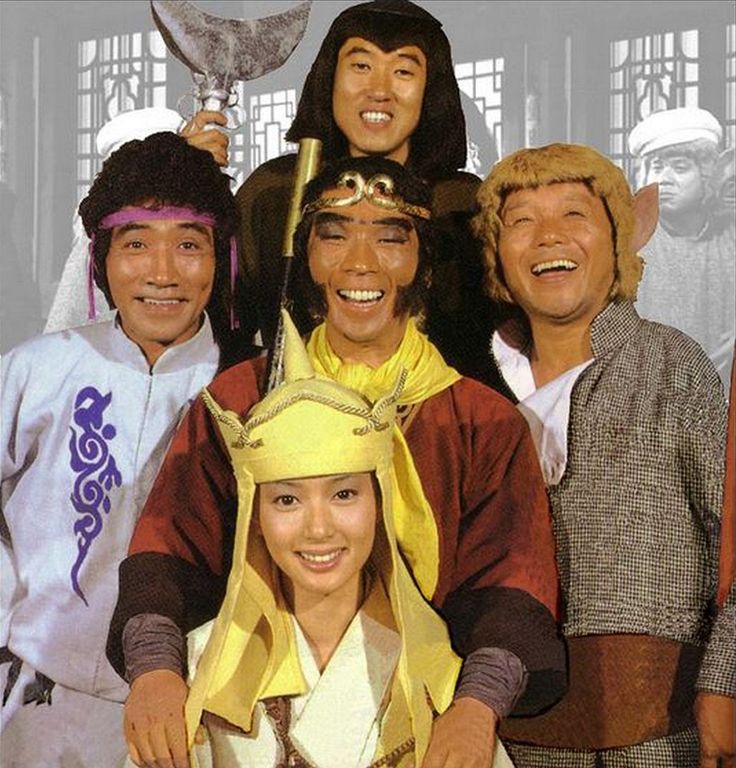
But it was the popular and bizarre TV series ” MONKEY”, that really made Hidari famous around most of the world, especially to the kids. It was an adaptation of a Chinese folktale about a pilgrimage to the West undertaken by a monk and his divine guardians (based on the 16th-century Chinese novel Journey To The West). The series surprising only ran for 2 seasons, between 1978 to 1980. Hidari would come in as Pigsy in 1979, replacing Toshiyuki Nishida, who play that character in the first season. I was at school when this was showing on out TV screens all the way over here in Sydney Australia. Everyone liked it, but some obsessively loved it! And we’d talk about it and act out some of the memorable moves! It was so lovely to find out that Hidari was a part of that Monkey Magic era, after getting my hands of this record.
Hidari died on February 24, 2018 at a hospital in Tokyo due to heart failure. Thank you Hidari for your performance on this record. It sounds like you were loved by many and whenever I play this record for someone, it has always impressed them…immensely.
– del Piero
Lyrics translated by @ikidearitashi1030
Lyrics: Gogoro Composer: Yoshimichi Mochizuki
HEY YOU HEY YOU WHAT’S YOUR NAME? HEY YOU HEY YOU WHAT’S YOUR NAME?
There is a sound in the air Do you remember your mother’s breasts? Can you remember the mole of the girl you abandoned? The world is full of people Life is a pestle, baby Life is a slippery slope OH MY BABY Listen to this blues
HEY YOU HEY YOU WHAT’S YOUR NAME? HEY YOU HEY YOU WHAT’S YOUR NAME? All my friends stole the same watermelon. All my friends were killed by the same woman All my friends were on the same train How about that? Before I know it, I’m a pestle I’ve been turned into a pestle I’m a tired and lonely pestle The one who turned me into a pestle Who is that? Who is that?
HEY YOU HEY YOU WHAT’S YOUR NAME? HEY YOU HEY YOU WHAT’S YOUR NAME? Are you saying that alcohol doesn’t make you angry? Are you saying that my wife is not excited? If there is a god who throws away, then there is also a god who heals. The pestle has become so worn down that it looks tiny. Who is Hiromon? The more a pestle works, the more it grinds. Grind it, add miso and enjoy it. There’s got to be someone who’s wearing me down. The one who turned me into a pestle Who is that? Who is that?
HEY YOU HEY YOU WHAT’S YOUR NAME? WHAT’S YOUR NAME? WHAT’S YOUR NAME? Please write your name Who are you? Who are you? Who is it? You too will become a pestle someday. I’m no good. I’m no good. HEY YOU WHAT WHAT WHAT’S YOUR NAME? HEY YOU WHAT’S YOUR NAME? I’m no good. I’m no good. WHAT’S YOUR NAME? No, no..
MOVIE CREDITS
1966 Kuromaku (Black Cutrain)
1968 Dorifutazu desu yo! Totte totte torimakure (It’s Drifter Tatsuru! Take it, take it, take it!)
1977 Torakku yarô: Otoko ippiki momojirô uncredited
1983 The Ballad of Narayama1987 Yoshiwara Enjo
1987 Yoshiwara Enjo
Naomi Chiaki – Asa Ga Kurumaeni


Columbia – SAS-1357 Japan Released 1969
Track A : 朝がくるまえに Asa Ga Kurumaeni
I absolutely love this track from Naomi Chiaki. I feel it is perhaps over looked in the Japan Sevens collector circles and it needs to be shared.
Born on September 17, 1947, Naomi Chiaki (real name Segawa Mieko) was born in Kanagawa, raised in Itabashi, in the Tokyo Metropolis in Japan. Born as the youngest of the three sisters, and heavily influenced by her mother who loved to perform, she learned tap dancing at the age of four, and at the age of five, she took the stage for the first time in the Nikgeki Music Hall, a beautiful former Japanese theatre, built in 1933, and which had avoided damage throughout air raids and war. It is documented that she sang at US military camps, jazz cafes and supported then popular singers on concert tours, when was she very young.
Chiaki moved schools numerous times, graduating and shifting through different cities around the Tokyo regions, but it’s difficult to find what musical path was leading her or the journey she was following during her teens. In the late sixties she succeeded an audition to become a pupil for composer Jun Suzuki and in 1969 she had signed to Columbia and released her first single, this featured release, “Asa Ga Kurumaeni”.

It translates as “Before The Morning Comes”, and it’s such a beautiful track. You can hear her jazz styling in her very polished voice. It’s a very theatrical song in that it feels like it should be part of spy thriller that was so popular in the sixties. Jun Suzuki is composing, and you can tell he was a master with mixing a good sixties back beat, with atmospheric strings, driving bass and distant piano chops. This Chiaki song is just devine! This track has the perfect vibe, and it’s one that really grew on me, to the point where I got a bit obsessed with it. It is a much loved 7″ that I pack for only the cool bars.
The flip to this single is called “Yoru Wa Darenimo Agenaide” and has a familiar arrangement, but isn’t as spectacular. But I will say it also is growing on me, so I am happily giving it more rotations. “Asa Ga Kurumaeni” also appears on her debut LP “Yottsu no Onegai; Anata ni Yobikakeru Chiaki Naomi”, which kinda translates to “Naomi Chiaki Is Calling Out To You With Four Wishes”, and was released the following year in 1970. I don’t own that LP, but I have has a listen and I like it. It feels like a conceptual love story record, with Chaki narration between some tracks. Again familiar themes and top class Jun Suzuki arrangements, and I will put it on my list of records to look out for if I ever get back to the Tokyo record stores.

Naomi Chiaki had her breakthrough single in 1970 with “Yottsu no Onegai”, and would end up releasing a barrage of singles through Columbia all through the seventies, and even beyond, with further labels. Further digging tells me her biggest and most successful hit was “Kassai” released in 1972, a song which has been commonly considered her signature tune. It sold over one million copies by February 1973, and because of it she won the 14th Japan Record Award and landed a “Gold Disc” for it. She would also release a tonne of LP’s (I have counted 28) all the way up to 1991, so she really enjoyed a successful recording career.
Chiaki also did a few musicals, but it is said when she played Billie Holiday in the musical ‘Lady Day’ in 1989 to 1990, that her performances were absolutely unforgettable. She also played Carmen the musical ‘Song Days’ in 1991, so this tells us a lot about her stage talent and vocal chops.
Sadly her husband *Eiji Go, passed on September 11 in 1992, and she stopped working completely as an artist. But I’m certain her millions of her admirers, will continue to listen to her vast catalogue for many years to come. Apparently Naomi Chiaki had recorded 425 songs, and I’m wondering if there’s a more perfect Chiaki release amongst them? Let me know if there is.
- del Piero
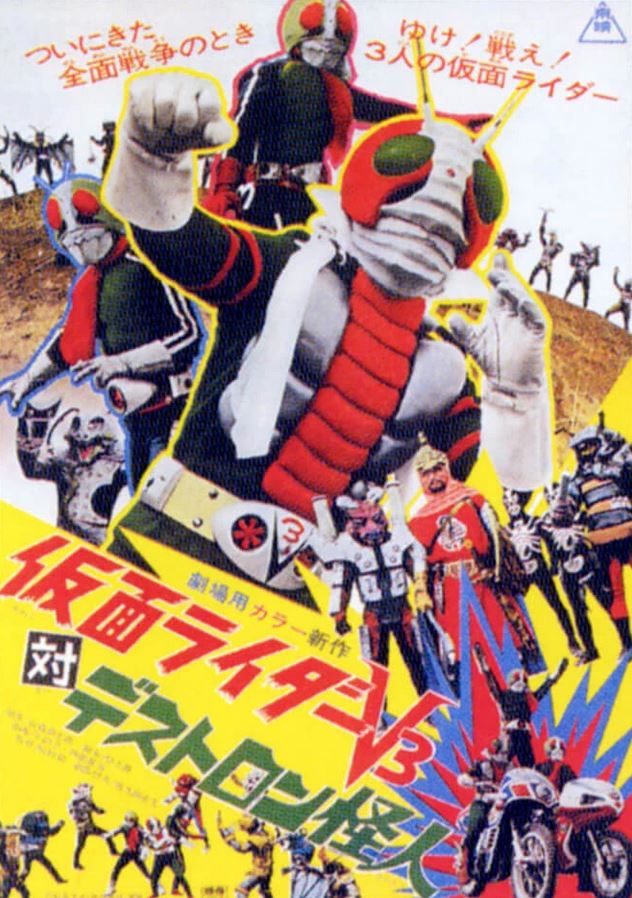
*Eiji Go was an actor known for “Kamen Rider V3 vs. Destron Mutants” (1973) where he played Doctor G, and also starred in “The Executioner II: Karate Inferno” (1974) and “The Executioner’ (1974).
I think it is lovely and sweet to see Chiaki’s late husband in action, so here is a link to Kamen Rider V3 vs. Destron Mutants. I love this stuff! Hope you can see why!
Mieko Hirota – On A Sorrowful Day
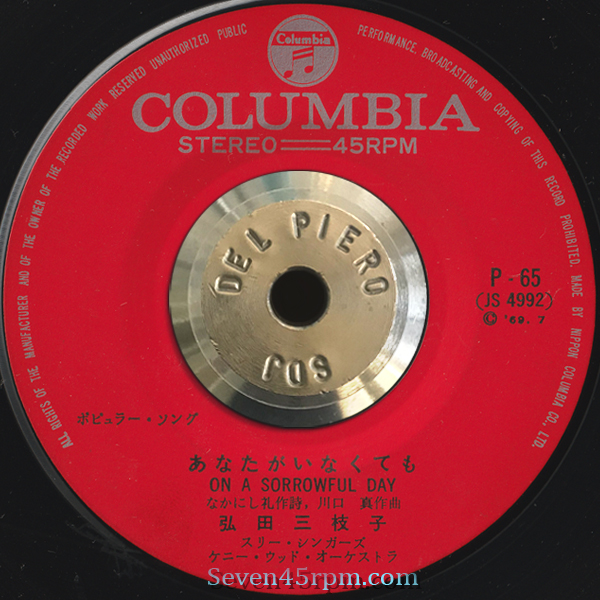

Columbia – P-65 Released 1969
Track B – あなたがいなくても On A Sorrowful Day
Here’s another gem from Japan, from perhaps a lesser known singer (well on our shores at least) which will always appeal more to me, but a track and artist I felt I needed to share. The singer was called Meiko Hirotota, had the nickname of Mico (also spelled Miko), and in Japan was very prolific and successful, releasing fourteen albums on Columbia between 1968 and 1977, (and a career totaling 35 albums) and was known in her country as “The Queen Of Pop”.
This will be another short and brief post, as I cannot find a lot about Hirota, which is surprising, considering her success in Japan throughout the late sixties, seventies and eighties. I’m really just trying to string together a few facts I have found out, here and there, into some kind of summary. So please reach out for any more info or helpful links! I would be most appreciative.
Hirota was born in Setagaya, Tokyo, on Feb. 05, 1947. She grew up listening to pop and jazz, and is believed to have started singing at US Occupation camps in Tachikawa, from the age of 7. Her brother who performed Hawaiian music, helped her with music and also learning the English language by teaching her nursery rhymes, while she was in Elementary school. By the time Hirota was 14, she had her first single release through Toshiba Records, in 1961. A cover version of Helen Shapario’s “Don’t Treat Me Like A Child. She would be releasing a lot of covers from the western world, in this early pop era of her career, following with “Vacation”, a Connie Francis’s cover, which in 1962, became a big hit for Toshiba and Hirato. 1962 would also see the release of her first LP, and she’d end up releasing around 35 albums in her time. Music critic Hisao Murata argues, “As a means of overcoming the problem of the Western rhythm, melody line and the language’s ability to communicate as a Japanese language, it is Mieko Hirota who invented English-like Japanese”. Hirota released around 25 singles through Toshiba in the space of 4 years, but in October 1964 she left the Toshiba music industry and moved to Nippon Columbia.

The world was changing it’s sound, and Hirota was maturing in her field, and developing more of a Jazz direction. Hirota recalls it was all because of a chance meeting in 1964, with jazz promoter extraordinaire George Wein on the Japanese Shinkansen bullet train, who convinced her that she had the range to explore Jazz. * In July 1965, Hirota performed with the Billy Taylor Trio at the American Newport Jazz Festival. This was a massive achievement to play at such a revered event, who’s line up also included so many esteemed musicians and groups such as John Coltrane Quartet, Thelonious Monk Quartet, Muddy Waters Blues Band, Dizzy Gilllepse Quintet, Drave Brubeck Quartet, Herbie Mann Octet, and the list goes on. Alongside Billy Taylor on piano, Hirota would have Grady Tate on drums and Ben Tucker on Bass. **
Her first Columbia LP release in 1966, was “Miko In New York” accompanied by the Billy Taylor Trio. There’s some beautiful work here from Hirota, covering some great standards including Torme’s “I’m Coming Home Baby”, and apparently the first Japanese woman to cover bobby Hebb’s Sunny. Hirota would then release a bunch of live albums, including “Exciting R&B Vol.1 and Vol.2” which mostly were covers, but with more zest and live energy (The live version of “I’m Coming Home Baby on Vol.2 is pretty great).
Hirota’s featured single from 1969, “On A Sorrowful Day” is her “swingiest” beat dancer release for sure. Far more fun and I’m sure hip to what was charting at the time of the late sixties in Japan. Lot’s of go go action with this one, with that great kinky beat and swinging horns. I have to say, as is common with the genre, to my ears there’s some similarities here, to other songs from the popular artists of that scene, which is something I actually love about this sound. The opening verses have very similar phrasing to Jun Mayuzumi’s “You And The Sun” and Segawa Mieko’s “Asa Ga Kurumaeni”, but the flavour here is more sultry coming from Hirota. In her huge catalogue of music, this is a groovy track that is more to my taste for sure, and somewhat overlooked I feel.
Hirota would keep releasing music for a very long time, and continued to have a huge fan base in her home country. She also worked a lot in the commercial world with diverse promoting from Japanese beer to coffee brands. And she will always be lovingly known as the voice to the theme song, “Leo no Uta”, for the animated television series Kimba the White Lion. Hirota died on July 21, 2020, at the age of 73 following a fall.


Research and referencing…
KIYOKO ITÕ – Hoshi Kara No Tayori

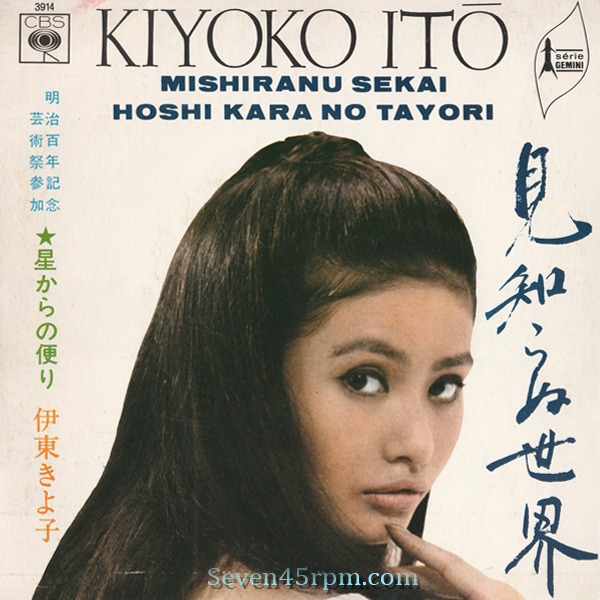
CBS/Sony – SONA 86009 Released 1968
Track A – Hoshi Kara No Tayori (A Letter From The Stars)
Here is a “drifty” sweet release from Kiyoko Ito with a beautiful sprinkling of psychedelia. Perhaps more tempered and whimsical than my normal up beat dancers from the sixties gals, but it’s too good to not share this one!
There’s not very much I can find on Kiyoko, other that she was born on January 24, 1947, possibly in the northern island of Japan, in Sapporo, Hakkaido. After graduating from Aoyama Gakuin High School in 1964, she entered Takarazuka Music School. She passed the audition for Toho’s International Dancing Team and appeared as a dancer in the musical “No Strings” in June, but gave up dancing due to Achilles tendonitis. As a result, she dropped out of the music school.
Focusing on the folk songs that were popular among Japanese youth at the time, she decided to become a singer, and made her debut at the 1st Folk Song Festival held at The Nippon Theater on December 19, 1965. The following year, in May 1966, she passed the audition (of over 300 Japanese singers) for the popular American folk group New Christie Minstrels and became an official member. A group not really to my tastes, but they did have have amazing talent go through the ranks, such as Kim Carnes and Kenny Rogers. She went straight to the United States and remained with the group until her Visa expired in October.
 After returning to Japan, she signed a contract with Watanabe Preofessionals, and had her debut single in June1967 on Nippon Columbia’s CBS label with the song “Hana to Kojisan” written by Kurunosuke Hamaguchi . This became her first hit! For some reason, I cannot find this in any of her catalogue listings, let alone a recording or clip, but I’m sure it’s out there somewhere. I’m sure it’s just lost in translation. Ito then would go on to record twelve 7″ singles with the CBS/Sony label, as well as three albums, between 1967 to 1975.
This featuring track “Hoshi Kara No Tayori” (A Letter From The Stars), is actually the B side to her euphonious upbeat Mishiranu Sekai single, one of three releases from 1968. Both sides of the single also appear on her 1969 LP Ballads Of Love. The year 1968 and sitars go hand in hand, and so many pop artists would experiment with introducing this sound with at least one song release of that year. And I’m ever so thankful for that! The trippy sitar introduces the song, a beautiful flavor that mixes in with the percussion and that 60’s bass that soon enters. A sweeping harp, then we receive Ito’s voice. I really wish I had a translation to this song. Of course it’s not always needed, especially in this case, as we are taken away and fall lusciously into her vocal clouds, but I do imagine the lyrics are about spirit, love and innocence. And it does after all translate to A Letter From The Stars.
As far as other release from Kiyoto Ito that take me away to that faraway dreamy place, she released the beautiful “Namida no Binzume” as a 1969 single, and is just as delightful as the featured track, sans sitar and psychedelics. This track also appears on the Ballads Of Love LP. I also love “Hana No Madonna” also from 1968, and a bit more of a dancer. And for your exotica lounge soiree, the 2 sider “Talking To Myself” and “Soon Will Be Morning” 7 inch from 1972, is an absolute goodie!
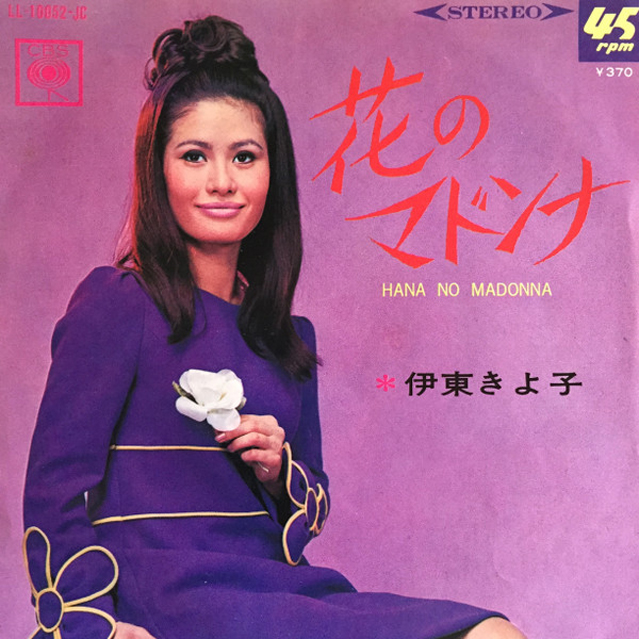

So there you have Kiyoko’s sweet, psychedelic love song release, and after a few listens, like a whispering haze, I’m sure it will seep delightfully into beating heart. I would love to be enlightened on anything more about this wonderful singer, from anywhere out there in the world.
– DJ del Piero
Maki Asakawa – Chicchana Toki Kara
Express Compact ETP-4277 Japan 1970

 Track 1 – B2 Chiccana Toki Kara
Track 2 – A1 Yoru Ga Aketara
Maki Asakawa was a born in Ishikawa Prefecture, January 27, 1942. After graduating high school she worked as a civil servant for a short time before moving to Tokyo to pursue a far more inspirational career in music. She started by playing at United States military bases and cabarets, where she refined her style, which she says was largely influenced by Blues queens such as Billie Holiday and Mahalia Jackson.
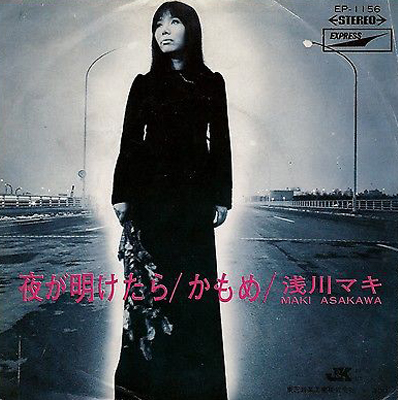 In 1967 Asakawa made her debut recording, releasing Tokyo Banka with B side Amen Jiro on Victor. In 1968, Asakawa got her big break when she appeared for three days running at the Shinjuku underground theater known as Sasoriza, a project of underground playwright Shuji Terayama. She soon signed with Toshiba, and by the next year had released the very, VERY cool and slick Yo ga aketara (At the Break of Dawn) and Kamome (Gull) on Toshiba’s subsidiary Express label.
1970 saw this featured Asakawa release, which has as the B2 track, Chicchana Toki Kara. This wonderful, yet not easy to find EP, has to be my favourite from Maki, with it’s big beat drive, high energy horns and cinematic production. Every time I play this I get comments as to how hasn’t Tarantino used this track for one of his movies. It’s 70’s sex, has a good amount of sting, and would be the ideal punch for a strong femme fatale introduction. And having the slow swinging Yo Ga Aketara as the opening track makes this 7″ a real delight (that distant train at the end…I mean really, what a way to see out such a cool track). Just the thought of seeing this performed in a dark underground club of Tokyo by Maki and that time just does my head in. The smoke, the black, the neons and the distant traffic outside…not too difficult to visualize. But this wasn’t just a time for Asakawa’s musical exploration.
In 1971, Asakawa made her big screen debut when she played the stairway prostitute in Shuji Terayama’s experimental Throw Away Your Books, Rally in the Streets. It was the first film for poet-playwright Terayama, and it was about an angst-ridden teen who hits the streets after dealing with his dysfunctional family. This hard to find movie has a strong underground following due to it’s non-linear Avant-Garde vision and amazing pre-punk psychedelic soundtrack. Asakawa’s recording of Nemuru No ga kowai is included amongst the tracks, and can also be found on her 1971 Maki II album, which by the way also include covers of Gin House Blues and The House Of The Rising Sun. That great LP also happens to include the incredible psychedelic Govinda (there should be a link below)…such a stand out Asakawa composition! The next year in ’72, Asakawa would release Blue Spirit Blues, and again here her voice somehow feels so right within the warm minor chords.
 In 1973 Asakawa would this time hit the small screen on the dark Japanese TV Series Kyôfu Gekijô Umbalance. From what I can put together, she appeared in season 1 episode 7, and I’m almost certain the link below is the clip from that episode, where she plays herself singing Yo Ga Aketara, on a cinema screen in a dark seedy theater, and with the dark seedy characters to match.
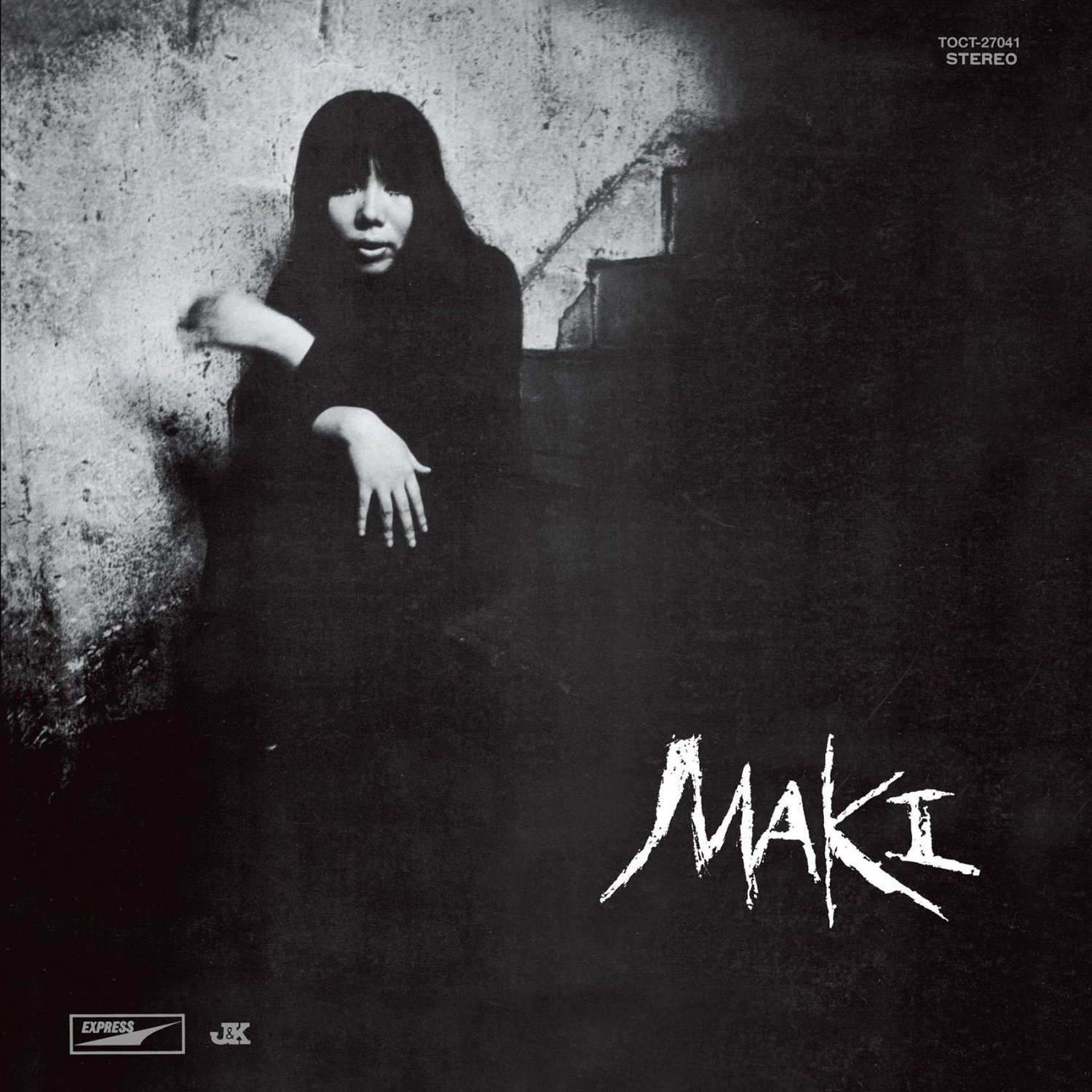 Over the next 30 or so years, Asakawa recorded quite a lot of records, but it wasn’t all dark moody blues and folk jazz. I discovered the Catnap album through a favourite blog, Interstellar Medium – Foriegn Lavish Sounds, which you should hit up, for a far more detailed look into the great album. Released in 1982, it’s a colourful, bold yet smooth collision of electronic jazz funk post punk plus, and for myself, it was so exciting to discover this side of Asakawa. The opening track Kurai Me Wo Shita Joyuu and also Shinkyoku B are real high lights, if I was forced to choose. This album holds up to quite high to today’s very standard standards in my opinion.
As Maki Asakwa grew older, she never stopped performing live. Just before an appearance on January 15-17, 2010 where she had a concert in Nagoya, she died of heart failure before the show could go on. She was 67.
References and inspirations…
 Seven45rpm
Recent Comments