
Rita Monico – Thrilling (La Regola Del Gioco)

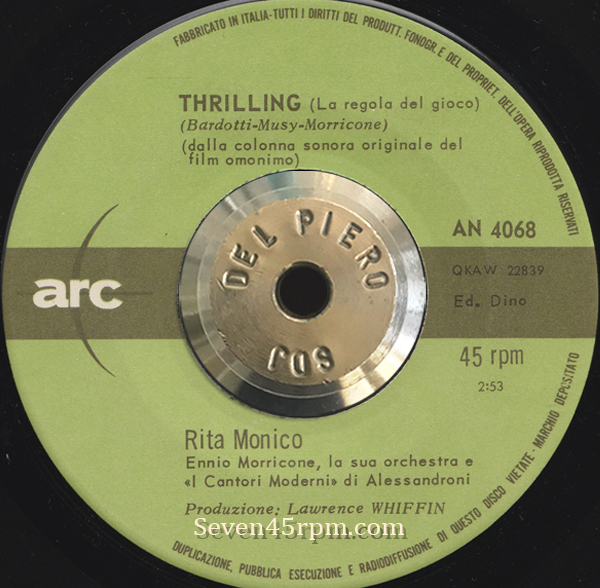
Label: Arc – AN 4068 Italy Released 1965
Track A: Thrilling (La Regola Del Gioco)
Thrilling: adjective – causing excitement and pleasure; exhilarating… “a thrilling adventure”
That’s a definition that is so well suited to this Rita Monico soundtrack single, released back in 1965. This featured track defines the Italian dramatic movie theme sound of the sixties.
I’m finally diving into this Morricone-Monico thriller title track, a much loved record, and a rare diamond in my collection. Quite a notable singer in Italy, and releasing a modest amount of singles early in her career, I mistakenly thought I would be able to uncover a whole lot more about Rita than I could. There has to be fans out there that can shine more light on her than I can here, but for now, I need to share what I have found out about her release.
Monico was born in Milano in 1950, and began singing at a very early age. She participated in the Zecchino d’Oro, an Italian festival/competition held annually since 1959, showcasing children singing songs (the winners are the writers and composers of the songs, not the young performers). She also sang in other competitions such as The Golden Mask and Golden Colosseum.
Her first credited recording release was in 1960 (she must have been 10), a collaboration with Armando Galimberti, singing the children’s Rhyme “Vorrei Volare”. At 11, alongside Laura Belloni, she narrates a record of “Tiritera Dell’Arcobaleno”, which I am assuming is a children’s story accompanied by music. Then in 1964, she had her first actual pop (chanson) release on the ARC label with “Se Tu Non Mi Vuoi” and “Di Sera”. That same year she release “Non Ho L’Eta (Per Amarti)”, a song also sung by Gigliola Cinquetti, who would end up winning the 1964 Eurovision song contest, with her performance of it.
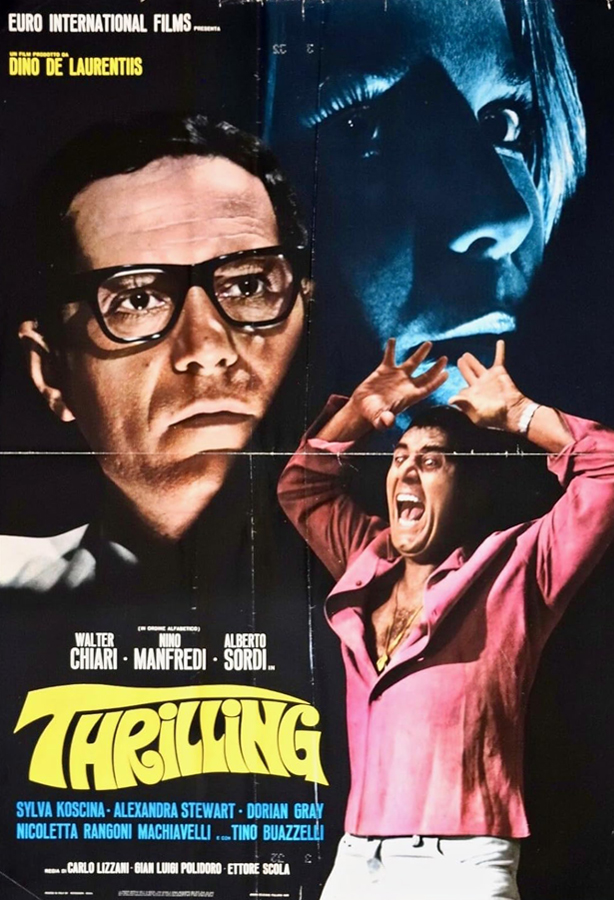
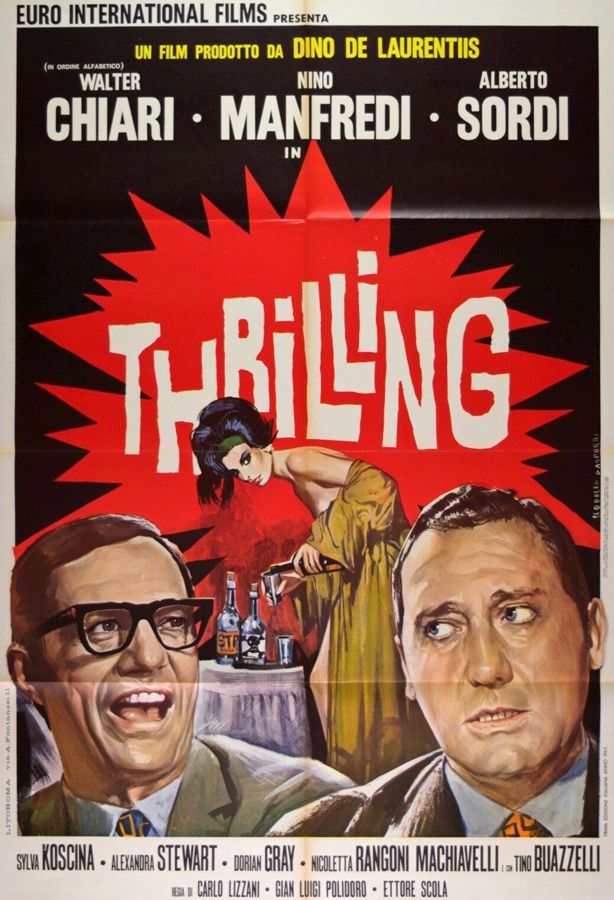
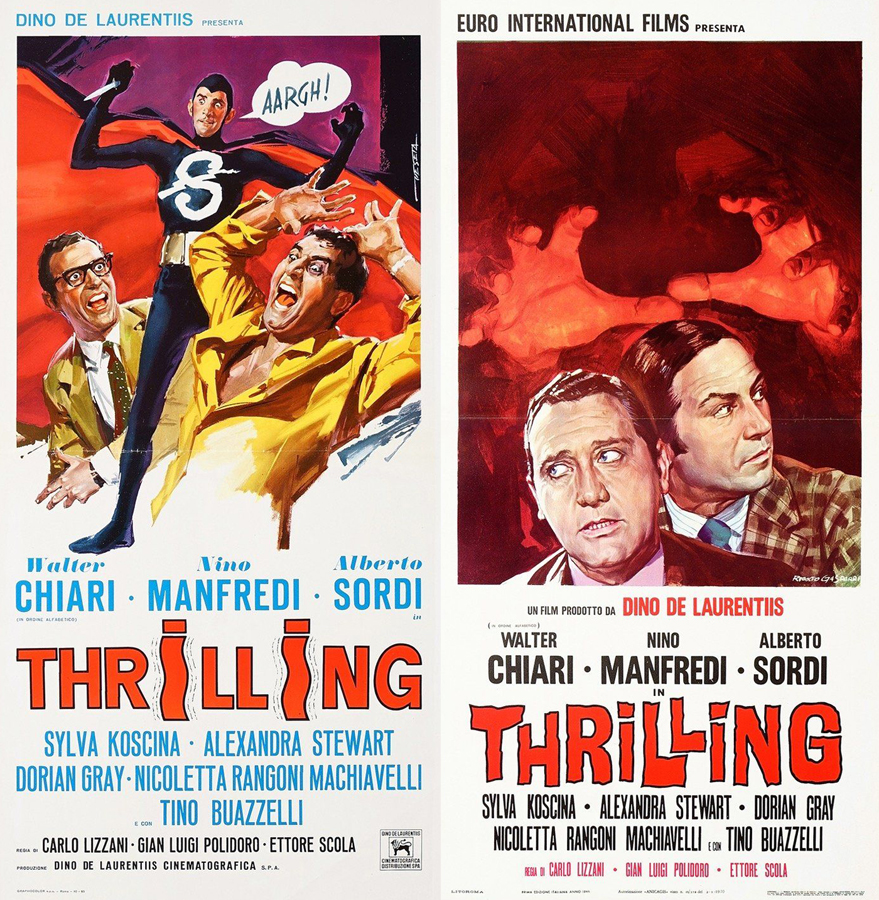
1965 saw the cinematic release of “Thrilling”, released in Italy by Dino De Laurentiis Cinematografica, filmed in Rome, Lazio. Filed as “mystery/thriller/comedy”, it’s an anthology made up of three short films, about three ordinary men who become involved in violent crimes. Each chapter had it’s own director and each included an array of iconic or up and upcoming Italian actors and actresses, all brilliantly cast. Here’s a brief depiction of the three chapters that make for the fun kooky ride.

Il Vittimista (The Victim) – The first story is about a Latin teacher named Nanni Galassi, who suspects his wife Frida (who also happens to have a creepy doll collection), is out to kill him. So convinced that she wants him dead, he consults a psychologist, to determine if it’s a reality or just a wild paranoid fantasy. His anxiety becomes so overbearing, and his tired hallucinating mind starts to break him down. His psychoanalyst reveals that his obsession is caused by a guilt complex stemming from an extramarital affair, so he breaks off all ties with his lover and resumes a quiet life with his wife. But his lover Luciana, isn’t too pleased to be brushed aside, and Nanni may have to pay the price. If you like Italian black humour and absurdity, then this is very enjoyable. Nino Manfredi plays the manic, witty Nanni superbly, and having both Alexandra Stewart as Frida and Magda Konopka as Luciana in the cast, makes it a delicious, if hardly thrilling short film. Ennio Morricone scores this first chapter with thriller instrumental themes, but the celebrated track to Il Vittimista is from Petula Clark, and her song Ciao Ciao (her Italian take on Downtown). It is heavily used in this first episode of Thrilling , and it is both genius and hilarious, as how it is placed in the final sequence.It’s the final master stroke by director Ettore Scola.
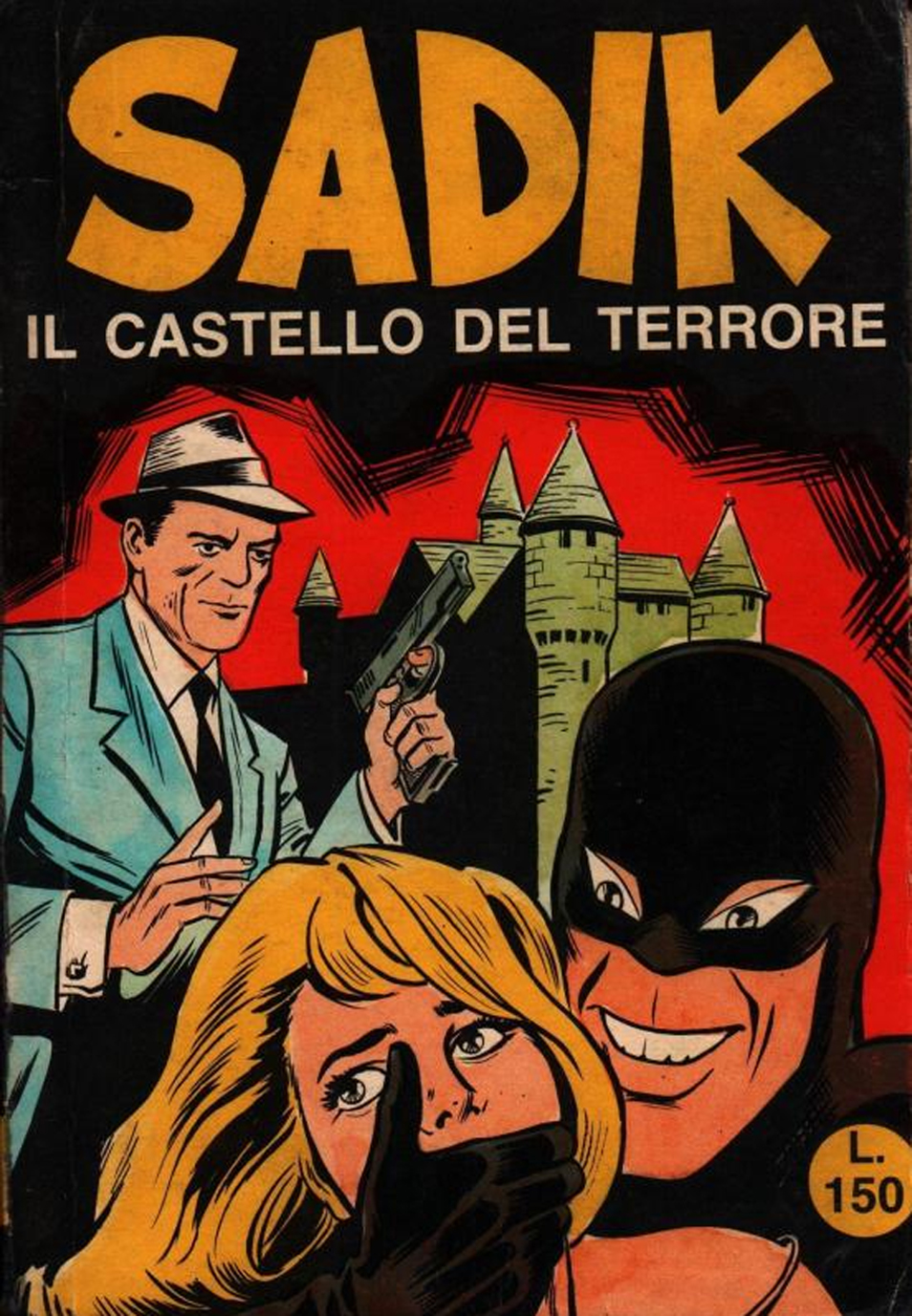
Sadik – Based on the comic series of the same name, this is the second story about a very stressed out business man-engineer named Bertazzi, who is struggling with debt and unpaid bills, but also having relationship troubles in the home, with his comic book obsessed wife. When Bertazzi comes home after a big day at the office, we first meet Veronique, lost deep into one of her comic books, that litter their living area. She pays him very little attention, far more interested in the adventures that picture the pages of her favourite Sadik paperback. After failed attempts of any real conversation, Veronique springs up an idea that may just spice up their relationship. She convinces her husband to dress up as her comic book hero and then break into their house, while she innocently waits in the bedroom. And yes she happens to have a replica costume, that really looks like she made it herself, ready to go. And miserable husband is willing to give it his all. The exotic escapade starts off well, but of course we know it’s not going to go to plan. The phone rings, his wife rejects a valuable business phone call from Switzerland, and he reacts by completely identifying with the comic book role imposed on him. Directed by Gian Luigi Polidoro, and starring Walter Chiari as Bertazzi and Dorian Gray as Veronique, this is a short but amusing adventure, with Monico’s title track used perfectly throughout, to give that wonderful Italian melodramatic and utmost thrill.

L’autostrada del sole (The Highway of the Sun) – The final film of the trilogy starts with Fernando Boccetta, driving sporadically on a freeway, deluded he’s behind the wheel of a Ferrari rather than the incredibly tiny Italian car he actually is driving. Whippin’ and zippin’ through frantic traffic, throwing out attitude to truck drivers, flirty looks to passing ladies, and just being a little insane really. After ditching a suspicious hitch hiker, he ends up having a little bungle with the driver of a sports car he was egging on. The driver takes off and the pursuit starts. But Boccetta breaks down and is forced to spend the night at a mysterious inn run by a very strange family, that it seems are murdering their guests. He meets Paola, a beautiful guest also staying at the inn, along with the very suspect family members. Boccetta senses evil doings and after discovering a body in his cupboard, he really starts losing the plot. He tries to warn an unconvinced Paola, but realising he is likely the next guest to be disposed of, he does his best to make his own getaway. The framed Bocetta almost succeeds, until the final reveal. Director Carlo Lizzani chose well to cast Alberto Sordi as the hilarious and cowardly buffoon lead. And if you have a thing for Italian screen starlets, this short film is a delight! Two sisters of the creepy family are played by Nicoletta Machiavelli as Lea, and her sister Claudia, played by Oretta Fiume, and also the female lead Paola, played by Sylva Koscina, who was actually a Croatian starlet, very popular in Italy in those days.
The title track “Thrilling (The Rules Of The Game)”, is another Morricone film score masterwork, and even though it was only this single that come out for the films release, I peak it very high, as one of his best. He’s collaborated with the highest calibre of female vocalists, but no one could ever better Rita Monico’s performance, or even be more suited for this particular track. It’s really hard to believe she was 15 or 16 when she recorded this! What an incredible range, from her sultry verses to the the big beautiful choruses. And so dramatically performed, in the way that only the Italians can do. And there is also icing of this cake with Alessandro Alessandroni’s musical vocal group Cantori Moderni di Alessandroni helping this become such a Morricone masterpiece. “Thrilling” is predominant used in the second act, but Morricone did create similar themes that really carries that beautiful eerie background atmosphere that is so good for this genre of Italian film making. There was never an actual LP soundtrack released for the film, however just recently in 2024, Solisti E Orchestre Del Cinema Italiano & EverKent, had released a “reconstruction” of Morricone’s music score for the three episodes as a limited run on CD. I’m honestly not a big fan of such modern day re workings (I struggle with the modern production sound, and definitely not the talent), but it could be good, and may even give Monica’s obscure original release more recognition.

The flip side to this official release has Monico singing what is now a Hal David – Burt Bacharach classic, Quando Tu Vorrai (What The World Needs Now Is Love), which has nothing to do with the movie, but it is such a beautiful version. On record, it is Jackie DeShannon who was first to release the vocal song version in April of 1965, so possibly it was some very clever marketing to have an Italian version on the shelves. Not an uncommon occurrence from European or foreign labels at that time. Also, if you want this version of Thrilling, a more achievable 7″ to find, was an EP released in France which also includes “Non È Mai Tardi”, a take on The Shangri-Las 1966 track “Dressed in Black”. Another beautiful cover from Monico, but not as dark as the original, which is always so alluring about The Shangri-Las.

Monico would release singles yearly up until 1975, but I really couldn’t find too much about her career movements or personal life after that period. If I was going to pick a stand out from her further releases, I would suggest the 1975 single Sono Mia / Leggenda Del Futuro, which was used for the documentary “Pianeta Donna – Italia”. The first in a series of documentaries dedicated to the condition of women around the world, produced to coincide with the UN’s “International Women’s Year”. The documentary explores the daily life of Emilia, a 28-year-old woman who emigrated from sunny southern Italy to foggy Turin, northern Italy. She lives with her large family (herself, her husband, four children, two sisters, and a nephew) in a squalid attic, and tries to make the income by working as a housemaid. Her life is devoid of entertainment and discusses the difficulties faced by immigrant families, similar to those faced by approximately 7 million Italians living in the North. The only footage I could find of this, was through the two clips of both songs posted on you tube. It actually looks ethereal and psychedelic, with trippy dance sequencing that plays against both songs, but particular well over Sono Mia. I believe Monico’s tracks are played for both the opening and closing sequences, but I would love to find the series… it’s very intriguing.
I must recommend the film “Thrilling”, to put on your watch list if you have never seen it, especially if you love this era of Italian cinema. The film has never had an official non cinematic re-release, on DVD or for purchase, other that the exclusive VHS (Domovideo and BMG) releases many, many years ago. This is madness! There are some shared opportunities online, but none of the recordings were of the best quality, and likely taken from a VHS copy. Most versions were in Italian with no subtitles, and while my Italian is very poor these days, that didn’t stop me from absolutely enjoying the whole ride, from beginning to end.
If you adore Morricone’s soundtrack work particularly from the sixties and seventies, you will understand why I absolutely treasure this obscure Monico release.
– del Piero

 Seven45rpm
Recent Comments