
Rita Monico – Thrilling (La Regola Del Gioco)

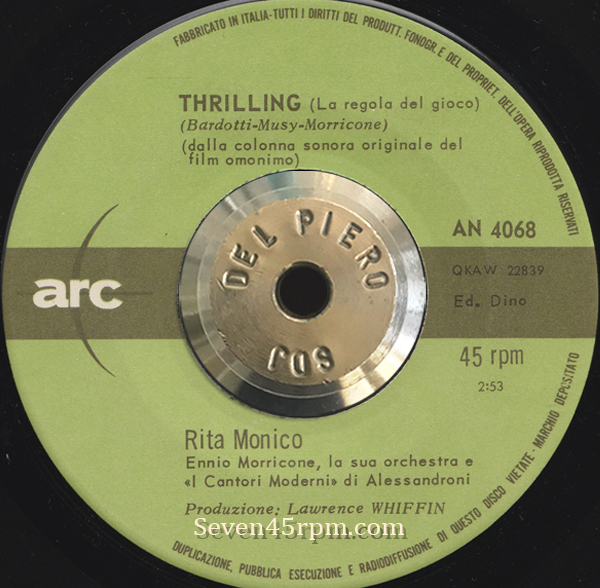
Label: Arc – AN 4068 Italy Released 1965
Track A: Thrilling (La Regola Del Gioco)
Thrilling: adjective – causing excitement and pleasure; exhilarating… “a thrilling adventure”
That’s a definition that is so well suited to this Rita Monico soundtrack single, released back in 1965. This featured track defines the Italian dramatic movie theme sound of the sixties.
I’m finally diving into this Morricone-Monico thriller title track, a much loved record, and a rare diamond in my collection. Quite a notable singer in Italy, and releasing a modest amount of singles early in her career, I mistakenly thought I would be able to uncover a whole lot more about Rita than I could. There has to be fans out there that can shine more light on her than I can here, but for now, I need to share what I have found out about her release.
Monico was born in Milano in 1950, and began singing at a very early age. She participated in the Zecchino d’Oro, an Italian festival/competition held annually since 1959, showcasing children singing songs (the winners are the writers and composers of the songs, not the young performers). She also sang in other competitions such as The Golden Mask and Golden Colosseum.
Her first credited recording release was in 1960 (she must have been 10), a collaboration with Armando Galimberti, singing the children’s Rhyme “Vorrei Volare”. At 11, alongside Laura Belloni, she narrates a record of “Tiritera Dell’Arcobaleno”, which I am assuming is a children’s story accompanied by music. Then in 1964, she had her first actual pop (chanson) release on the ARC label with “Se Tu Non Mi Vuoi” and “Di Sera”. That same year she release “Non Ho L’Eta (Per Amarti)”, a song also sung by Gigliola Cinquetti, who would end up winning the 1964 Eurovision song contest, with her performance of it.
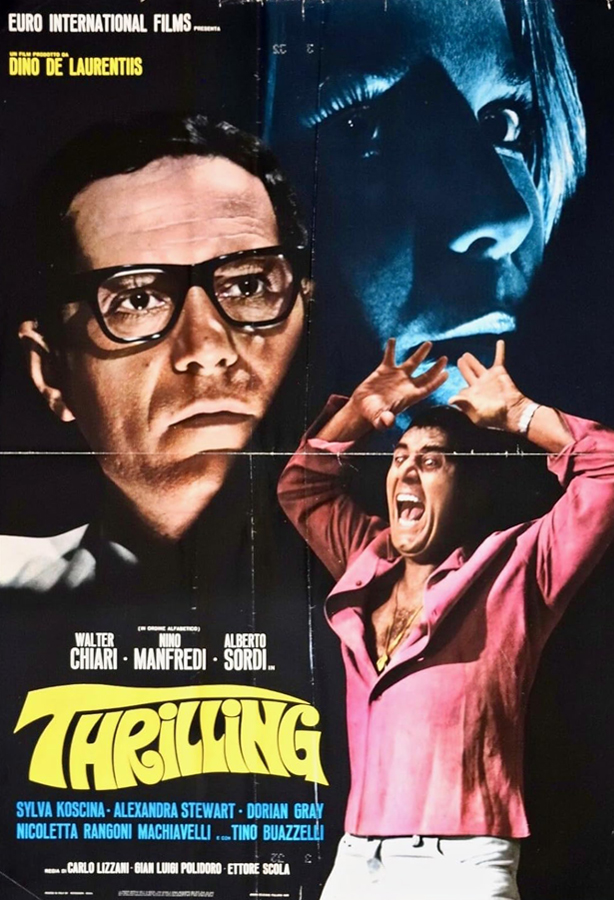
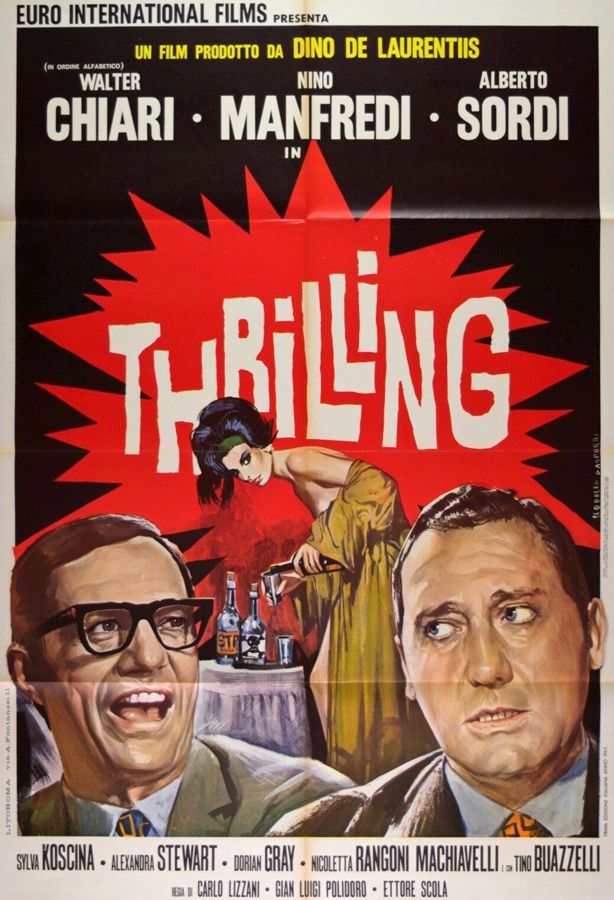
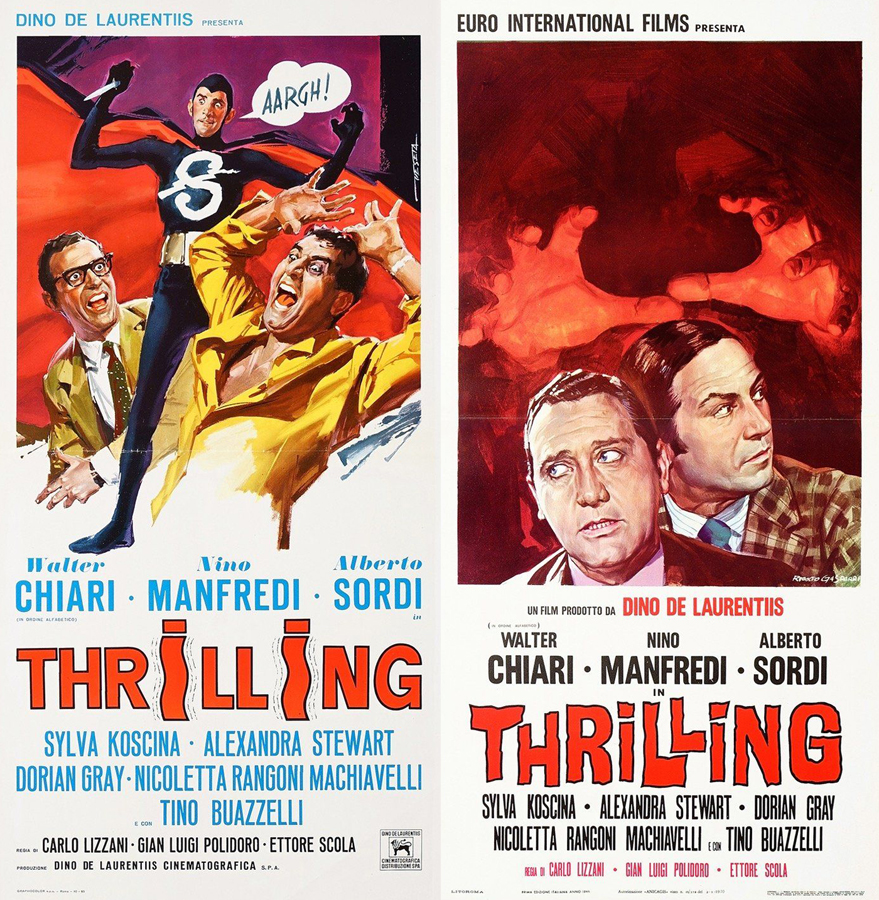
1965 saw the cinematic release of “Thrilling”, released in Italy by Dino De Laurentiis Cinematografica, filmed in Rome, Lazio. Filed as “mystery/thriller/comedy”, it’s an anthology made up of three short films, about three ordinary men who become involved in violent crimes. Each chapter had it’s own director and each included an array of iconic or up and upcoming Italian actors and actresses, all brilliantly cast. Here’s a brief depiction of the three chapters that make for the fun kooky ride.

Il Vittimista (The Victim) – The first story is about a Latin teacher named Nanni Galassi, who suspects his wife Frida (who also happens to have a creepy doll collection), is out to kill him. So convinced that she wants him dead, he consults a psychologist, to determine if it’s a reality or just a wild paranoid fantasy. His anxiety becomes so overbearing, and his tired hallucinating mind starts to break him down. His psychoanalyst reveals that his obsession is caused by a guilt complex stemming from an extramarital affair, so he breaks off all ties with his lover and resumes a quiet life with his wife. But his lover Luciana, isn’t too pleased to be brushed aside, and Nanni may have to pay the price. If you like Italian black humour and absurdity, then this is very enjoyable. Nino Manfredi plays the manic, witty Nanni superbly, and having both Alexandra Stewart as Frida and Magda Konopka as Luciana in the cast, makes it a delicious, if hardly thrilling short film. Ennio Morricone scores this first chapter with thriller instrumental themes, but the celebrated track to Il Vittimista is from Petula Clark, and her song Ciao Ciao (her Italian take on Downtown). It is heavily used in this first episode of Thrilling , and it is both genius and hilarious, as how it is placed in the final sequence.It’s the final master stroke by director Ettore Scola.
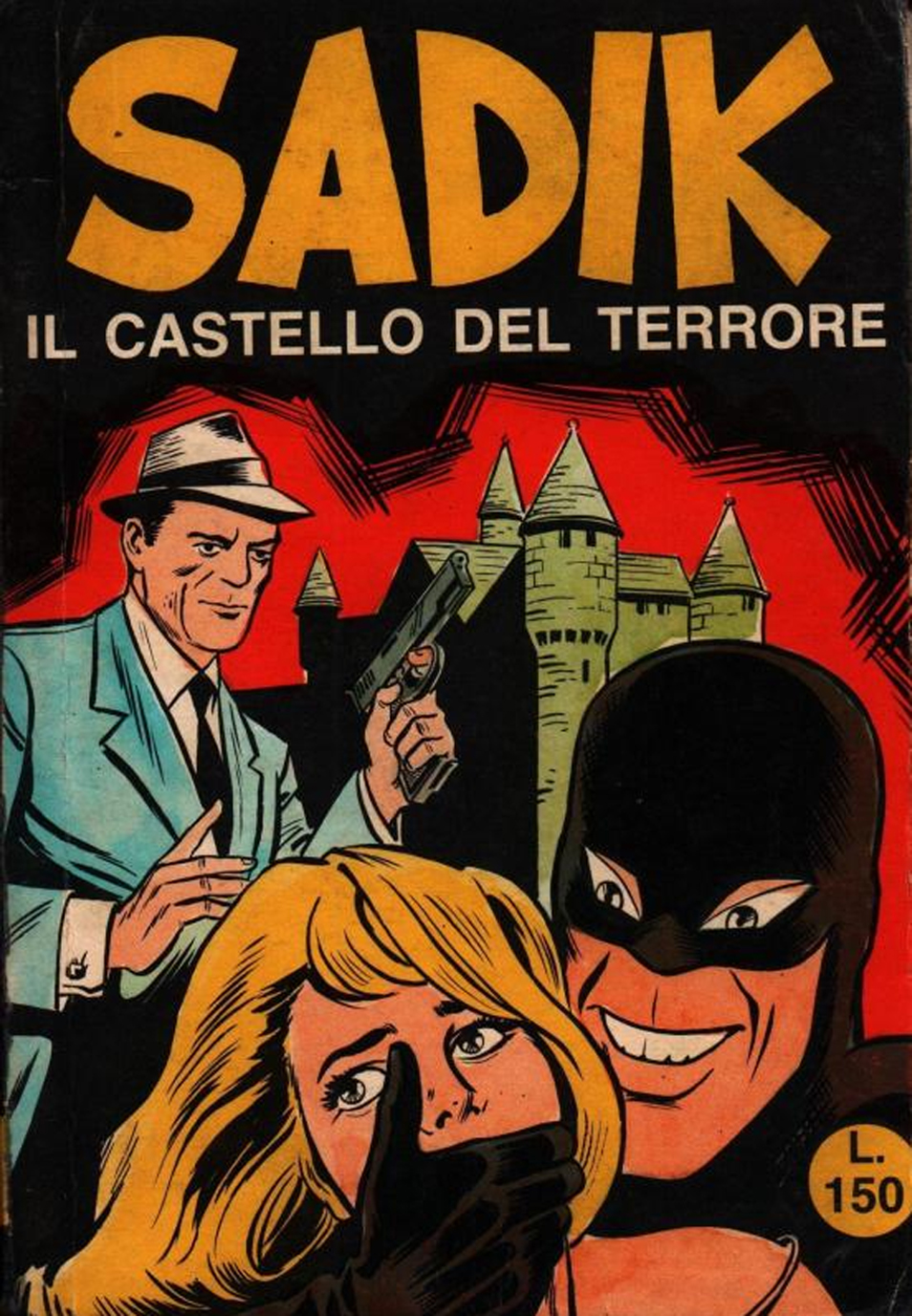
Sadik – Based on the comic series of the same name, this is the second story about a very stressed out business man-engineer named Bertazzi, who is struggling with debt and unpaid bills, but also having relationship troubles in the home, with his comic book obsessed wife. When Bertazzi comes home after a big day at the office, we first meet Veronique, lost deep into one of her comic books, that litter their living area. She pays him very little attention, far more interested in the adventures that picture the pages of her favourite Sadik paperback. After failed attempts of any real conversation, Veronique springs up an idea that may just spice up their relationship. She convinces her husband to dress up as her comic book hero and then break into their house, while she innocently waits in the bedroom. And yes she happens to have a replica costume, that really looks like she made it herself, ready to go. And miserable husband is willing to give it his all. The exotic escapade starts off well, but of course we know it’s not going to go to plan. The phone rings, his wife rejects a valuable business phone call from Switzerland, and he reacts by completely identifying with the comic book role imposed on him. Directed by Gian Luigi Polidoro, and starring Walter Chiari as Bertazzi and Dorian Gray as Veronique, this is a short but amusing adventure, with Monico’s title track used perfectly throughout, to give that wonderful Italian melodramatic and utmost thrill.

L’autostrada del sole (The Highway of the Sun) – The final film of the trilogy starts with Fernando Boccetta, driving sporadically on a freeway, deluded he’s behind the wheel of a Ferrari rather than the incredibly tiny Italian car he actually is driving. Whippin’ and zippin’ through frantic traffic, throwing out attitude to truck drivers, flirty looks to passing ladies, and just being a little insane really. After ditching a suspicious hitch hiker, he ends up having a little bungle with the driver of a sports car he was egging on. The driver takes off and the pursuit starts. But Boccetta breaks down and is forced to spend the night at a mysterious inn run by a very strange family, that it seems are murdering their guests. He meets Paola, a beautiful guest also staying at the inn, along with the very suspect family members. Boccetta senses evil doings and after discovering a body in his cupboard, he really starts losing the plot. He tries to warn an unconvinced Paola, but realising he is likely the next guest to be disposed of, he does his best to make his own getaway. The framed Bocetta almost succeeds, until the final reveal. Director Carlo Lizzani chose well to cast Alberto Sordi as the hilarious and cowardly buffoon lead. And if you have a thing for Italian screen starlets, this short film is a delight! Two sisters of the creepy family are played by Nicoletta Machiavelli as Lea, and her sister Claudia, played by Oretta Fiume, and also the female lead Paola, played by Sylva Koscina, who was actually a Croatian starlet, very popular in Italy in those days.
The title track “Thrilling (The Rules Of The Game)”, is another Morricone film score masterwork, and even though it was only this single that come out for the films release, I peak it very high, as one of his best. He’s collaborated with the highest calibre of female vocalists, but no one could ever better Rita Monico’s performance, or even be more suited for this particular track. It’s really hard to believe she was 15 or 16 when she recorded this! What an incredible range, from her sultry verses to the the big beautiful choruses. And so dramatically performed, in the way that only the Italians can do. And there is also icing of this cake with Alessandro Alessandroni’s musical vocal group Cantori Moderni di Alessandroni helping this become such a Morricone masterpiece. “Thrilling” is predominant used in the second act, but Morricone did create similar themes that really carries that beautiful eerie background atmosphere that is so good for this genre of Italian film making. There was never an actual LP soundtrack released for the film, however just recently in 2024, Solisti E Orchestre Del Cinema Italiano & EverKent, had released a “reconstruction” of Morricone’s music score for the three episodes as a limited run on CD. I’m honestly not a big fan of such modern day re workings (I struggle with the modern production sound, and definitely not the talent), but it could be good, and may even give Monica’s obscure original release more recognition.

The flip side to this official release has Monico singing what is now a Hal David – Burt Bacharach classic, Quando Tu Vorrai (What The World Needs Now Is Love), which has nothing to do with the movie, but it is such a beautiful version. On record, it is Jackie DeShannon who was first to release the vocal song version in April of 1965, so possibly it was some very clever marketing to have an Italian version on the shelves. Not an uncommon occurrence from European or foreign labels at that time. Also, if you want this version of Thrilling, a more achievable 7″ to find, was an EP released in France which also includes “Non È Mai Tardi”, a take on The Shangri-Las 1966 track “Dressed in Black”. Another beautiful cover from Monico, but not as dark as the original, which is always so alluring about The Shangri-Las.

Monico would release singles yearly up until 1975, but I really couldn’t find too much about her career movements or personal life after that period. If I was going to pick a stand out from her further releases, I would suggest the 1975 single Sono Mia / Leggenda Del Futuro, which was used for the documentary “Pianeta Donna – Italia”. The first in a series of documentaries dedicated to the condition of women around the world, produced to coincide with the UN’s “International Women’s Year”. The documentary explores the daily life of Emilia, a 28-year-old woman who emigrated from sunny southern Italy to foggy Turin, northern Italy. She lives with her large family (herself, her husband, four children, two sisters, and a nephew) in a squalid attic, and tries to make the income by working as a housemaid. Her life is devoid of entertainment and discusses the difficulties faced by immigrant families, similar to those faced by approximately 7 million Italians living in the North. The only footage I could find of this, was through the two clips of both songs posted on you tube. It actually looks ethereal and psychedelic, with trippy dance sequencing that plays against both songs, but particular well over Sono Mia. I believe Monico’s tracks are played for both the opening and closing sequences, but I would love to find the series… it’s very intriguing.
I must recommend the film “Thrilling”, to put on your watch list if you have never seen it, especially if you love this era of Italian cinema. The film has never had an official non cinematic re-release, on DVD or for purchase, other that the exclusive VHS (Domovideo and BMG) releases many, many years ago. This is madness! There are some shared opportunities online, but none of the recordings were of the best quality, and likely taken from a VHS copy. Most versions were in Italian with no subtitles, and while my Italian is very poor these days, that didn’t stop me from absolutely enjoying the whole ride, from beginning to end.
If you adore Morricone’s soundtrack work particularly from the sixties and seventies, you will understand why I absolutely treasure this obscure Monico release.
– del Piero

Nakahara Miki 愛のイエスタディ

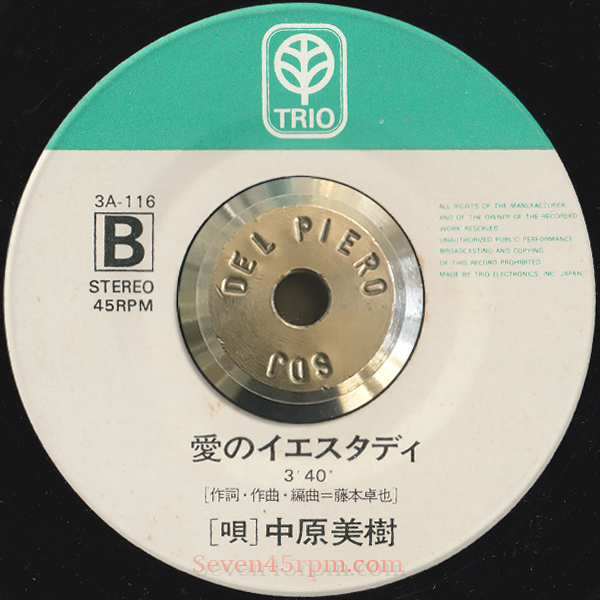
Trio Records – 3A-116 Released Oct 21, 1973 JAPAN
TRACK B: 愛のイエスタディ (Yesterday)
So here’s another one I am filing under “Mysterious & Unknown”. Another one that has become an obsession, and has that alluring dreamy, misty gentleness. Embracing like a hallucinogenic lullaby from a faraway lost world in another time. But again, that place is Japan, and the year was 1973. Can anyone out there tell me anything about Nakahara Miki?
I can’t explain it, or describe it. There’s something I adore about hazy and quirky foreign and unknown releases from the sixties and seventies. I can’t place them in a category or genre. Somewhat seductive, and with both an outer space and under water atmosphere, and dripping with over the top romanticism. And part of not knowing what the song is about only adds to the desire and intrigue. This track sits nicely alongside the Naomi Chiaki – Asa Ga Kurumaeni track I featured a little while ago.
I could only find one isolated release from Kiki, this only 7″ single. Recorded through the same label as Tonpei Hidari – Hey You Blues , and released the same year of 1973. This makes me really want to dig into the Trio label’s archives to see if I can dig out any other lovely but odd jewels. I have done a bit of searching into the Japanese label’s catalogue, but there’s a fair bit to sift through, and it is ever so varied, with some very strange releases, and definitely not exclusive to Japan only artists.

The feature track is the B side of Kiki’s (possibly) only release. Side A 花嫁の手紙 (Bride’s Letter), is more of a typical soft rock ballad where Kiki uses her range to crescendo through soaring strings along the standard pop beat. She does do a thing I do like, that whole bridge thing where the singer narrates over the top, maybe telling a story or encounter perhaps. It’s kinda cheesy, but it is completely allowed by me if it’s coming from this kind of Japanese context. Hidari also does it in Hey You Blues. I know it was a “thing”, in a time, and in a lot of foreign countries. It’s just adorable!
But the Side B Track 愛のイエスタディ (Yesterday), is astonishingly beautiful… to me. Nothing typical here. So much melancholy from the very start, but it’s pure and just so lovely. The kind of sweetness bordering on”Lynchian”. The chorus is so distant and dream like. And yes again, we get some of that great narration. I suppose I could use some kind if AI app to translate it all. But I don’t need it. I love it all, with or without knowing the story or lyrics.
So if that is it from Nakahara Miki recording wise, then the next thing I do is search the trusty IMDB for any possible clues of film work, via music talents or other. “Nakahara Miki” does come up as an actress that possibly worked on approximately 7 films, between 1974 to 1991. But without any photo evidence and hardly any write ups of any of the films, I’m just not a good enough detective to confirm this is the same artist featured here.
So I’m going to leave this all here, and just wait in hope for someone out their to please enlighten me on Miki. The woman behind this truly beautiful, divine and poetic song I have deeply fallen for. And I hope someone out also feels the same way about it.
– del Piero
If you fancy this, you may dig these…
Tonpei Hidari – Hey You Blues


Trio Records – 3A-118 Released 1973 Japan
Track A – とん平のヘイ・ユウ・ブルース Hey You Blues
I have promised myself to do a post on Hidari’s “Hey You Blues”, since the day of his passing back in 2018. That was 7 years ago! Why do these things take me so long to get to? I recently pulled this record out for a radio show I put together celebrating some Japanese gems, but this time I promised myself not pack this one away until I finally share it here on this blog.
But now that I am back researching Tonpei Hidari, I am remembering why I put his story aside, which was because of the lack of information I was able to find on him at the time. Well, I’m still not finding a lot about him, but I won’t let that stop me from sharing this great release from him, and as always, just maybe, I’m hopeful, someone, anyone, that reads this who is far more knowledgeable, can share more truths and tales about the wonderful Mr. Hidari.
Tonpei Hidari (real name Hiromichi Hidaki) was born on May 30, 1937 in Tokyo, Japan. He was the youngest of three brothers and the house where he was born was a restaurant and sushi shop. In 1953 he entered Setagaya High School. At that time, inspired by the performances of the Dassen Trio and Hisaya Morishige, who were very popular at that time, he decided he wanted to be a comedian. In 1954, while still at school, he entered the Yoyogi Actors’ School. In 1956, he graduated from high school and helped out in the family sushi shop. In 1957 he formed a theatre group with his friends and in 1960 he joined Kiyoko Tange’s Etcetera Theatrical Troupe. He has appeared in films from 1963 onwards during the 60s and was under contract to Toei’s theatrical section and appeared in many plays for them. In 1962 he was married.
So to his recording career. This featured single, was his first release, and on the label TRIO Records, in 1973. The label was known for its jazz releases, and was established by the audio manufacturer later known Trio Kenwood Corporation. I always wanted a Kenwood in the seventies! This A side is killer! “Tonpei’s Hey You Blues” (Tonpei No Hei Yū Burūsu), strides through the verses with a soul jazz groove, where Hidari speaks more like in conversation than sings. But suddenly there comes the cresendos to the explosive chorus where Hidari shouts out in English “Hey you! What’s your name?” I have never known the story behind the lyrics in this song and what is behind the punch of the chorus.
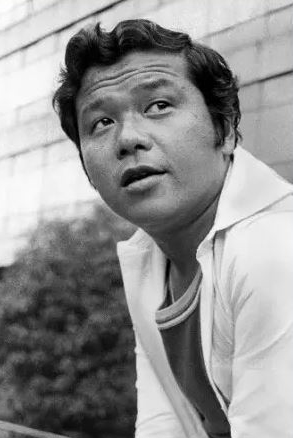
With many of the non English songs I research, I like to go to the comment sections, where ever I can find the song posted, and hope to find meanings or peoples personal reactions. And here I could a few things. Firstly, this song is very well known to the Japanese people, and many remember singing this chorus at schools when they were young. And many Japanese people respond to the meaningful lyrics. One commentator translates the lyrics which I will include here, and I trust it is correct, and will leave the reader to take in what they think it all means. This is one comment from a listener… “It’s a masterpiece that children who laugh and listen to without understanding the meaning eventually grow up and listen to it while crying.” And another comment… “He asks for the names of those who despise him, degrade him, and ruin him. But he must know that the name belongs to him. But I can’t help but scream. The blues of such a sad man’s soul. Even a professional soul singer would not be able to sing to this level.”
But I also find a few more exciting comments, from a Ken Muraoka, The actual Saxophonist that recorded on this track, and also the flip side track called “Tokyo Is A Great City” (Tōkyō tte ī machida na). “I’m Muraoka, who played saxophone on this song. I was invited by Mickey Curtis that day to record at a disco in Roppongi. Hey You Blues got the OK on the first take, and he said we were going to record one more song, so I wrote out the chords and we started playing and recording, and that’s how “Tokyo is a great city” on the back was completed. I had fun filling in both songs with guitar-like saxophone, right? I wonder if Mickey is reading this, hahaha.”
It is also apparent that at this time of release, the rise of new soul such as Isaac Hayes’ “Shaft” in 1971, and Curtis Mayfield’s “Superfly” in 1972, and also The Phillly Soul Sound, was not only sweeping the United States, but was spreading across the world, and influencing musicians and music lovers. Ken Muraoka also mentions that he himself got to play with Curtis Mayfield when he toured Japan, and played in Shibuya in 1984.
The B side track “Tokyo Is A Great City”, is far more smooth, but again no actual singing from Hidari, but instead it’s more spoken and narration. Well the music is smooth, but it is sounding like Hidari ends up in some kind of angry argument, and without knowing the context, it’s difficult to know the story that is being told.
The following year in 1974, Hidari released a second 7″ titled “Tonpei’s Alcoholic Life” (Tonpei no sakebitari jinsei). This is an odd show tune sound and Hidari is sounding slightly intoxicated. In 1975 he released possibly his final single with the A Side Busuna on’na (Ugly Woman) and the flip “Koyubi No Warutsu” (Pinky Waltz). He actually sings on the A side, there’s kitsch strings and the soul is, well far less deep that the featured track. It is said that he also recorded a single years later called “Ningen te nandaro” or translated to “What are humans?” But I could not for the life of me, find anything on this after a deep dive. Is this true?
After a short recording career, Hidri would become a well known actor in Japan. In the 1970s, he became through various dramas such as “It’s Time”, “Terauchi Kantaro Ikka” and “Mu Ichizoku” and he played a Japanese Columbo-style detective in “Hijo No Licence”. He gave “passionate” performance as a detective in Nippon Television’s “Female Coroner Muroo Akiko”, which began in 1986, and would run for more than 20 years. In later years, he spent most of his time doing talk shows, but featured in comedies such as “Oedo degozaru”. Hidari also appeared on the big screens, working in films such as “The Ballad of Narayama” (1983), which won the Palme d’Or at the Cannes Film Festival, and “Yoshiwara Enjo” (1987).
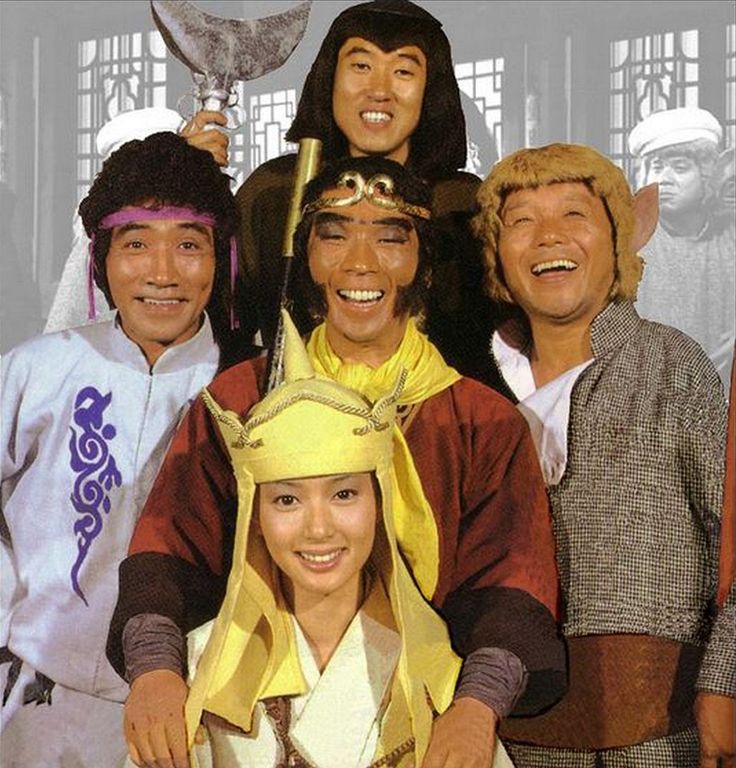
But it was the popular and bizarre TV series ” MONKEY”, that really made Hidari famous around most of the world, especially to the kids. It was an adaptation of a Chinese folktale about a pilgrimage to the West undertaken by a monk and his divine guardians (based on the 16th-century Chinese novel Journey To The West). The series surprising only ran for 2 seasons, between 1978 to 1980. Hidari would come in as Pigsy in 1979, replacing Toshiyuki Nishida, who play that character in the first season. I was at school when this was showing on out TV screens all the way over here in Sydney Australia. Everyone liked it, but some obsessively loved it! And we’d talk about it and act out some of the memorable moves! It was so lovely to find out that Hidari was a part of that Monkey Magic era, after getting my hands of this record.
Hidari died on February 24, 2018 at a hospital in Tokyo due to heart failure. Thank you Hidari for your performance on this record. It sounds like you were loved by many and whenever I play this record for someone, it has always impressed them…immensely.
– del Piero
Lyrics translated by @ikidearitashi1030
Lyrics: Gogoro Composer: Yoshimichi Mochizuki
HEY YOU HEY YOU WHAT’S YOUR NAME? HEY YOU HEY YOU WHAT’S YOUR NAME?
There is a sound in the air Do you remember your mother’s breasts? Can you remember the mole of the girl you abandoned? The world is full of people Life is a pestle, baby Life is a slippery slope OH MY BABY Listen to this blues
HEY YOU HEY YOU WHAT’S YOUR NAME? HEY YOU HEY YOU WHAT’S YOUR NAME? All my friends stole the same watermelon. All my friends were killed by the same woman All my friends were on the same train How about that? Before I know it, I’m a pestle I’ve been turned into a pestle I’m a tired and lonely pestle The one who turned me into a pestle Who is that? Who is that?
HEY YOU HEY YOU WHAT’S YOUR NAME? HEY YOU HEY YOU WHAT’S YOUR NAME? Are you saying that alcohol doesn’t make you angry? Are you saying that my wife is not excited? If there is a god who throws away, then there is also a god who heals. The pestle has become so worn down that it looks tiny. Who is Hiromon? The more a pestle works, the more it grinds. Grind it, add miso and enjoy it. There’s got to be someone who’s wearing me down. The one who turned me into a pestle Who is that? Who is that?
HEY YOU HEY YOU WHAT’S YOUR NAME? WHAT’S YOUR NAME? WHAT’S YOUR NAME? Please write your name Who are you? Who are you? Who is it? You too will become a pestle someday. I’m no good. I’m no good. HEY YOU WHAT WHAT WHAT’S YOUR NAME? HEY YOU WHAT’S YOUR NAME? I’m no good. I’m no good. WHAT’S YOUR NAME? No, no..
MOVIE CREDITS
1966 Kuromaku (Black Cutrain)
1968 Dorifutazu desu yo! Totte totte torimakure (It’s Drifter Tatsuru! Take it, take it, take it!)
1977 Torakku yarô: Otoko ippiki momojirô uncredited
1983 The Ballad of Narayama1987 Yoshiwara Enjo
1987 Yoshiwara Enjo
Naomi Chiaki – Asa Ga Kurumaeni


Columbia – SAS-1357 Japan Released 1969
Track A : 朝がくるまえに Asa Ga Kurumaeni
I absolutely love this track from Naomi Chiaki. I feel it is perhaps over looked in the Japan Sevens collector circles and it needs to be shared.
Born on September 17, 1947, Naomi Chiaki (real name Segawa Mieko) was born in Kanagawa, raised in Itabashi, in the Tokyo Metropolis in Japan. Born as the youngest of the three sisters, and heavily influenced by her mother who loved to perform, she learned tap dancing at the age of four, and at the age of five, she took the stage for the first time in the Nikgeki Music Hall, a beautiful former Japanese theatre, built in 1933, and which had avoided damage throughout air raids and war. It is documented that she sang at US military camps, jazz cafes and supported then popular singers on concert tours, when was she very young.
Chiaki moved schools numerous times, graduating and shifting through different cities around the Tokyo regions, but it’s difficult to find what musical path was leading her or the journey she was following during her teens. In the late sixties she succeeded an audition to become a pupil for composer Jun Suzuki and in 1969 she had signed to Columbia and released her first single, this featured release, “Asa Ga Kurumaeni”.

It translates as “Before The Morning Comes”, and it’s such a beautiful track. You can hear her jazz styling in her very polished voice. It’s a very theatrical song in that it feels like it should be part of spy thriller that was so popular in the sixties. Jun Suzuki is composing, and you can tell he was a master with mixing a good sixties back beat, with atmospheric strings, driving bass and distant piano chops. This Chiaki song is just devine! This track has the perfect vibe, and it’s one that really grew on me, to the point where I got a bit obsessed with it. It is a much loved 7″ that I pack for only the cool bars.
The flip to this single is called “Yoru Wa Darenimo Agenaide” and has a familiar arrangement, but isn’t as spectacular. But I will say it also is growing on me, so I am happily giving it more rotations. “Asa Ga Kurumaeni” also appears on her debut LP “Yottsu no Onegai; Anata ni Yobikakeru Chiaki Naomi”, which kinda translates to “Naomi Chiaki Is Calling Out To You With Four Wishes”, and was released the following year in 1970. I don’t own that LP, but I have has a listen and I like it. It feels like a conceptual love story record, with Chaki narration between some tracks. Again familiar themes and top class Jun Suzuki arrangements, and I will put it on my list of records to look out for if I ever get back to the Tokyo record stores.

Naomi Chiaki had her breakthrough single in 1970 with “Yottsu no Onegai”, and would end up releasing a barrage of singles through Columbia all through the seventies, and even beyond, with further labels. Further digging tells me her biggest and most successful hit was “Kassai” released in 1972, a song which has been commonly considered her signature tune. It sold over one million copies by February 1973, and because of it she won the 14th Japan Record Award and landed a “Gold Disc” for it. She would also release a tonne of LP’s (I have counted 28) all the way up to 1991, so she really enjoyed a successful recording career.
Chiaki also did a few musicals, but it is said when she played Billie Holiday in the musical ‘Lady Day’ in 1989 to 1990, that her performances were absolutely unforgettable. She also played Carmen the musical ‘Song Days’ in 1991, so this tells us a lot about her stage talent and vocal chops.
Sadly her husband *Eiji Go, passed on September 11 in 1992, and she stopped working completely as an artist. But I’m certain her millions of her admirers, will continue to listen to her vast catalogue for many years to come. Apparently Naomi Chiaki had recorded 425 songs, and I’m wondering if there’s a more perfect Chiaki release amongst them? Let me know if there is.
- del Piero
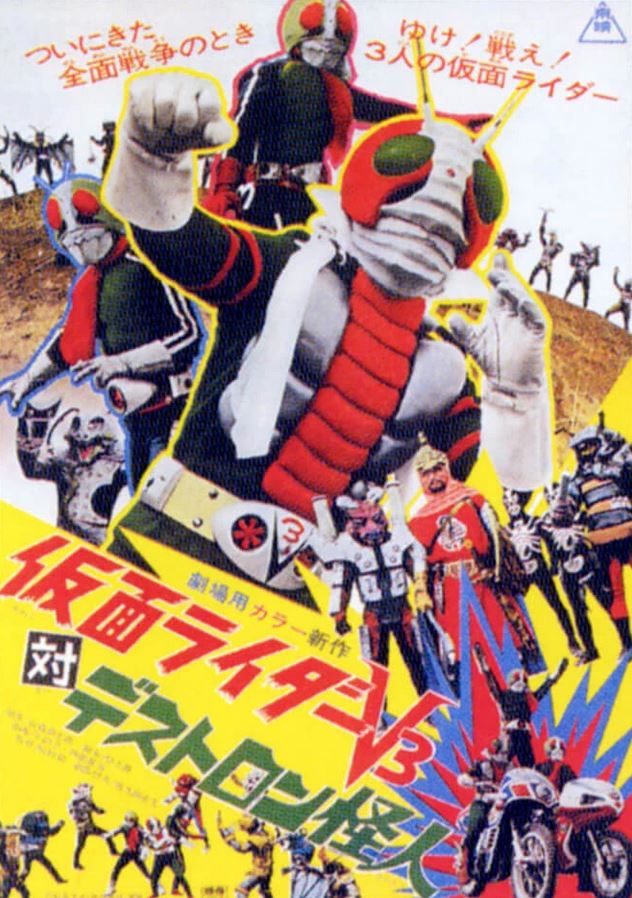
*Eiji Go was an actor known for “Kamen Rider V3 vs. Destron Mutants” (1973) where he played Doctor G, and also starred in “The Executioner II: Karate Inferno” (1974) and “The Executioner’ (1974).
I think it is lovely and sweet to see Chiaki’s late husband in action, so here is a link to Kamen Rider V3 vs. Destron Mutants. I love this stuff! Hope you can see why!
Victoire Scott 4ème Dimension
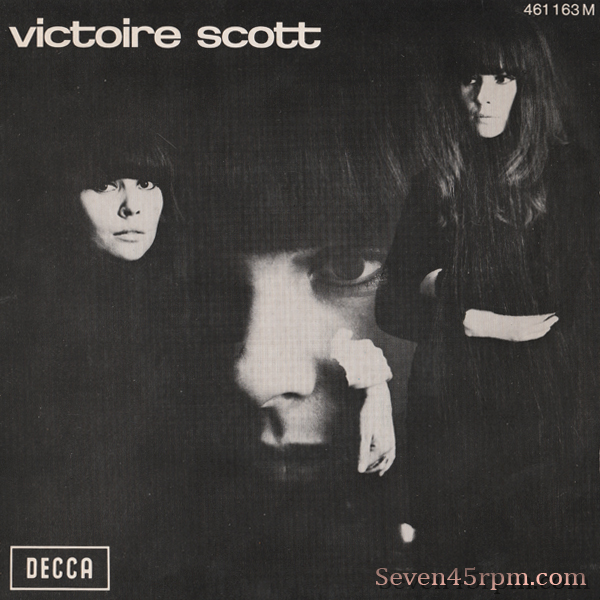

Decca – 461.163 France Released April 1968
Track A1: 4ème Dimension
Track A2: Une Fleur Dans Le Coeur
So the whole purpose of this blog was initially to contain information of all the things I have discovered about some of the musicians that have recorded on some my favourite 7″s. Artists or songs, that aren’t so well known, that has taken me hours and nights of digging into very particular music websites, elusive but specific forums, archival news articles, linar notes and even old fashion books. But there’s so many artists I want to feature here that for the life of me, I just cannot find anything on them! So I’ve decided to start a new “mysterious unknown” category on Seven45RPM, in hope that someone out find has something to enlighten me with, that I can add. This track, from Victoire Scott, has to be in my top sixties french femme list, and it needs to be shared!
Her real name apparently is Claudie Deneuville, and the only consistent word on this singer that I’m hearing, is that her whereabouts is famously unknown. We do know she released eight 7″ releases, between 1968 and 1971, with 3 ep’s include in that small mix. Decca released her french EP’s in the sixties, then possibly new management, or a deal, for her CBS releases for her early seventies releases. Her two canadian single releases were on London. So no real overseas pursuits by the looks of it?
4ème Dimension is her first release and her best. Haunting intro and versus, with psychedelic power pop bursts into choruses. The lyrics picture a dream like moment, where the world around is all unknown, perhaps lost in a 4th dimension. It’s all very psychedelic, fantastical, and paints all the images you need for a the surrealist’s journey. Shattered glass, one eye window and golden butterflies. It’s all so perfectly dreamy and bliss!

But this is not a “must have one track” EP, or no! The following track is also brilliant and beautiful. “Une Fleur Dans Le Coeur” follows a similar pattern to the opener, with it’s gentle but eerie start, but this time we are lead more into a prog garage blues shift, albeit still with catchy pop choruses. This track is actually a take on The Shamrocks* “Rich Life” from 1967. But it’s not a cover. Scott’s song title translates to “A Flower In The Heart”, and the lyrics are very different, this being a love song, again, quite pure and dream like. Where as The Shamrocks talk about Chevy’s, Swimming pools, Egyptian jewels and king size beds. No guessing which portrayal I prefer. French writer Christian Schaeffer gets a credit for “Une Fleur Dans Le Coeur”, but so do Shamrocks’ Keith Chambers and Peter Pawson, which would be for the rights to use the melody and song construction. Scott’s take blows away the original into fragments of rainbows. The following two B side tracks are also great, similar in spirit, and just adds to this whole package of pysche sixties delight.
Scott would release a second EP in October of 1968 and is another worthy release if you like her first release. The title track ” Un Garçon, Une Fille” is psychedelic floating pop, but has a really strong and catchy chorus, and wonder why this is obscure, as it has everything and more, than other more popular hits of the time, in he similar genre. Maybe the radio french weren’t into the psychedelia. Or maybe they were and it did well? I just don’t know. But it’s brilliant! And as an extra treat, there’s a clip of her singing this track (search it on you tube), so maybe the expectations were hopeful for this release, by record executives?
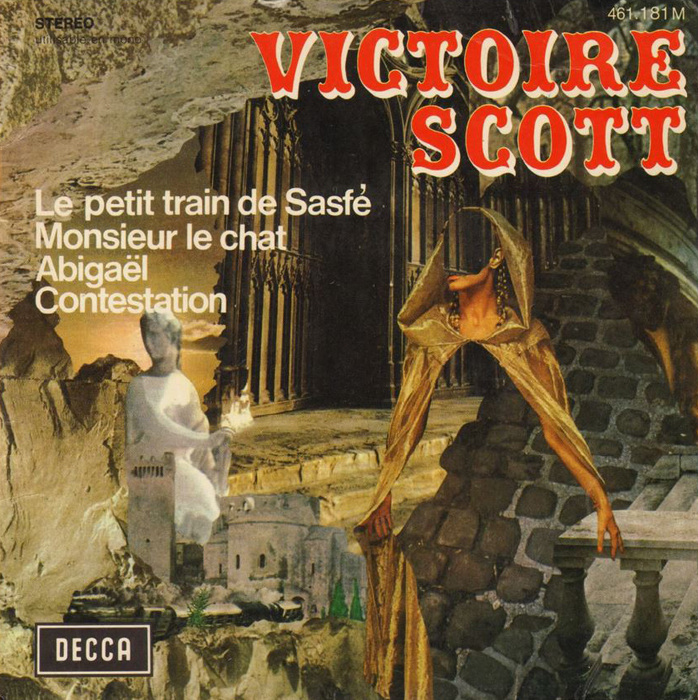
Her 1969 Ep “Le Petit Train De Sasfé” doesn’t just have that amazing surrealist collage pic sleeve, but it also includes the incredible haunting “Abigaël”, which I’ve always been in love with. This is Victoire Scott, her voice, her mystery, her sound, and her everything. Some other artists that I love of this time, would release a one off psychedelic track, perhaps it was a thing that they felt needed, to fit all that was so happening at the time. But in Scott’s case, I feel it was coming from a more genuine place.
Scott would release “Hey Mamma” in 1970, and now she’s moved more in to a harder edge sound, not too far from what the Beatles were moving into, with an early taste of glam, and guitar heavier than early releases. Then 1971 saw the release of her much more radio friendly “Bientôt San Francisco”. And this is where it stops for Scott and her recording releases…as far as I know.
I will always respect artist’s privacy, especially when I have no idea of what their recording experiences were like, or their lives at that time or in following years. So I have to appreciate if these singers and musicians prefer to stay secluded and away from recognition. But I also hope that they do know how much their music is valued and loved all these years later. So, please, if anyone out there knows anything about the wonderful and mysterious Victorie Scott, please shine a light!
– dj del Piero
* The Shamrocks were a phenomenon as they never charted in Sweden, but were the most successful Swedish Rock band in Europe in the the ’60s, and charted in German, France, Netherlands and even Japan.
Other things I found out:
Therion “Une fleur dans le cœur” in 2012.
Scott appeared on “Musicolor” in the Episode Les moyens de locomotion that aired on June 19, 1969.
Writing credits for “4ème Dimension” go to Guy Bonet and Christian Turban, the older brother of Alain Turban who covered this song as a disco track (!) in 1978 on Carrere.
Victoire Scott starred on Au Risque De Vous Plaire rare tv show directed by Jean-Christophe Averty. The clip below supposedly is taken from her appearance in 1968 and includes surreal artworks by Belgian surrealist Paul Delvaux and Dutch graphic artist M. C. Escher.
If you like this you may also like Maki Asakawa.
Vetty – Nicolas

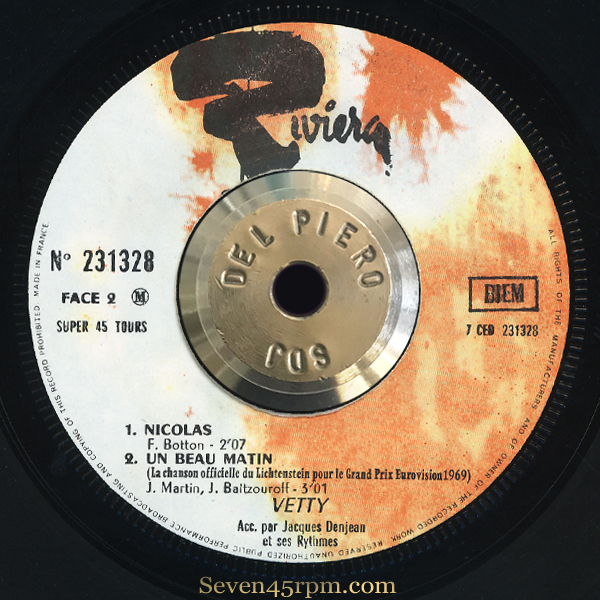
Riviera 231328 France Released 1969
Track B1 – Nicholas
Well here’s a favourite french 7″ that fits into a few categories. It’s beat ye’ ye’, it’s groovy French pop, it’s got a funk kick and it could definitely be filed under oddities. This is all I could find out about the mysterious Vetty that is behind this big rare french monster 45!
Yvette Levis was born in 1941 in La Croix Rousse, a small city high on the hill that shares the same name, in Lyon, France. In 1962 she was spending time in Switzerland and had a connection (possibly working) with La Chaux-de-Fond, in an establishment run by Jacques Marjo: La Boule d’Or, a few kilometres south of the French border. It is said that she started acting before any musical ventures, but I have no information as when and where this took place, in these earlier years.
In January 1966 she landed in Paris and took part in a game show, “Le Palmarès des Chansons” which was broadcast every week from 1965 to 1968 on the first French channel on television. On each show, a renowned singer is invited and young artists must perform one of this singer’s hits, or a potential new hit song, unknown to the general public. The winners were determined using a “computer machine”, where all the punched cards from the viewers where fed into and sorted automatically (this added a technical and modern side to the show). Some of the big french artists to appear on the show included Serge Gainsbourg ,Jacques Dutronc, Sheila ,Sylvie Vartan, Johnny Hallyday and Francoise Hardy. It is here, on this popular TV show, where Vetty was noticed and scored a three week opener for Gilbert Bécaud at the Olympia. Vetty then was able to jump onto another tour with a big name attached, the pop star Claude François, that really would have focused her in an even brighter spotlight.
In 1969, she recorded her only solo release, a 4-track EP titled “Vetty” through Riviera. On it’s release, the better known track was the opener “Johnny (Si Tu Viens À Saint-Étienne)”, co written by TV – radio host, comedian Jacques Martin. I am not an expert by any means with the French language, but I feel like it’s a call out to idol Johnny Hallyday from the fan girl. “Johnny if you come to Saint-Etienneuh, for one evening, I want to be yours”. A quirky and fun tune, but c’mon the real reason to sought this EP out is because of NICOLAS! My goodness what a track! This is as good as go go beat gets, and Vetty’s unique vocal, makes this such a stand alone track. Yes her odd vocal style, somehow fits this dance floor mover, and because of it’s peculiarity and distinctiveness, it actually demands attention! I don’t play this out much, but when I do, it turns heads and is responsive!
(Emma) Vetty would also appear on the “Petipatapon” LP, the soundtrack to a musical french show played at Bobino (Paris), April 1967. Recorded in 1968, the album would also feature Jacques Martin and chanson Catherine Franck, who sang the beautiful track Plus La Même (He’s My Little Devil).
So what happened to Vetty? I believe she found plentiful work through voice acting with children’s TV shows, and have read that she was the voice of the main character of the series “The Universe of M. Touchatou” from 1968 to 1970. She also toured with Nana Mouskouri in 1970, and for a time, worked in small theatre plays, and had a movie role in the 1983 film Sandy.
This is a prized 7″ and feel lucky to have found a copy a long time ago. Like I said, it doesn’t go into my dj box too often, but whenever I do play it, I’m just reminded how bizarre, great and gigantic this little Vetty treasure is!
– DJ del Piero
Mieko Hirota – On A Sorrowful Day
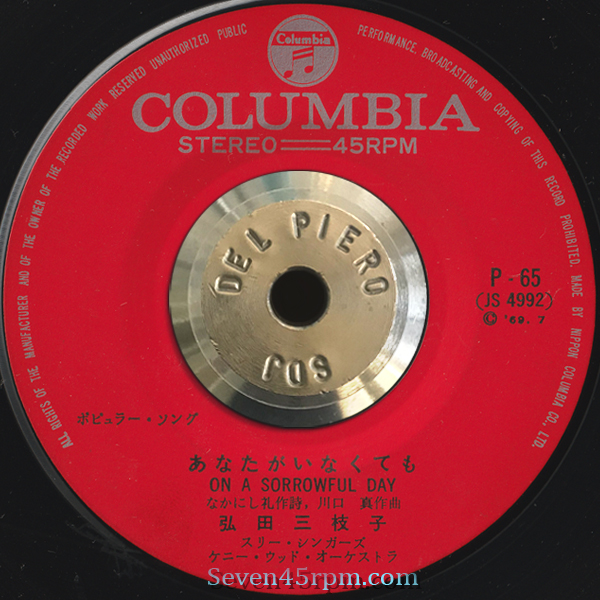

Columbia – P-65 Released 1969
Track B – あなたがいなくても On A Sorrowful Day
Here’s another gem from Japan, from perhaps a lesser known singer (well on our shores at least) which will always appeal more to me, but a track and artist I felt I needed to share. The singer was called Meiko Hirotota, had the nickname of Mico (also spelled Miko), and in Japan was very prolific and successful, releasing fourteen albums on Columbia between 1968 and 1977, (and a career totaling 35 albums) and was known in her country as “The Queen Of Pop”.
This will be another short and brief post, as I cannot find a lot about Hirota, which is surprising, considering her success in Japan throughout the late sixties, seventies and eighties. I’m really just trying to string together a few facts I have found out, here and there, into some kind of summary. So please reach out for any more info or helpful links! I would be most appreciative.
Hirota was born in Setagaya, Tokyo, on Feb. 05, 1947. She grew up listening to pop and jazz, and is believed to have started singing at US Occupation camps in Tachikawa, from the age of 7. Her brother who performed Hawaiian music, helped her with music and also learning the English language by teaching her nursery rhymes, while she was in Elementary school. By the time Hirota was 14, she had her first single release through Toshiba Records, in 1961. A cover version of Helen Shapario’s “Don’t Treat Me Like A Child. She would be releasing a lot of covers from the western world, in this early pop era of her career, following with “Vacation”, a Connie Francis’s cover, which in 1962, became a big hit for Toshiba and Hirato. 1962 would also see the release of her first LP, and she’d end up releasing around 35 albums in her time. Music critic Hisao Murata argues, “As a means of overcoming the problem of the Western rhythm, melody line and the language’s ability to communicate as a Japanese language, it is Mieko Hirota who invented English-like Japanese”. Hirota released around 25 singles through Toshiba in the space of 4 years, but in October 1964 she left the Toshiba music industry and moved to Nippon Columbia.

The world was changing it’s sound, and Hirota was maturing in her field, and developing more of a Jazz direction. Hirota recalls it was all because of a chance meeting in 1964, with jazz promoter extraordinaire George Wein on the Japanese Shinkansen bullet train, who convinced her that she had the range to explore Jazz. * In July 1965, Hirota performed with the Billy Taylor Trio at the American Newport Jazz Festival. This was a massive achievement to play at such a revered event, who’s line up also included so many esteemed musicians and groups such as John Coltrane Quartet, Thelonious Monk Quartet, Muddy Waters Blues Band, Dizzy Gilllepse Quintet, Drave Brubeck Quartet, Herbie Mann Octet, and the list goes on. Alongside Billy Taylor on piano, Hirota would have Grady Tate on drums and Ben Tucker on Bass. **
Her first Columbia LP release in 1966, was “Miko In New York” accompanied by the Billy Taylor Trio. There’s some beautiful work here from Hirota, covering some great standards including Torme’s “I’m Coming Home Baby”, and apparently the first Japanese woman to cover bobby Hebb’s Sunny. Hirota would then release a bunch of live albums, including “Exciting R&B Vol.1 and Vol.2” which mostly were covers, but with more zest and live energy (The live version of “I’m Coming Home Baby on Vol.2 is pretty great).
Hirota’s featured single from 1969, “On A Sorrowful Day” is her “swingiest” beat dancer release for sure. Far more fun and I’m sure hip to what was charting at the time of the late sixties in Japan. Lot’s of go go action with this one, with that great kinky beat and swinging horns. I have to say, as is common with the genre, to my ears there’s some similarities here, to other songs from the popular artists of that scene, which is something I actually love about this sound. The opening verses have very similar phrasing to Jun Mayuzumi’s “You And The Sun” and Segawa Mieko’s “Asa Ga Kurumaeni”, but the flavour here is more sultry coming from Hirota. In her huge catalogue of music, this is a groovy track that is more to my taste for sure, and somewhat overlooked I feel.
Hirota would keep releasing music for a very long time, and continued to have a huge fan base in her home country. She also worked a lot in the commercial world with diverse promoting from Japanese beer to coffee brands. And she will always be lovingly known as the voice to the theme song, “Leo no Uta”, for the animated television series Kimba the White Lion. Hirota died on July 21, 2020, at the age of 73 following a fall.


Research and referencing…
KIYOKO ITÕ – Hoshi Kara No Tayori

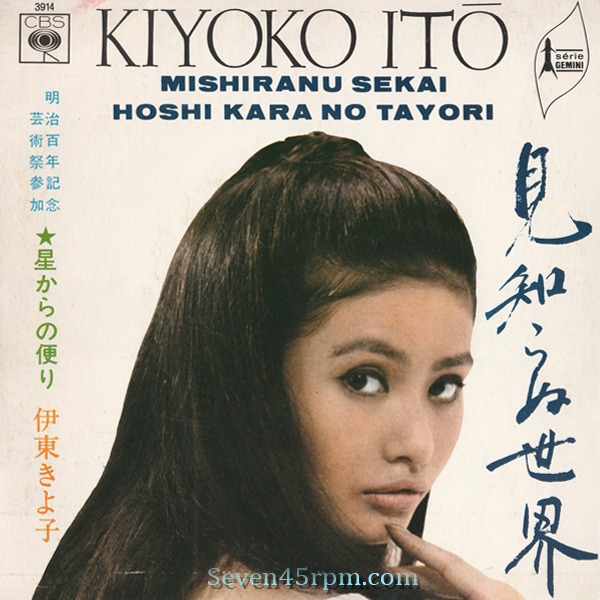
CBS/Sony – SONA 86009 Released 1968
Track A – Hoshi Kara No Tayori (A Letter From The Stars)
Here is a “drifty” sweet release from Kiyoko Ito with a beautiful sprinkling of psychedelia. Perhaps more tempered and whimsical than my normal up beat dancers from the sixties gals, but it’s too good to not share this one!
There’s not very much I can find on Kiyoko, other that she was born on January 24, 1947, possibly in the northern island of Japan, in Sapporo, Hakkaido. After graduating from Aoyama Gakuin High School in 1964, she entered Takarazuka Music School. She passed the audition for Toho’s International Dancing Team and appeared as a dancer in the musical “No Strings” in June, but gave up dancing due to Achilles tendonitis. As a result, she dropped out of the music school.
Focusing on the folk songs that were popular among Japanese youth at the time, she decided to become a singer, and made her debut at the 1st Folk Song Festival held at The Nippon Theater on December 19, 1965. The following year, in May 1966, she passed the audition (of over 300 Japanese singers) for the popular American folk group New Christie Minstrels and became an official member. A group not really to my tastes, but they did have have amazing talent go through the ranks, such as Kim Carnes and Kenny Rogers. She went straight to the United States and remained with the group until her Visa expired in October.
 After returning to Japan, she signed a contract with Watanabe Preofessionals, and had her debut single in June1967 on Nippon Columbia’s CBS label with the song “Hana to Kojisan” written by Kurunosuke Hamaguchi . This became her first hit! For some reason, I cannot find this in any of her catalogue listings, let alone a recording or clip, but I’m sure it’s out there somewhere. I’m sure it’s just lost in translation. Ito then would go on to record twelve 7″ singles with the CBS/Sony label, as well as three albums, between 1967 to 1975.
This featuring track “Hoshi Kara No Tayori” (A Letter From The Stars), is actually the B side to her euphonious upbeat Mishiranu Sekai single, one of three releases from 1968. Both sides of the single also appear on her 1969 LP Ballads Of Love. The year 1968 and sitars go hand in hand, and so many pop artists would experiment with introducing this sound with at least one song release of that year. And I’m ever so thankful for that! The trippy sitar introduces the song, a beautiful flavor that mixes in with the percussion and that 60’s bass that soon enters. A sweeping harp, then we receive Ito’s voice. I really wish I had a translation to this song. Of course it’s not always needed, especially in this case, as we are taken away and fall lusciously into her vocal clouds, but I do imagine the lyrics are about spirit, love and innocence. And it does after all translate to A Letter From The Stars.
As far as other release from Kiyoto Ito that take me away to that faraway dreamy place, she released the beautiful “Namida no Binzume” as a 1969 single, and is just as delightful as the featured track, sans sitar and psychedelics. This track also appears on the Ballads Of Love LP. I also love “Hana No Madonna” also from 1968, and a bit more of a dancer. And for your exotica lounge soiree, the 2 sider “Talking To Myself” and “Soon Will Be Morning” 7 inch from 1972, is an absolute goodie!
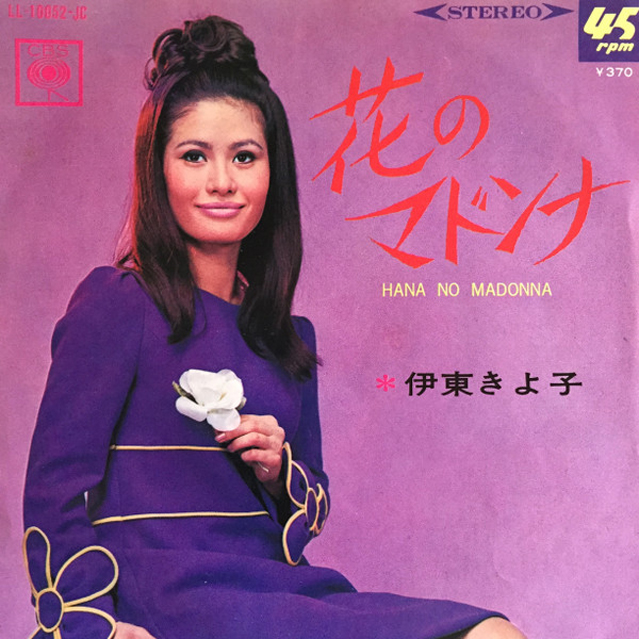

So there you have Kiyoko’s sweet, psychedelic love song release, and after a few listens, like a whispering haze, I’m sure it will seep delightfully into beating heart. I would love to be enlightened on anything more about this wonderful singer, from anywhere out there in the world.
– DJ del Piero
André Previn – Rollerball OST – Executive Party


United Artists Records – UA 36 033 Releaesed 1975
Track A: Executive Party
Track B: Executive Party Dance
Jazz influenced classical music composer-conductor, Andre Previn was responsible for one of the most funkiest spaced out film tracks you will ever hear, called Executive Party, released for the Rollerball soundtrack in 1975. Although I had watched this movie numerous times, the first time I really gave this track some serious and well deserved attention, was when I purchased the The Mighty Mellow (A Folk – Funk Psychedelic Experience) compilation in 1997, from the infamous Sydney record store Good Groove, which was recommended by the owner Tom. The comps linear notes and information was vague, mixed up and song titles were incorrect. I was certain that Andre Previn was incorrectly credited until I discovered it was from his Rollerball soundtrack.
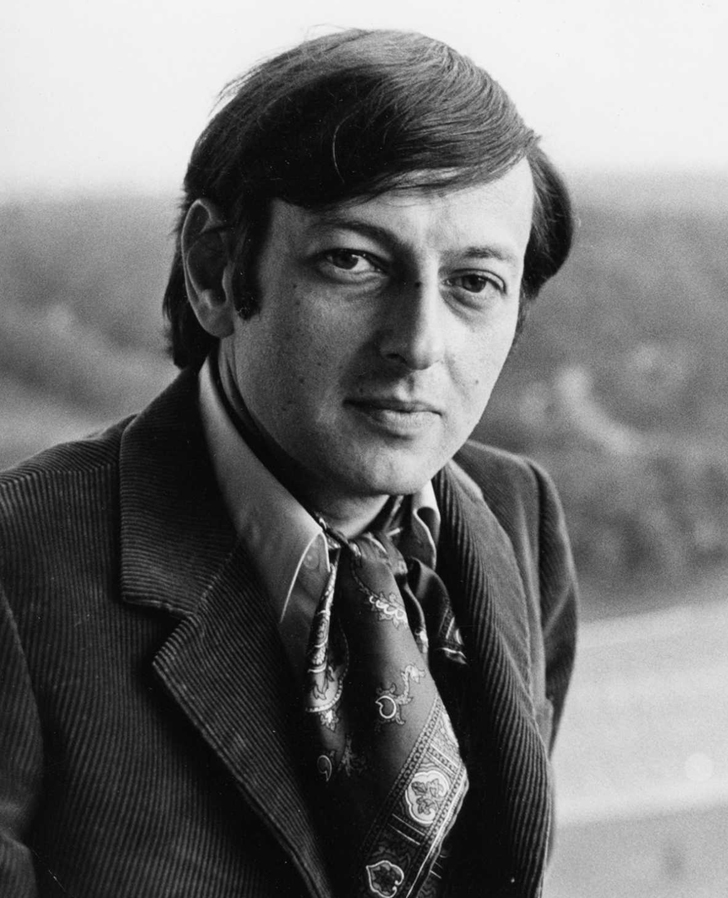
Previn was born in Berlin to a Jewish family, with three children of Charlotte and Jack Previn, a father who was a lawyer, judge, and music teacher. All three children received piano lessons but André was the one who enjoyed them from the start and displayed the most talent. At six, he enrolled at the Berlin Conservatory. In 1938, Previn’s father was told that his son was no longer welcome at the conservatory, despite André receiving a full scholarship in recognition of his abilities, on the grounds that he was Jewish.In 1938, the family left Berlin for Paris, and Previn’s father enrolled him into the Conservatoire de Paris where he learned music theory. In 1938 his family left Paris and sailed to New York City, then their journey continued to Los Angeles, and Previn learned English, his third language after German and French, through comic books, reading the dictionary, and watching films.
In 1946 he graduated from Beverly Hills High School, but had already started working for Metro-Goldwyn-Mayer as a composer-conductor, and arranger, after their music department noticed his work for a local radio program and hired him. Previn recalled that MGM was “looking for somebody who was talented, fast and cheap and, because I was a kid, I was all three. So they hired me to do piecework and I evidently did it very well”. Previn focused his attention on film scores and jazz, and stayed at MGM for 16 years, but despite the secure job and good pay, he had come to feel increasingly confined, and consequently desired to pursue classical music outside of film scores. He resigned from MGM at 32, wanting “to gamble with whatever talent I might have had”.

Previn would branch out into classical music, theatre, easy listening music and contemporary classical music. His jazz recordings, as both leader and sideman, were primarily during two periods: from 1945 to 1967, and from 1989 to 2001, with just a handful of recordings in between or afterward. Previn was involved in creating the music for over 50 films and won four Academy Awards* for his work, and in 1966, Previn was the first person in the history of the Academy Awards to receive three nominations in one year. Some of his releases that I lean towards to, are two collaborations…Ravi Shankar & André Previn – London Symphony Orchestra Concerto For Sitar & Orchestra, from 1971, and the Valley Of The Dolls soundtrack, which was conducted by John Willams, and feature song composing by Previn and his then wife Dory, who was a poet, lyricist and singer song writer. I’m also a admirer of his Holst release of The Planets, Op. 32, in 1974.
Rollerball is a classic seventies sci-fi action film, with a large cult following and a very iconic look. It was directed by Norman Jewson, who had also directed The Cincinnati Kid (1965), In The Heat Of The Night (1967), The Thomas Crown Affair (1968), amongst others. These all did well for him, and taking on this dark, futuristic, violent action film, must have been a challenging curve ball he was looking for.
The Storyline: In a futuristic society where corporations have replaced countries, the violent game of Rollerball is used to control the populace by demonstrating the futility of individuality. However, one player, Jonathan E., rises to the top, fights for his personal freedom, and threatens the corporate control (IMDB – Jeff Hansen). The film is based on a short story by William Harrison’s “Roller Ball Murder”, first released in Esquire magazine in 1973. Although Rollerball may first look like a science fiction sports movie, it’s actually a deep philosophical look into a dystopian future, and looks into government control versus free will. James Cann plays the hero Jonathan, the ultimate champion and hero of Rollerball, and is adored by masses of fans of the blood sport. But he is getting on, well for a demanding sport that is evolving by becoming increasingly more violent. However the head of the energy corporation who runs society, wants him to retire, but when Jonathan refuses, things get intensely dangerous, and the game becomes a fight for his life. The film demonstrates that the individual can triumph over insurmountable odds and cautions against corporate control of society.

Jewson was a big fan of A Clockwork Orange, and used the film as a reference point for defining a world of concrete and steel imagery. He also adopted the idea of using classical music for this fierce movie, because of Clockwork, and also 2001 A Space Odyssey, and believed the timeless score would less likely age the film in the future. Previn composers The London Symphony Orchestra to perform Shostakovich’s Symphony No. 5 movements to establish tone, mood, and atmosphere for certain scenes, and also cunningly uses Tchaikovsky’s Sleeping Beauty Waltz for action and drama. Bach’s Toccata and Fugue in D minor plays during the opening title sequence and again at the final scene, book-ending the film. Previn wrote the space jazz track Executive Party and it’s lounge accomplice Executive Party Dance, and as isolating as they may seem on the album, they sit well within the more laid back dining scenes in the movie. Unfortunately Executive Party, one of my most favourite soundtrack instrumentals of all time, clocks in at only 1. min 47sec. But there’s also something nice about that.
These two tracks may feel odd or misplaced on the LP, amongst Previn’s composed The London Symphony Orchestra works. And I’m sure many like myself, that knew this track, before finding a copy of the soundtrack, were expecting and hoping for more wigged out grooves, like these featured tracks. But it shows us the diversity and dexterity of Previn’s mind, and how he was an artist of all musical styles. After learning more about Previn and this soundtrack, I like how the tracks sit amongst the classical tracks on film and on vinyl. I do admit I wish there was more of this to be found in his extensive catalogue, but I’m ever so grateful that these tracks not just made their place onto the LP, but also were released as 7″ singles.
* Previn won four Academy Awards for Gigi (1958), Porgy And Bess (1959), Irma La douce (1963) My Fair Lady (1964) and was nominated 11 times.
Previn was married four times which included 9 years with Mia Farrow.
Newsom has been nominated for the Academy Award Best Director three times in three separate decades for In the Heat of the Night (1967), Fiddler on the Roof (1971) and Moonstruck (1987).


Japanese and French movie poster releases.
If you like this kinda stuff, check out some other soundtrack titles I’ve dug into….
Berto Pisano featuring Doris Troy – Kill! Them All!
Ennio Morricone – Svolta Definitiva (Città Violenta)


RCA SS 1985 Japan Released 1970
Track A – Città Violenta
Track B – Svolta Definitiva
Legendary master composer Ennio Morricone, is behind the soundtrack for the 1970 film Città Violenta, and this Japanese single release gifts us with two outstanding tracks from Sergio Sollim’s film. Italian soundtrack collectors…you need this!
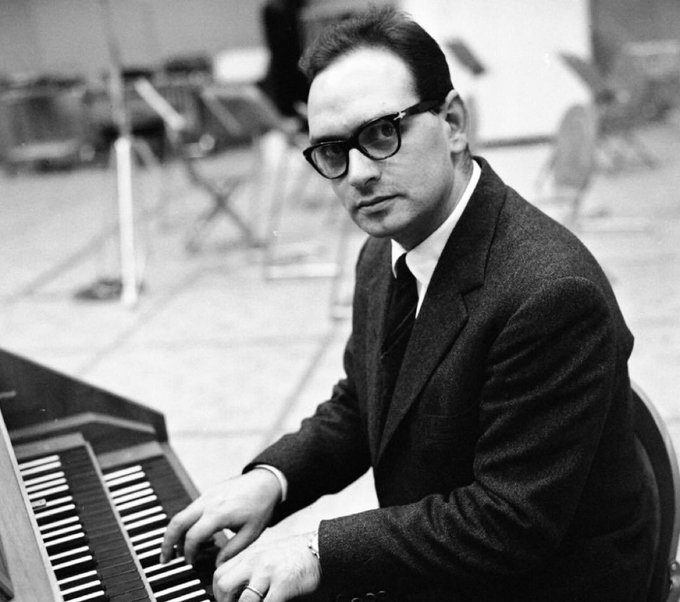
Morricone was the unquestionable leader for scoring Italian cinema, and although he achieved wide recognition with Sergio Leone’s series of Westerns, we all are aware of his diverse range of colour, style, methods and moods. He was always exciting and knew how to create atmosphere, even if it was a totally new angle, and opposing the predictable. I get this feeling, when Ennio was composing scores for these kind of action thrillers of the 60’s and 70’s, it’s like he’s at the wheel of a Ferrari Dino 246, steering us in and out of dangerous and intense situations, speeding up, slowing down, then flooring it even more. And when things are calm, you’re still anticipating the unexpected. Morricone knows how to create atmosphere. He invented it for this era of cinema, and today we still love it, because it just belongs…it’s the right time and place for his mastery. Yes, we all are aware of Morricone’s talent, but what we have to keep reminding ourselves, is the amount of work he was producing and the variety of projects he was taking on. In 1970, the year Città Violenta was released, I count Morricone’s soundtrack tally to 15 films just for that year alone!
Directer Sergio Sollim’s crime thriller is released as Città Violenta in Italy, but it also had two additional releases in the US, the first as Violent City, then a later and wider release as The Family. This was an intentional name change for the 1973 release, to try and jump on the success of The Godfather that had been released the year earlier in 1972. The marketing department were even influenced by the famous Godfather font, with some blatant borrowing. This would be Sollima’s 7th (I think) feature film and would call on Morricone again, for his talents to score his new film as he had done with 3 of his earlier films, The Big Gun Down, Face to Face and Run, Man, Run, featuring Christy. I can assume their working relationship together was reverent and successful, however all Sollima’s three previous films they collaborated on, were westerns. I’m not sure how Sollima discussed or briefed sound concepts with Morricone for Città Violenta, but with hindsight, it would definitely become a new sound for his film catalogue.

Città Violenta carries some good acting talent as well, with Telly Savalas, Charles Bronson and his fairly new recent wife, Jill Ireland (Ireland’s former husband-actor David Mc Callum, first introduced them on the set of The Great Escape in 1963). Bronson was just becoming a major star in Europe after the success of recent and broad films such as London Affair, Adieu l’ami, and Sergio Leone’s Once Upon a Time in the West, and for a good period of the seventies, he would rival Clint Eastwood as the biggest movie star in the world.* So it’s great to see Bronson here at this important part of his acting career, and working alongside his wife. That same year and Bronson would also star in Cold Sweat, directed by Terence Young, and again co staring Ireland.
Synopsis – Jim Heston (Bronson) a professional hit man, is left for dead after a double cross murder attempt by a his wife Vanessa Shelton (Ireland) and another hit man. The set up costs him four years in jail, but when he gets out, he sets out to take revenge on his wife and the mob who put her up to it. He finds himself blackmailed by a powerful crime boss (Savalas), who wants the fiercely independent gunman to join his organization. Jeff who wants to leave that line of work, refuses, and is hunted by killers for the effort. Vengeance and love drives him through detrimental roads of uncertainty and it’s consequences.
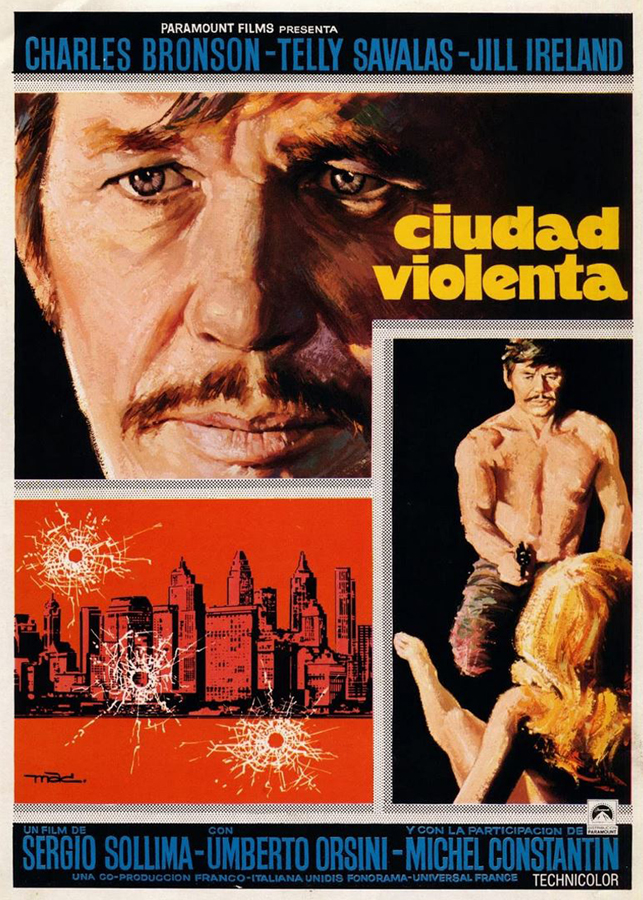
The opening title sequence is beautifully stylised and features the main theme Città Violenta, straight up creating a mood of excitement, intrigue and suspense. And what soon follows, is a exceptional and insane thrilling car chase in the small streets of a tight Italian country town, where Sollim decides to take away the music for impact, and unusual but very effective decision for action sequences. I know when I’m discovering a new soundtrack track list, I usually go straight to the “car chase” theme, as it’s usually the one with the big beats and drive. So audiences are right in from the get go, and you already can tell this is no novice in the directors chair. Sollim knows about the film making and how music can be used to paint, just as much as visuals. And he wouldn’t be afraid to NOT use it, if he felt it may deter from story or action, or if it felt too predictable or typical to do so. The track Città Violenta gets a good run through the film as does a few nicely composed variations on the theme, but it is all for a reason. Svolta Definitiva is the perfect background music to a bar sequence where the patrons are the in-crowd… a bit hippy trippy, but an exclusive scene. Models, dancers and gangsters. It’s perfect! I have loved this track for many years before I knew this movie, and I was so please to discover that it belonged in such a great sequence! Later in the film we get some memorable hard hitting and surprising moments, and again Sollim creates such an impact with his music direction, and how effectively he uses it, and again, not uses it. Together the movie and music direction entwine effortlessly and results with a strong action film of it’s time, that both hold proudly in their catalogue of successes.
And this is also why Morricone’s music is so revered today. The impact it leaves on the audiences. His scores are often considered as much as part of the experience, as the story or cast of the film. A lot of the times, his scores are more remembered than the films itself. But in this case Città Violenta is a perfect score to a great crafted Sollim film. – Piero Sgro
Here is a link where you can watch Sollim’s Violent City, which is a nice print, but note that it will only on the occasion, revert to Italian dialogue every now and then. But it’s a good source.
Other Ennio Morricone scores for Sergio Sollima…
- The Big Gun Down 1967 (La resa dei conti) lit. ’The Settling of Scores
- Face to Face 1967 (Faccia a faccia)
- Run Man Run 1967 featuring Christy (Corri uomo corri)
- Devil in the Brain 1972 (Il Diavolo Nel Cervello)
Piero Umiliani scores for Sergio Sollima…
- Agent 3S3: Passport to Hell 1965 (Agente 3S3: Passaporto per l’inferno)
- Agent 3S3: Massacre in the Sun 1966 (Agente 3S3, massacro al sole)
* Sergio Leone once called Bronson “the greatest actor I ever worked with”, and had wanted to cast Bronson for the lead in 1964’s A Fistful Of Dollars. Bronson turned him down and the role launched Clint Eastwood to film stardom. The film was the biggest hit of 1969 in France.
Image 1 – Ennio Morricone (photo credit unknown)
Image 2 – Charles Bronson and fellow actress wife Jill Ireland (photo credit unknown)
UPDATE Alternate version of Violent City
– Everlasting Screen Themes
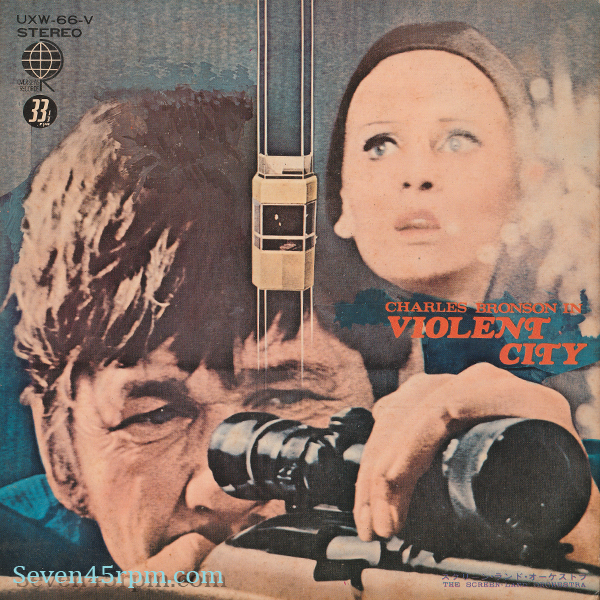
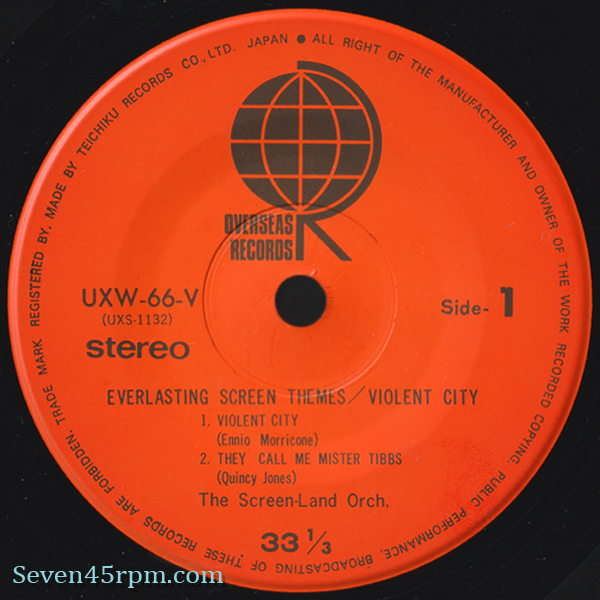
JAPAN Overseas Records UXW -66-V
Track 1: Violent City
Here is a Japanese alternate version of Violent City, that’s pretty great and different enough from Morricone’s original. Had to share this also. This rare EP also includes a wild take on Quincy Jones’ Mr. Tibbs.
Berto Pisano featuring Doris Troy – Kill! Them All!


CineDisc – M-5 Released 1972
Track A – Kill! Them All!
Italian composer, conductor, arranger and bassist Berto Pisano is behind this wild score for Romain Gary’s 1971 film Kill! Kill! Kill! Kill! This Japan release of the single includes the explosive main track with Doris Troy providing some beautifully brutal vocals, and also includes the lovely instrumental main title theme on the flip! Stand back! This is explosive!
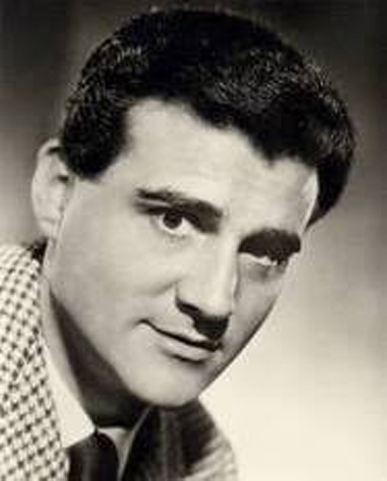
As brilliant as Pisano’s work is, I can’t help feeling his musical accomplishments are still very overlooked, and when I went searching for anything on this incredible musician and important composer, I really couldn’t come up with much at all, which may sound familiar… and it’s unforgivable! I do know Umberto Pisano (real name) was born in Cagliari,on October 13, 1928 and passed on January 29, 2002, and was the younger brother of Franco Piano who would also in time, become a composer and conductor. Berto began his career as a jazz musician playing the bass, first in Quintetto Aster (this was during WWII, then working for the allied radio and Radio Sardinia) and later in Orchestra Gli Asternovas along with his brother on guitar. This group would release around ten singles, more in the style of Latin pop jazz, between 1960 to 1961. Really quite a lot of records in a short time span.

When I look through Berto’s discography, his first soundtrack release is in 1966, a single release, the track is called Ma Se Tu Vorrai featuring Ella Gaby, for the film La Spia Che Viene Dal Mare (directed by Lamberto Benvenuti and starred the statuesque model Janine Reynaud). I’m not sure how Berto made this transition into Italian film scores, but already you can hear something pretty strong developing here, that would be a trade mark staple sound. Big band Bond-esque like orchestration with big dramatic Italian vocals by Gaby, would become a popular style for Italian cinema in the sixties. I also wish I could find out more about Ella Gaby, who only had one other single release that same year in 1966.
1967 draws the release of Pisano’s western soundtrack to the film Bill Il Taciturno, also titled Django Kills Softly and one of many films that were given a “Django” title in order to cash in on the success of Sergio Crobucci’s 1966 masterpiece “Django”. Directed by Massimo Pupillo, a film from what I read from quite a few reviews, follows a lot of typical western formulas of that time, and I feel I have to say the same about the score. Both tracks on the single release are great, but yes, sounding very “borrowed” from the Morricone path that was already heavily cemented. This really isn’t a bad thing as it really ties in well with the genre, with big iconic horn instrumentation and chorale. I did find the whole film on line so I am keen to have a good watch, although I will have to brush up on my Italian.

Interrabang was Pisano’s followup single in 1969 and this one is a delight and more towards my erotic kitsch tastes! So this is the storyline… A photographer is sailing with his wife, her sister and his nympho-maniacal model. He leaves the three women alone to get a part for his boat. A mysterious man shows up, who might just be an escaped criminal the police are searching for. This doesn’t alarm the three women too much, and he rapidly seduces all three of them. Directed by Giuliano Biagetti and starring the radiant actresses Beba Loncar, Haydée Politoff and Shoshana Cohen, this is again another film I have yet to see in it’s entirety, but what I have seen, is pure 60’s kitsch Italian film making with it’s adult vibrancy, Pucci paint strokes and it’s stunning water locations. Pisano has managed to bring in the great Edda Dell’Orso for this soundtrack, which is always the exact right thing to do, and takes things up to the next level. You can hear her beautiful distinctive voice on the single release of Il Colore Degli Angeli. This film would also give Pisano his first LP soundtrack release in 1970. *

KILL! So here we are, 1971, and Berto Pisano presents the soundtrack to Romain Gary’s second film after Birds In Peru (1968). Where do I start? This film was also released as Kill! Kill! Kill! Kill, and starred Romain’s wife Jean Seburg, Stephen Boyd (Fantastic Voyage) and also one James Mason who starred in one of my favourite childhood movies Journey to the Center of the Earth. If you have the opportunity to watch this movie, you will need to hang on with both hands as it’s a bizarre roller coaster ride which will go off the rails! When the story begins, a big-time drug kingpin is inexplicably released by a judge, and as a result, most of the drug detective agents resign in protest. Hamilton, a Federal Narcotics Bureau Chief Inspector (Mason) remains on the job and is sent by his boss to Pakistan with $5 million worth of heroin, in hopes of unmasking a global narcotics kingpin. At the same time, heroin dealers around the world are being assassinated. Hamilton’s bored wife Emily (Seberg), secretly follows her husband in hopes of joining him on this insanely dangerous mission. Emily is soon lost and alone in a foreign land, is stalked by hitmen, but is also aided by rugged, ex-cop, potentially unhinged American Brad Killian, who by the way, has a personal mission to slaughter everyone involved with the heroin biz – transporters, processors, corrupt cops, scumbag lawyers…everyone! Brad also takes home movies of his executions and enjoys watching them afterward, with an equally-drug-loathing 12 year old Arab boy (yeah…pretty weird right?). Emily quickly falls for Brad, although she tells him she hates him and he’s insane…possibly because she craves the excitement of his murderous ambitions?

Pisano’s Kill! Them all! is the perfect savage and explosive introduction to this film, which embraces the high powered voice of R&B singer Doris Troy! Immediately your punched in the face 4 times with the impact of the opening horns. The driving bass, background fuzz, and the spine chilling grit of Troy’s voice, to Romain Gary’s lyrics, is absolute! The whole structure of this composition is pure accomplishment, with it’s build ups and it’s quiet junctures, and I will say this has to be one of the top of all time, title themes for any thriller action film, period! The film would also have an LP release is with original copies of course being incredibly difficult to get your hands on. Again Pisano brings in Edda Dell’Orso for the beautiful track To Jean, which alone makes this LP a must have. But there’s also beautiful instrumentals including the dizzying Allucinazion, the transcending Indian inspired Khanpur, and further hypnotic tracks Il Deserto and Souk Tawil. As a side note, Tennessee blues artist Memphis Slim performs in a surreal nightclub sequence filled with trippy sensual naked women, which does not appear on the LP release.

I couldn’t imagine anyone else fronting this killer big beat track other than Doris Troy, and when I first heard this, I had to check it was the same Doris that gave us Just One Look and What’cha Gonna Do About It? The daughter of a Barbadian Pentecostal minister, that cut her teeth singing in her fathers choir, with parents that both disapproved of “subversive” forms of music like rhythm & blues. A hard and more gutsy song perhaps for Doris, but it shows us a side of her diversity, which would bet proven more and more times in her future recording career. She would go on and contribute her voice to The Rolling Stones, Carly Simon (You’re So Vain), Pink Floyd (Dark Side Of The Moon), and also Nick Drake, Dusty Springfield and a heap more.
This Japanese release featured here, has an exciting flip, an instrumental less abrasive version of Kill Them All! It has beautiful cover art with striking font, and the production quality on this is super clean and loud (as most of these Japan pressings are). There’s also an Italian release on General Music which includes a surprising Jean Seberg track Hiasmina, also composed by Pisano. Her only recording that I could find and although she’s not really “singing”, it is a lovely treasure that exists.
Pisano would further more, work on jazz instrumental albums and soundtracks and would continuing recording with Edda Dell’Orso, including on the soundtrack La Novizia (recorded in 1975 but just properly released by Four Flies) and La Svergognata (1977). While his recording legacy isn’t as accomplished and extensive as some his other colleagues, I highly recommend if you haven’t already, to take a dive into his works! And like I said, I would place Kill Them All! extremely high up and as one of the best and sublime film theme tracks of all time!
Referencing…
Shock Cinema – Great stuff here!
* An interrabang (more commonly interrobang) is a non-standard punctuation mark combining through superimposition a question mark and an exclamation point. It was invented in 1962 by an American advertising executive Martin K. Speckter.
If you find this genre interesting you may also like these…
Kay Bell and The Spacemen – Scream Along With The Monster

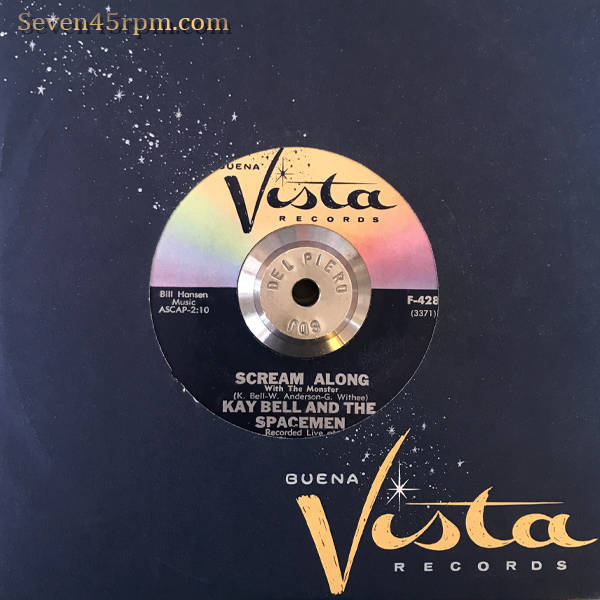
Buena Vista Records – F-428 Released 1964
Track B – Scream Along (With The Monster)
Well it’s HALLOWEEN again, and that means it’s time to pull out some of my dearly beloved spooky records from under the bed! This year I’ve chosen to feature this incredible Kay Bell and the Spacemen track, because in my eyes it’s one of the absolute best if you’re up for spooks and frightful delights! EVERYBODY SCREAM!!!
Kay Bell was at one point, one half of the youthful and famous pop duo, The Bell Sisters, the other half being her big sister Cynthia Strother. Born in Kentucky, they have four sisters and one brother, and as performers the duo would adopted their mother’s maiden name of Bell. Cynthia 16, and Kay, being only 11, were discovered on October 31, 1951, singing “Bermuda” on a Los Angeles television program called “Peter Potter’s Search for a Song.” The song was released in 1952, it reached #7 on the Billboard charts and sold in the millions, and The Bell Sisters pretty much became a household name, particularly in the US.
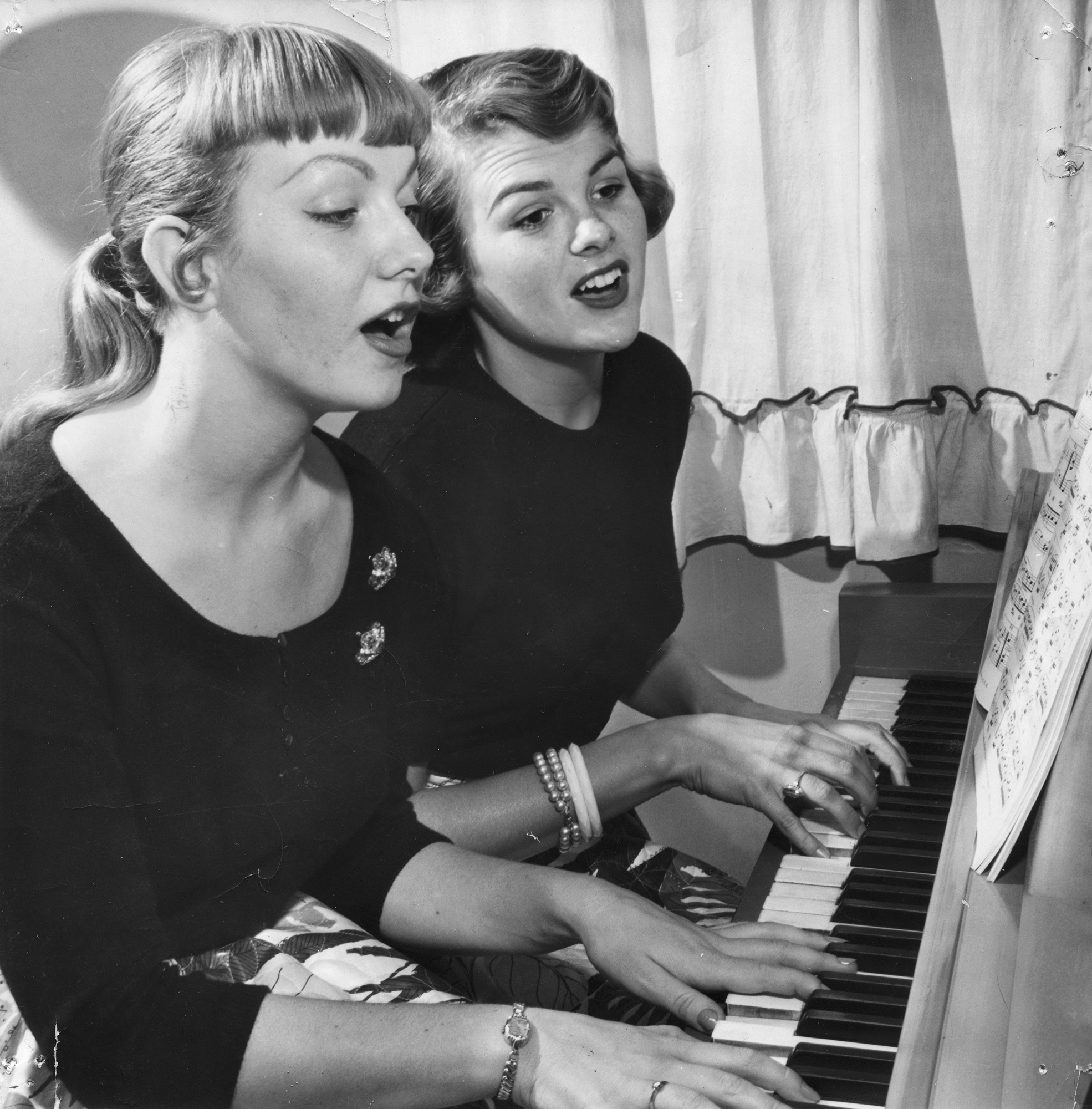
They enjoyed a roller coaster ride of success, eventually releasing eleven records (22 songs) for RCA and hitting the charts again with “Wheel of Fortune” (#10). They appeared on many popular radio and television programs, including The Johnny Carson Show, The Frank Sinatra Show, The Perry Como Show and The Dinah Shore Show. They appeared some 14 times with Bing Crosby and Bob Hope and opened for Nat King Cole in Los Angeles and also worked with greats Kay Starr, Rosemary Clooney, Lucille Ball, Tony Curtis, Dean Martin, Jerry Lewis, Mel Torme. They took their act on the road (during school breaks) and performed in big cities including New York, Dallas, and Las Vegas.
They also made it onto the big screens, working on the movies Cruisin’ Down the River (Columbia, 1953), Those Redheads from Seattle (Paramount, 1953) and Les Brown Goes to Town (Universal).
Kay Bell would start venturing into solo projects around 1959, singing in ballrooms and performing and broadcasting on radio. In the early sixties, Kay worked with the Space Men (Johnny Schmidt and Sonny Anderson) and scored a residency at the Disneyland Space Bar (now known as Tomorrowland Terrace). She performed with them as many as 6 nights a week, even while attending Long Beach State College for her Bachelor of Arts degree in English. She recorded a single as Kay Bell & The Tuffs called Surfers’ Stomp in 1961, written by Schmidt and Anderson and released on Dot.
Kay performed on a couple of live television broadcasts from Disneyland in 1962, on what was a regularly Saturday night screening “Meet Me at Disneyland”, on the Tomorrowland theme episodes Swingin’ Through Space and Talent On Parade. In September 1963, Kay Bell and the Spacemen recorded live two tracks, Surfer’s Blues and Scream Along With The Monster, written by Kay Bell herself (and W. Anderson).

Scream Along With The Monster starts with a VERY familiar “Comin’ Home Baby” groove, which is fantastic, as many innocent listeners would believe they know what they are expecting, when I play this track. But the twist is quick, and Kay Bell is superb in her delivery, preparing you for with what you need to do when you hear green eyed monster’s horn! The energy becomes more frantic as the song progresses, and after two short versus, you can’t help but feel an obsessive need to join in with the screams! I love that this was recorded live! Surely they must have prepared the audience to give them their all, before they pressed record! It’s so much fun but just too quick, but then again, like a fast roller coaster ride, it can leave you out of breath! Surfer’s Blues starts as a bit of a Jazzy stroller but quickly unleashes into a bit of a grinding savage beast with raunchy chaos and beats! Kay really enjoys showing off her vocal skills on this one and it’s such a bonus to have it on this single!
Unfortunately this was the only release from Kay and her Spacemen, and it makes me wonder about all the fun that would be had, listening and dancing to all those live performances they all played together, in those years of the sixties.

Now it’s important I mention, everything I found about about Kay and Cynthia, and the Spacemen, is attributed to the Bell Sisters official website put together by their nephew, who has nicely packaged and categorize a great amount of articles, photos and timelines, he’s been able to unravel about his aunties. So please jump over and dig in, and find out so much more about these incredible talented ladies. There’s also a great FaceBook page with a heap of great images, memories and dedications (links below for both).
Scream Along With The Monster is the ultimate Halloween party track to have, but I really believe it’s just too good to play once a year, so if you are lucky enough to have a copy, people always need a good scream, so spread it out there!

Top Photo from Bell Sisters FaceBook page – Cynthia and Kay 1956.
Middle Photo from Bell Sisters FaceBook page – Kay Bell performing at The Space Bar (Tomorrowland Terrace) at Disneyland January 1965.
Lower Photo from Bell Sisters FaceBook page – Kay Bell and The Spacemen – performing at The Space Bar (Tomorrowland Terrace) at Disneyland.
Patrizia Pellegrino – Automaticamore
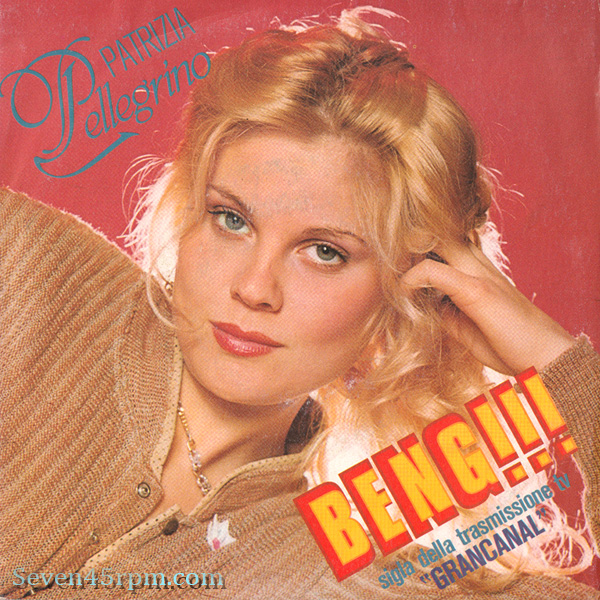

CGD 10322 Italy Year 1981
Track 1 : Automaticamore
I’m a bit of an Italian “disco” victim and can go weak at the ginocchia (that means knees apparently) when I hear that particular chemistry of new wave electronica, a breathy Italian voice, and a polished spaced out production, combining as one beautiful moment of sound. This lovely track from Patrizia Pellegrino, came out in the early 80’s when this sound was in it’s element. It is a specific genre from a particular time, with a tone I’ve always loved, maybe because it takes me back to my very early teen days, when this “new” exciting style was emerging. While I never had access to this particular Italian style of new wave synth disco back then, it somehow still feels like it fits in to the hair gel scene was I discovering in the early eighties. I’ve been obsessing over this era of Italian dance music for some years, and thought this track from Patrizia, would be a good one to share.

Patrizia Pellegrino was born on July 28, 1962 in Torre Annunziata, Campania, Italy. She is an actress, producer and TV presenter, and today is still a much admired celebrity figure. She released 6 singles between 1981 and 1991, on various Italian labels, and most to me, feel very aimed towards the commercial pop dance floors. It’s very difficult to find any sales numbers for any of these singles, as it was such an inclusive euro market and scene, but that’s not to say her songs weren’t popular. I’m sure they were well loved sound tracks to many.
The stand out for me in Pellegrino’s catalogue is this track Automaticamore, which happens to be the flip side of her debut single Beng!!!. Arranged and directed by Jean-Pierre Posit (real name Claudio Gizzi), a name unfamiliar to me, but after looking up his credentials, looks like he was responsible for releasing quite a number of “easy listening” instrumental recordings throughout the seventies and eighties. After a bit of a dig into his library, Saint-Blas from 1975 would be my top pick which has a really nice synth jazz percussive soundtrack feel to it.
The production on this beautiful mid tempo track is clean and bright, and has a classy Giorgio Moroder feel to it. Pellegrino’s distant whispery voice is mixed so nicely with the defined bass lines and the period correct staccato muted guitars, along with the bright and saturized keyboards and synthesized choir lines. It’s so beautifully eighties and a perfect journey into the stars! This is a nice one to play over a cocktail in a dark room, or late into the night to a beautiful chilled out room.

Pellegrino also had an acting career that started in the early eighties, appearing both on the TV and the movie screens. In 1984 she starred in Breakdance Sensation ’84, about a an Italian dance group that travels to a break dance competition in New York (Pellegrino plays Sharon, one of the key dancers). Directed by Vittorio De Sisti, the film came out to exploit the current break dance craze, but actually featured very little break dancing other than some (presumably second unit) footage of the notorious breakdancer, Mr. Robot. I was able to discover one clip only of the Disco dance contest sequence, which features the “break dancing” contest. See the link below…it’s pretty fun! While Pellegrino wouldn’t appear on any of the recordings, the songs included on the soundtrack including Shannon’s Let The Music Play, make it a respectable record to get a hold off. The film has heavily promoted in Germany, and is sometimes referred with the title Dance Music.
Pellegrino would also star in Italian Boys, around the same time, a film about a group of young DJs who embark on a disco challenge to win the money they need to save their radio channel, Trip Radio. Due to a total economic loss, the rebellious group decides to kidnap the popular DJ Umberto, so as to gain an audience for the broadcaster. However it is soon feared that given Umberto’s success, radio station owner Doctor Viganò decides to keep only him and fire the others. Anyway, reading various descriptions (I have yet to see this film), it seems to get a bit twisted with different parties running scams to either suit their own advantages or save the station. But again, the finale looks like it has another contest of sorts, between a popular rival station and a dj challenge thrown down, to see who can gain the bigger audience. Whoever wins will be rewarded with a lot of money and a flamboyant classy car.
Pellegrino looked like she had a pretty good run with film appearances around this time, starring in Se tutto va bene siamo rovinati (1983), and also being included in the film Final Justice (1984) aswell as starring in Vacanze d’estate (1985). You can see a full list of her film and TV appearances on her current official website (see link below).
As far as further recordings, Pellegrino would release only a small number of singles in the following years, with her final release in 1992. If this feature track is doing it for you, I do suggest have a listen to Musica Spaziale, released a year later in 1982. It’s pretty great. However while none of the later recordings are really my cappuccino, they seem to all be highly sort today, proving she still has a strong fan base, and probably not just in the vinyl collecting world. But I myself, am very content on playing the timeless Automaticamore on endless rotations, for many years to come!
Breakdance Sensation ’84 – Disco Dance Contest (Movie Scene)
Raffaella Carra – Chissa’ Chi Sei
RCA Italiana – PM 3581 1971
Track 1: Chissa’ Chi Sei
Here is a real fire cracker from Raffaella Carrà! After losing her just a short time ago (on 5 July 2021), I thought this would be a good time to post what I think is one of her best tracks! Shine on Raffaella!
Raffaella was definitely NOT obscure or unknown by any means, especially in Italy where she was adored for a lifetime. She oozed that Italian sassy-ness and bravado and was always a glamorous shining light whether singing on stage or on the screens as an actress or presenter. She was also appearing and performing up until a couple of years before her death, so there is plenty content on line about this wonderful woman, but here’s a brief run down I think you may find interesting.
Carrà was born on 18 June 1943 in Bologna to Raffaele Pelloni and Angela Iris Dell’Utri, her parents, however, separated shortly and Carrà spent most of her childhood between her mother’s bar and the ice cream shop in Bellaria – Igea Marina. She grew up watching the television programme Il Musichiere, a game show that required guests to sing, learning by heart the most popular songs. When she was only eight years old, she left the Romagna Riviera to continue her studies directly in Rome at the National Academy of Dance. At the age of 9, while walking with her mother in Rome and through a family friend, she met the director Mario Bonnard who cast her in his film Tormento del passato, in which she played the very young character of Graziella. At the age of 14 she dropped out of ballet classes.In 1952 she began her studies at the Centro Sperimentale di Cinematografia to study the art and technique of cinematography and film, until she graduated in 1960. Carrà landed a few smaller roles in a couple of films in 1958 and 59, but she really made her debut as a recognized actress in 1960 in the film Long Night in 1943.
SWORDS AND SANDALS: Carra’s film roles would follow with a handful of “swords and sandals” films, an Italian film genre also know as peplum films, a sub-genre of largely Italian-made historical, mythological, or Biblical epics, that attempted to emulate the big-budget Hollywood historical epics of the time, such as Ben-Hur, Spartacus and The Ten Commandments.
She would appeared in films, including Fury of the Pagans (1960), Atlas in the Land of the Cyclops (1961), Mole Men Against the Son of Hercules (1961) as Princess Salirah, Ulysses Against the Son of Hercules (1962), Pontius Pilate (1962) (with the dashing Cocteau star Jean Marais as Ponzio Pilato) and Caesar the Conqueror (1962) with Dominique Wilms as Queen Astrid. There’s not a lot of public images around, with Carrà in these roles for some reason. Maybe she didn’t look at this early stage of her career as her best work? I did not know about this path of Raffaella! Most these films are available on line and look like so much fun! I’ve booked marked them all and so looking forward to watching them!
MUSICALS, COMEDIES AND ACTION THRILLER FILMS:
Carrà soon landed opportunities to play more popular roles, in a few comedies, musicals and action films, such as 5 Marines Per 100 Ragazze (1961), The Terrorist (1963), The Organizer (I Compagni) directed by Mario Monicelli and starring Marcello Mastroianni (1963) and La Celestina P… R… (1965).
In 1965, Carrà moved to Hollywood after signing a contract with 20th Century Fox, following in the footsteps of her fellow artists Gina Lollobrigida, Sophia Loren and Virna Lisi, Carrà. She appeared in the film Von Ryan’s Express alongside Frank Sinatra, Edward Mulhare and Trevor Howard. But feeling homesick and not liking life in Los Angeles, she decided to return to Italy that same year, and would star in more “local” productions such as the french film Le Saint prend l’affût (1966), Il Vostro Super Agente Flit, an Our Man Flint parody (1966), Why Did I Ever Say Yes Twice? (1969), and the french thriller Cran d’arrêt (1970).
1970’S AND THE MUSIC: In 1970 Carrà participated as a guest actress on Io, Agata e tu, a TV show hosted by the great Nino Ferrer. It was here where she could really show off her singing and dancing talents, which rocketed onwards!
She also presented the musical contest Canzonissima 71, which featured some pretty glamorous fashion, some back breaking dance moves on amazing sets, and a incredibly talented and dynamic house band that played some wild compositions just as “out there”! Here she would she release her hit single “Ma che musica Maestro“. She would also host the Canzonissima 74 edition.

After her success on the Italian market, in 1975 Carrà made her first appearance in Spain when she performed in the variety show Señoras y señores. During these years Carrà concentrated more on her singing career, achieving success in countries including Spain, Germany, France, Holland, Belgium, England, Greece, and in particular Latin American countries.The world was becoming well aware of Carra! And there was no stopping her!
Carrà would release a good number of LP’s and singles in the seventies and did well out of them. Her first LP simply titled Raffaella, I’m just discovering is a rare beauty, and also includes this featured single, Chissa Chi Sei (Sookie Sookie). Many would recognise this immediately, as a cover of Steppenwolf’s “Sookie Sookie” from the first their self-titled studio album Steppenwolf, released in January 1968. And it likely is the most well know version. But in truth, the original version is from Don Covay & The Goodtimers, released in 1966 (later released in March 1967 just credited and released by Don Covay).
The song was co-written by Covay alongside Steve “The Colonel” Cropper, who was a big co writer for Stax and Atlantic, co-writing classic songs such as Knock On Wood, The Dock Of The Bay and In the Midnight Hour. This early version is gritty soul and tight, and a real dance floor number, and apparently Cropper plays guitar on the track. The Goodtimers had an incredible line up including Bernard Purdie on drums and Buddy Lucas on tenor saxophone!

Carra’s version is an absolute banger! Why? Well for starters it has Carrà singing it in Italian with her undeniable Carrà determination! Her energy along with the fiery production takes this song onto a far bigger dance floor! Great percussion throughout, with big horns and Hammond organs (sounding very Brian Auger-ish), this is the best version in my book! The great Paolo Ormi E La Sua Orchestra takes the credit for the arrangement, and if you’re into Italian big beat-psycho beat records of the seventies, you will recognize Paolo Ormi’s name associated with tracks like Spiaggia Libera, Cocco Secco and No No No, and also the rare LP releases of P.O.X. Sound 2 and Tastiere.
The LP also includes and amazing version of Foot Prints In The Moon by Johnny Harris Orchestra, titled Conta Su Di Me. This blew my mind! I have never heard a vocal version of this and I’m assuming Carrà wrote the lyrics. Although after a quick Google translate, I was a little disappointed the lyrics weren’t about anything to do with the moon, nor any space travel concepts. Composers Francis Lai and Liberace (I’m not kidding) would both release beautiful versions of the track also in the early seventies.
While many albums followed, and were very successful for Carrà….not a lot of tracks are to my taste to be honest. But she is fun to dig on line for, as there’s some pretty great performances, especially the live clips. She’s a joy to watch and had some great outfits! One absolute amazing performance is her pairing up with Adriano Celentano, singing the great Prisencolinensinainciuso, likely in 1972 or 73! There’s also a great clip of her singing Superman from her 1974 album Felicità Tà Tà, and I also suggest the great Italo disco track Dreamin’ Of You.
Carrà would continue to work in TV for many years, as an actress and presenter, well into the 80’s, 90’s and the 2000’s. She’d continue with her music path as well, and would appear again on euro vision, would do support benefit gigs and kept releasing records up until 2021. In October 2020, the musical film Explota Explota, based on Carrà’s songs and directed by Uruguayan Nacho Álvarez, was released in Spanish cinemas, a country where she was very much love by for a big part of her life. Carrà died in Rome on 5 July 2021, at the age of 78
Other notable Sooki Sooki covers (all pretty great)…
Roy Thompson 1966
The Primitives 1967
Ricardo Ray Orchestra 1968
Davy Jones and the Voodoo Funk Machine 1968
Tina Britt 1969
Etta James- from her Come A Little Closer 1974
Here’s some great clips from Canzonissima 1971
And here she is doing Chissà chi sei…
TUCA – Xango


Philips 6136 001 Série Parade Couleurs France 1970
Track 1 – Xango
Track 2 – Umbanda
The life of the beautiful Tuca was sadly short lived, but she left behind for us some truly glorious musical gifts, including this outstanding 7″. She also played a very important part of a particular album from an artist I have loved my for a big part of my life, Francoise Hardy. So much to celebrate regarding Tuca, but with heart break, there should be so much more.
Brazilian singer, guitarist and songwriter Valeniza Zagni da Silva was born on 17 October 1944 in São Paulo, Brazil. In 1957, Valeniza began to compose while studying classical music at the Conservatory of São Paulo, and a little later during the mid-sixties, she participated in several TV talent-shows while being part of the Group of Popular Music at the University of Architecture and Urbanization of São Paulo. She made her first steps as a professional musician, writing the music for Homem de Verdade, penned by Consuelo de Castro and recorded by singer Ana Lúcia in 1962. Valeniza made her singing debut on the television show Primeira Audição, produced by João Leão and Horácio Berlinck, and would further participate in several very popular Brazilian TV singing contests.

In 1965, Valeniza came up with her new stage name Tuca, and the year saw the release of her first LP Meu Eu. She composed the music on twelve songs of the thirteen, and wrote the lyrics on three, while co writing all the others, including six tracks along side Mexican pop-folk-singer, songwriter, actress, politician and vedette, Irma Consuelo Cielo Serrano Castro, later known simply as “La Tigresa”. Not an easy album to find these days with no re-release. The following year in 1966, in the second Festival Nacional da Música Popular Brasileira, she performed with Airto Moreira a song called Porta Estandarte which was awarded first place, and won them the 1966 Berimbau Golden Award. She followed that prize with a second place position in the 2nd International Music Festival – National Sector, with her composition O Cavaleiro. These award winning songs would then of course also be released as a singles in 1966.
In 1968, she signed a contract with Philips Records who would release her next album, simply self titled Tuca. Similar to her previous album, this release also contains quite complex arrangements and dynamic rhythms and pacing, but also with some absolute soft tones as within Verde and O Cavaleiro E A Virgem. She would also compete in the Festival Nacional de Música Popular Brasileira, singing one of her composition Paixão segundo o amor (Passion according to love) with soprano Stella Maris, which won third place. You really start to comprehend the broad talent of Tuca, and what she was capable of, when you hear tracks like this. The songs from these performances and artists were released on the LP O Brasil Canta No Rio in 1968.
In 1969, due to political issues and rising tensions in Brazil, Tuca went to Europe and settled in Paris and would perform every night at a Brazilian restaurant called La Feijoada. It is here it is believed, in 1971, where she was noticed and befriended by French singer and songwriter (and Goddess) Francoise Hardy. Tuca and Hardy connected very well; the singer later described their meeting as “love at first sight”, personally and artistically speaking. With Tuca’s expressive mind and her Brazilian influence, Hardy was confident she could escape her marketed pop look and sound, and could now really explore new boundaries. Hardy was particularly infatuated with Même sous la pluie, a song Tuca had written for another artist but eventually gave to Hardy. Together they began working on her eleventh album, Hardy’s magnum opus “Françoise Hardy” (also known as La Question, and Un Recueil De Mes Poésies – A Collection Of My Poems in Japan). Lyrically, the album encompasses themes of love, anxiety, eroticism and fear, attributed to instabilities in Hardy’s relationship with Jacques Dutronc at that time. Tuca was also suffering from an unrequited love at the time of the recording. She desired and wanted to be with the Italian actress Lea Massari, who in contrast, had no romantic connection nor was that way inclined. It is believed that this would also shape the album’s content.
The album was not well received by French audiences and radio stations upon release, but today it is celebrated as one of the most important works in Hardy’s discography, now viewed as a turning point in her career, in which she moved toward a less commercial and more sophisticated style. Tuca composed the music for all but one song on the album (Doigts), and rehearsed them with Hardy every day for a month before recording the album (with Guy Pedersen on bass) finishing each track after three takes. After the recording sessions, the duo took a break in Corsica, returning later to compose the string arrangements. For this, Tuca played different themes on a piano for Hardy; once they were chosen, Raymond Donnez was asked to write them. Thus, the making of La Question also marked the first time Hardy “participated in such a crucial choice”. With Tuca’s musical direction and guitar playing, this is truly an incredible album from Francoise! It’s my favourite LP of hers, and apparently also the record Francoise is most proud of and revered. I am falling in love again with this album, rediscovering it, and it’s helping me through this current tough lock down time.
Tuca would release two singles in 1970. The first single was Negro Negrito, which also had the B side Que C’Est Bon L’Amour, and had three separate pressings, from France, Italy and Brazil. The second 7″, this featured single, includes two incredibly fiery tracks, Xangõ on the A Side, and Umbanda on the flip side. Xango is new territory for Tuca with it’s tribal beat and frantic pacing, and unlike anything she had produced before. The B side is even faster and more up tempo. I couldn’t find any production credits other than “Tuca” with this release. This single would also come with a Venezuela release in 1972, and would end up being her final single. Neither of these releases were met with success, and her contract with Philips was subsequently broken.

However in 1974, on her return to Brazil, Tuca would sign with Brazilian label Som Livre, giving her now the belief she would have the opportunity to really express her music from deep within her soul and with all her musical abilities. Her masterpiece, Dracula I Love You, would be her final album. Recorded with Mario De Castro in Michel Magnes’ Château D’Hérouville Studios, where artists such as Pink Floyd and David Bowie would record, the album is a journey through darkness and light, sometimes experimental, and sometimes with tradition. It’s a blessing that Tuca had the opportunity to make this final art work. With no official re release, this album is incredibly difficult to find, which is a real shame as it really is a testament to Tuca and her artistry. I discovered a great article by Diego Olivas, who writes about this album and recommend you have a read (see fondsound.com link below).
As astonishing as her last album was, it also didn’t receive the sales or accolades it deserved, and with the label reluctant to promote the album, I’m sure investing towards any further recordings wasn’t a high priority for the recording company.
Tuca had a big voice and personality and perhaps a demanding passion that went with it. She comes across as fun and radiating when you see footage of her, but with the media always asking about her weight, diet and appearance, and less about her art, well this would have affected her deeply. She was a musical genius, and far too complex for most to comprehend, and maybe management would have found that difficult to market.
Due to complications from aggressive and intense dieting, and a draconian weight-loss program, resulting in inanition starvation, Tuca would leave us in São Paulo on May 8, 1978 at the age of 33.
– del Piero
NOTE – In 1970 Tuca also played guitar for her compatriot Nara Leão, on her album Dez Anos Depois, a double album of Bossa Nova standards and haunting ballads.
Research and references:
Tuca fan page with great pics, videos and tributes
Top right photo of Tuca by Eustaquio Trindade Neto.
Dracula I Love You article by Diego Olivas fondsound.com
Tuca – Vídeos Raros ( Rádio Retrô AM ) – This link includes incredible footage of Francoise Hardy singing Même sous la pluie, and also features Véronique Sanson alongside Tuca.
Entrevista da cantora TUCA na Argentina no começo dos anos 70 videoraridade
Rosa Maria – Samba Maneiro


Brazil – Tapecar – CS 376 Year 1973
Track 1 Samba Maneiro
Track 2 Alegria De Poeta
I feel many of these incredible artists, who in my opinion are the top singers and performers of the time, seem to be constantly hidden in a faraway past, with very minimal traces of timelines and successes. Perhaps there’s some personal experiences that should stay in the past? Or maybe in some places, those pivotal moments and events that happened, are still living strong in many hearts, and that’s enough? Perhaps in Brazil, Rosa Maria is still celebrated and gets the recognition she deserves? But to an outsider and fan like myself, that today lives and breathes this music, and who really wants to learn more and more about the artist, it really is a struggle to find facts and details, as is the case with this wonderful singer. I was grateful to discover an interview she did for Museu da Pessoa in 2012. I have referenced some of this information from that source and have tried to translate as best as I can, but please forgive me if I have misinterpreted anything.
This truly is one of my most prized Brazilian records, and one that gets played a lot, and will always excite me on every drop. So here’s what I can find out the lovely Rosa Maria.
Rosa Maria Batista de Souza was born Febuary 27, 1945, in Machado, Minas Gerais, a large inland state in south eastern Brazil, and was the daughter of Jorge Batista de Souza and Armanda Costa de Souza. When she was three years old, her mother took her to the Tabuleiro da Baiana in Rio de Janeiro, where a children’s singing contest was being run. She sang Chiquita Bacana, which was popular at the time by Emilinha Borba, and won first place. It was always in her blood. Her parents separated when she was very young, and Rosa would live with her paternal grandmother in Machado, until she passed (on the day of the feast of São Pedro). Rosa was only 8 when she passed away. “It was the biggest tragedy of my life! It was torture. She was everything to me. My ground, my sky, everything”.* Rosa then move in with her father, in Sao Paulo, and this part of her life sounds like a particular difficult time for her. Her father had “many wives”, but Rosa says she really struggled with a particular step mother that wasn’t a nice person to her at all, especially when she was growing into a young lady, which I feel must have been a frightful experience for Rosa.
She started working in her father’s dry cleaning business, and at the age of 9, and was responsible for the employees, with all the money she made going back to her father. At the age of 12, the Juvenile Court came to pick her up. The first days spent in the court were frightening and terrible for Rosa. The girls were the worst they had. She didn’t mix with the offenders, so they would burn her with cigarettes and hurt her with needles. Rosa would spend time at a boarding school and working at a plastics factory. But soon she would be offered a place to stay at Pensionato Maria Gertrudes. She describes this time as wonderful and the best phase of her life, because there she would get to study. She would take courses in ceramics, botany, cooking and embroidery. It was subsidized by Diários Associados, TV Tupi and Radio Difusora. And on the corner was Wilma Bentivegna’s house, and when she came home, passing by on the street, the girls would say: “Wilma’s there!” Rosa would run upstairs to the bathroom to sing, to see if she could find her. But Mrs. Maria José said that she shouldn’t and couldn’t be a singer, and that Rosa had to be a teacher. She said that a singer was a slut!
The Diários Associados would send the records that the radio stations no longer wanted, to the Pensionato. These would land into the hands of a very excited Rosa, and this is how she discovered and became infatuated and hooked with classical music, jazz, Bessie Smith, Billie Holiday, Frank Sinatra and so many more artists. She would learn and sing along to all the great songs and arrangements.

Some time passed, Rosa had turned 18, and she would decide to move back to Rio de Janeiro and live with her mother. Rosa describes her mother as a very bubbly person, who liked people, long nails, and painting herself a la Carnival, but it was sad for her to see her mother drinking beer, and going to the Carnival. Rosa hated it and knew she was the exact opposite of her mother. She would struggle living in a house with so many rooms and being so close to domestic fighting and arguing. She just wanted to sing!
With all her books and a Barsa (English Portuguese) dictionary she had bought, Rosa studied long and hard, and soon she would be giving classes around the community teaching English, and making some money. She taught in the mornings and afternoons and would look for more work during the day. She was always trying to search for her dream, trying to get spots on the local radio shows. The first time she went to Rádio Mairinque Veiga, on a program called Papel Carbono, she thought it a good idea to do a Angela Maria piece. She was “gonged” but that didn’t make the determined Rosa give up. At Rádio Tupi, where Rossini Pinto presented Today É Dia de Brotos, she sang a song in English and another in Portuguese. Pinto of course invited her back. **
He would introduce Rosa Maria to Jair de Thaumaturgo, one of the main broadcasters from Rádio Mairinque Veiga, where he had a program called Alô Brotos that featured young singers playing rock music, and this is how it is said Rosa got introduced to TV interest. In 1964, the artist started to collaborate for TV Tupi and TV Rio, and in 67 she was hired by TV Record. Many were proposing Rosa to perform American music including conductor, arranger, DJ and singer Erlon Chaves who had a program called Embalo. Rosa was popular on Blota Júnior’s music game show Essa Noite se Improvisa also around this time. This family favourite show aired on Thursday nights for 3 years, and every week, 6 music guests would come on arguing facts about songs and lyrics. Some artists had a prodigious musical memory and would always win. This was the case of Chico Buarque, Caetano Veloso, Carlos Imperial, Silvio César, Rosa Maria and the MPB4 group (Música Popular Brasileira 4), who would always be represented by one of its members, Aquiles. Rosa recalls how she was treated with great affection and attention because they knew where she had came from. “In my first show with Wilson Simonal, he took care of me”. Through television, she was discovered by Roberto Menescal and André Midani, who saw her and invited her to record their first album.
But while all this radio and TV direction was developing, Rosa had already started her music career, singing bossa nova and jazz at the infamous Beco das Garrafas, the name given to a cul-de-sac on Duvivier Street, which housed a group of popular nightclubs in the 50’s and 60’s. This was the meeting place for young Brazilian musicians including Sergio Mendes, Luis Carlos, Bebeto and Wilson das Neves and so many more. Also many now legendary singers would meet here including Elis Regina, Jorge Ben, Sylvia Telles and Simonal.
Bossa Nova was the bones of this exciting movement, but the fact is, that almost all of those artists from the lane, really liked jazz. Bossa would present a handful of songs that would serve as standards, but with so many musicians meeting and exchanging experiences and ideas daily, a revolution and new progression that would be the keynote in the 60’s, would form, a new Samba Jazz style. Groups began to emerge, such as the Tamba Trio, the Bossa Três , by Luís Carlos Vinhas, the Sextet by Sérgio Mendes and Sambossa 5 among dozens of others.

Rosa adapted well to the Bossa, Samba and jazz repertoire, and in 1965 she recorded her first EP for Odeon, which included the upbeat Tudo Rosa and also Vai Em Paz, a cover of Walk On By composed by Burt Bacharach. The following year she released the single of Pãozinho Do Leblon with the very great Samba Jovem on the B side. Also 1966 would see her first LP by the name of Uma Rosa Com Bossa and would included the outstanding tracks Capoeira De Oxalá, Minha Filosofia, Fica Só Comigo (with Wilson Simonal) and the brilliant Peter Gunn themed O Grito. This album is so rich and timeless. Orchestrated by João Theodoro Meirelles, composer, arranger, saxophonist and flutist, credited as one of the originators of Samba-Jazz and an important figure in the Bossa Nova movement. And produced by Lyrio Panicali, conductor, arranger and pianist. This would be her only LP release for quite some, up until 1980 on the release of Vagando. But she would release over a dozen singles before that LP release, and some are real rippers, with standouts from 1972, Deixa não deixa and Avenida Atlantica, and also the big Rio Da Felicidade in 1976.
Rosa’s first musical theater experience was in 68, in the production Hair. “It was a revolutionary piece. People were naked. I didn’t get naked because I was already a singer and it wasn’t good for my image to be naked, but a lot of actors did. It was a wonderful experience, it made me smarter about the world.”* She would perform in Hair for a good year.
From the beginning of the 80’s, Rosa Maria established herself as a jazz singer, playing alongside the Traditional Jazz Band. She would release 8 more LP’s from 1980 to 1992. A department store TV commercial in 1988 that included her version of California Dreamin by The Mamas & The Papas, lifted her to the top of the charts. In the late 90’s Rosa changed her name to Rosa Marya Colyn. In 1991, she was honored in her birthplace, Machado, in the state of Minas Gerais, in a gala night at the Clube dos 30, with the Cidade Presépio Award, for her body of work. She would also appear on a few popular TV shows over the years, presenting her acting talent.
I strongly suggest for readers to have a listen to the Rosa Maria interview linked below from 2012. It’s lovely hearing and watching her talk. You can clearly see her eyes light up when things were good, and get that understanding when they weren’t so good. I loved learning a bit more about the wonderful Rosa Maria.
-del Piero
*Museu da Pessoa Project: Suburbia – Rede Globo
https://acervo.museudapessoa.org/pt/conteudo/historia/a-consciencia-negra-de-rosa-marya-colin-47551
A consciência negra de Rosa Marya Colin (you tube link)
** Rossini Pinto was one of the most important names in the Jovem Guarda movement, and helped establish several artists, including Roberto Carlos and Erasmo Carlos, with his own compositions and Portuguese versions of British and American rock songs.
Gay Poppers – I Want To Know


Fire Records – Cat. # 1026 US 1960
Track 1: I Want To Know
Track 2: I’ve Got It
I have always been a big fan of the Fire label and this single from Gay Poppers, as far as I’m concerned, is one of their best releases! Please any doo wop and rhythm and blues experts please feed me more info on this one! I’ve searched for information for too long and nothing! I want to know!!!!
Their first release was under the name The Gay Poppers (losing the “The” on following releases) and released on the Savoy label. Savoy was founded in 1942 by Herman Lubinsky, specializing in Jazz, R&B and Gospel and played an important role in popularizing bebop. Savoy recorded some of the biggest names in jazz including Miles Davis, Erroll Garner, Dexter Gordon, J. J. Johnson, Fats Navarro, and Charlie Parker. But regardless of the success of the label, Lubinsky didn’t sound like a particular nice person and was commonly hated by many. If you want to know a bit more about the Savoy label check out the Wiki page link below. The A side is a great stroller called You Better Believe. The flip side carries the track I Need Your Love with both tracks listing Graham-Donn as writing credits. This single is far less sort after and quite attainable, and actually not a bad one at all to have.
The next release for “Gay Poppers”, was on the Fire label in 1960, (from New York under the parent label Fury), a label that was co founded by songwriter and producer Bobby Robinson. He was also a legendary Harlem record shop owner (Bobby’s Records And Tape Center and Bobby’s Happy House), and penned and produced numerous hit records from the 1950s up to the 1980. The BIG A side titled I Want To Know, is a dance floor monster. “Do you love me….Do you really care…I want to know… I want know… I want know now”. The opening lines are now an infamous introduction, and unless you have some kind of problematic hearing condition, this is when you drop everything and head quickly towards the dance floor, if you’re not already there. Truthfully, I wouldn’t play this out very often. This is a special one, and that would only come out for a very particular special occasion. I always believed the dance floor would need to earn this one. The flip side that is I’ve Got It, does not deserve to be ignored either, but it definitely is more suited for those gospel stomping lovers. Nathaniel Black gets writing credits for both these tracks along with Bobby Robinson as producer.

Gay Poppers final single release was again on the Fire label just a year later in 1961. The A side is a track called You Got Me Uptight written again by Bobby Robinson, but also alongside Fury Records owner Clarence L. Lewis, who is best known as co-writer of Lee Dorsey’s 1961 hit song Ya Ya. Uptight is a well paced and perhaps typical rhythm and blues track, but a pretty damn good one. However the moody B side Please Mr. Cupid, I find quite astonishing as it has that irresistible haunting mood and tempo I just die for! Nathaniel Black gets the credit for writing this beautiful piece.
You have to move quite a few years forward into the disco era actually, before any further Gay Poppers related recording is released, well at least as far as I can make out. There is a single solo release by Nathaniel Black called Keep On Steppin‘, released on NDR Records, a late-1970s era North Carolina record label, that only released another 2 singles with separate artists. With a track called Freak All night on the flip, this single, which I didn’t know about until now, seems to go for big money. I’m guessing the pressing had a very short run which would add to its desirability.
So yeah that’s it! That’s all I could really gather together regarding the Gay Poppers group, who is responsible for this killer R & B single. Always grateful for anything else! Some one out there must know something surely?
Zeudi Araya (Piero Umiliani) – Oltre L’Acqua Del Fiume

 La Ragazza Fuoristrada OST Piero Umiliani – Bla Bla – BBR 1338 Italy 1973
Track A: Oltre L’Acqua Del Fiume
This is a pretty special one, among my beloved mountain of 7″ soundtracks, and these tracks are in fact the only recordings by Eritrean-born Italian actress Zeudi Araya. The A track is fascinating and quite a hypnotizing piece, that pulls you right down into the beautiful deep dark water of sensuality. Composer Piero Umiliani recorded the soundtrack for La Ragazza Fuoristrada in 1973, which starred Zeudi in the lead role as Maryam, but for some reason the two vocal recordings for the film, did not end up on the soundtrack LP. But instead, and thankfully, they did end up on this Italian released single!
Piero was much more than a talented piano player and composer. He truly was one of the top master and pioneer composers of cult Italian films of the 60’s and 70’s. Providing soundtracks to films such a Il Marchio Di Kriminal 1968, Paranoia (Orgasmo) 1969, Five Dolls For An August Moon (5 Bambole Per La Luna D’Agosto) 1971, My Darling Slave (La Schiava Io Ce L’Ho E Tu No) 1973 and of course Sweden Heaven and Hell (Svezia, Inferno e Paradiso) 1968 in which Umiliani composes his famous Mah Nà Mah Nà, made famous by The Muppets.

Umiliani also founded his own label Omicron in 1964, where many more of his soundtrack works would be released. As he would also compose a lot of way out compositions that would not appeal to the Italian producers, this became the perfect outlet for him to release some of his incredible abstract, experimental and library albums such as Preistoria, Atmospheres, L’Uomo Nello Spazio and Psichedelica (Umiliani was also a great collector of music instruments from all over the world, and was one of the first in Italy to experiment with the Moog and other electronic keyboards). Some of his releases were under the alias Moggi, including my favorite Tra Scienza E Fantascienza from 1980, and also Omaggio a Einstein, Tensione and News! News! News!. By the end of his career he had written more than 150 soundtracks, without considering the music composed for documentaries, theatre and television.
While there’s so much to know and discover about the great Umiliani, unfortunately there’s not a lot out there regarding Zeudi. No official website and all the general film and music go to sites are very brief and unhelpful. Which is a real shame of course. Thankfully there’s one or two Italian websites that share a few details, that I’ve hopefully translated correctly.

Zeudi Araya was born on the 10th of February, 1951, in Asmara, Eritrea, Ethiopia, and is a former actress, singer, model and currently a film producer. Zeudi was the daughter of a politician and granddaughter of an Ethiopian ambassador to Rome. She graduated in 1969, and the same year she was elected Miss Eritrea. She is one of the best-known actresses of the Italian erotic cinema of the seventies, thanks to films such as La Ragazza Dalla Pelle Di Luna, La Ragazza Fuoristrada, and Il Corpo, and was second only to Laura Gemser, another icon of that particular Italian genre of cinema.
A trip to Italy opened the doors of Cinecittà to her almost by chance. In 1972 Araya starred in a commercial for a coffee, where director Luigi Scattini noticed her, and would cast her along with Beba Lončar, in his film La Ragazza Dalla Pelle Di Luna, shot in the Seychelles. The film is noted as being quite successful with the Italian audiences. The role was that of a girl from the Tropics who screwed up the marriage of a middle-class couple, with her overwhelming eroticism. Alberto, an engineer, and Helen, a magazine photographer, had been married for a few years, but their marriage was in crisis and they would betray one another. This debut film launched Araya as an up and coming actress. Mass media interest followed, as did other erotic films roles, mostly directed by Scattini from 1973 to 1975.
So the plot in her follow up film, that includes this feature track, La Ragazza Fuoristrada, again really circles deeply around Zeudi and her stunning model looks. Giorgio Martini, an advertising journalist who went for a shoot in Egypt, falls in love with the beautiful Maryam. He takes her with him to Ferrara, Italy, introduces her to his perplexed (perhaps disapproving) parents and marries her. Maryam’s ingenuity, spontaneity and sincerity burst into this provincial town and collide with a hypocritical, mean and racist environment. He will then be the victim of the cruel game of a former mistress of the journalist and of a joke combined by two rejected friends. Giorgio, thinking that Maryam has betrayed him, begins to neglect her. After having an abortion, she abandons him and returns to her people. Umiliani’s score throughout this film is wonderfully suited and at times just breathe taking (I’m basing this from the clips I have seen and knowing the official soundtrack). Zeudi sings two songs in the movie, Oltre l’acqua del fiume in Italian and Maryam, in Amharic. If you spend most of your life tracking down this rare record, and you do happen to get your hands on it, you’ll likely not be disappointed that it doesn’t contain the two vocal tracks, although you will then need to track done this featured single.
After Araya’s marriage with the film producer Franco Cristaldi, she would go on to star in the films Mr. Robinson in 1976, Atrocious Tales of Love and Death in 1979, and staring Marcello Mastroianni and Ornella Muti, Tesoro Mio also in 1979, than a fantasy film called Hearts and Armour in 1983, and starring the late Tanya Roberts as Isabella, and finally in Control in 1987.
In the early 1990s, Araya withdrew from the film scene. After the death of her husband, Araya became an active part of film production work, and still today produces several films for cinema and television, always remaining behind the scenes (she returned to television only in 2001, interviewed by Daniele Luttazzi, for the program Satyricon), with her new partner, the director Massimo Spano, with whom she had a son.
As is the case with a lot of these obscure Italian films, they are difficult to source, and therefore I have not had the privilege to enjoy many of them, including the film that has this featured track. But for me, that doesn’t really matter so much as I love the music enough and that’s where it holds that special place. I will continue to try and find these obscure films ofcourse but it is a challenge, trust me.
Zeudi Araya also also appeared in the Italian version of Playboy magazine in March 1974, which I may have to track down, to you know, maybe find out more information about her.
Araya’s starring films…
1972 La ragazza dalla pelle di luna – Also known as The Girl With The Moon Skin, Sex of Their Bodies, Moon Skin and The Sinner
1973 La ragazza fuoristrada
1974 La Preda – Also known as The Prey
1974 Il Corpo – Also known as The Body
1975 La peccatrice – Also known as The Sinner
1976 Il signor Robinson, mostruosa storia d’amore e d’avventure – Also known as Mr. Robinson
1979 Giallo Napoletano – Also known as Atrocious Tales of Love and Death
1979 Tesoro Mio
1983 Hearts and Armour – Also known as I Paladini: Storia d’armi e d’amori
1987 Il giorno prima – Also known as Control and Mind Control
Websites and referencing…
Piero Umiliani official web site
Mitiche attrici anni 70 – ZEUDI ARAYA
Top photo taken from Umiliani’s official site (link above). Director Luigi Scattini, Zeudi Araya and Piero Umiliani in the studio for the La Ragazza Fuoristrada sessions.
If you’re interested in more Italian 7″ soundtrack singles, see links below…
Hannah Dean – Strange Man


Columbia 3-41929 US 33RPM Released 1961
Track 1: Strange Man
I picked up this haunting love song a few years ago, but since, I haven’t really been able to find a lot about the singer or the release. Well, regardless of my inability, here’s a brief post hoping someone out there can shed some light on this relatively unknown singer.
So what 45Cat and Discogs are telling me, is that she did have 4 single releases from 1960 to 1963, all on Columbia. Her first single was an upbeat blues rocker called, Itty Bitty Love, flipped with the lovely slow and swaying So Little Time. Predominantly released in the US early in 1960, however 45Cat shows an odd distribution here in Australia later that same year, on the CBS Coronet label. It also actually looks like a panel sheet-sleeve came with a promotional record for this release, with a picture of the beautiful Hannah!
 A 45Cat member who is fortunate enough to have a copy, also gratefully shares the back cover, and reads this about Dean…“Hannah Dean’s style is a mixture of rhythm and blues and rock n’ roll sung with the feeling and unbuttoned phrasing of a gospel singer”. Irving Townsend, Executive Producer for Columbia Records in Hollywood, sent this personal evaluation of Hannah Dean’s talent to Columbia’s producers in New York along with Hannah’s first record – “So Little Time” backed with “Itty Bitty Love.”
The response was rapid. They agreed down to the last man. Hannah’s unique vocal quality is understandable because she has been a gospel singer since she was two and still sings regularly in a Los Angeles Baptist Church where her mother serves as minister. Until two years ago she was a Los Angeles house wife, completely unaware that she could be an extraordinary popular singer.
She was heard at a church by a Los Angeles talent scout who suggested immediately that Hannah should consider a popular career. Hannah told him frankly that she had no formal training and only sang popular music to herself and a few friends. Nevertheless, she was bolstered by his confidence and agreed to make the demonstration record which soon after brought her a Columbia recording contract. Hannah’s Dean’s first record launches for her a career as promising as it was unanticipated.
I also came across a fellow blogger with similar record collecting habits, and found a link on their The Listening Post blog, that pointed me to this short review from The Billboard dated September 5, 1960. It reads… HANNAH DEAN is a new name on the scene via the release of her first Columbia Record, ‘So Little Time/Itty Bitty Love’. Until two months ago she was a Los Angeles housewife whose only singing outlet was the L.A Baptist church. She was heard at the church by a talent scout who encouraged her to make a demonstration record that found its way to Columbia Records and resulted in a contract. Irving Townsend, Executive producer for Columbia in Hollywood, describes Miss Dean’s style as a “mixture of rhythm and blues and rock’n’roll sung with the feeling and unbuttoned phrasing of a gospel singer.”
In 1962, Dean released Open Sesame / Without your Love. At this very time, I cannot find even a sound bite of this release. There are a couple of copies on ebay (not big money) but unfortunately not one seller supplies an audio sample. So I’m at a loss to tell you anything about this one.
Dean’s Gospel righteousness roots and vocal capabilities come out for her 1963 release You, You, You. The B side High Noon has everything I love about the beautiful popcorn genre, and now makes me want to get my hands on a copy.
So back to Strange Man. I can’t for the life of me figure out why this release is quite unknown, especially as it sits on one of the bigger labels. The production is absolute killer. It has all the ingredients, the devilish blues guitar work from intro to end, the flute, Dean’s deep soul lines as well as the backing vocals, all sitting in the exact right place. When I hear tracks like this, I am aware this is no lost recording accident. Everyone in that recording studio at that time knew what exactly was being produced. Imagine as a musician, coming home from the studio late at night and realising what you were just a part of. And being in the midst of this truly holy and graceful Hannah Dean! January 16, 1961 Billboard Music Weekly states “Strange Man – On this side the thrush turns in another attractive performance on an unusual piece of bluesy material. Two sides show off her strong pipes”.
On the flip is one of many many covers of (I’m Afraid) The Masquerade Is Over, originally released in January 20, 1939, by Larry Clinton and His Orchestra, with Vocal Refrain by Bea Wain. I might go to hell for saying this, but Dean’s version is smoking hot. There’s something about her commitment that maybe can only come from that very deep part of the soul of a gospel singer. There are some beautiful versions of this song out there, from artists including Stevie Wonder, Marvin Gaye, Nancy Wilson and my personal favourite from Aretha Franklin, and this Dean version sits up high along side these.
So where does this odd 33rpm 7″ release fit in? To be honest, I’m not sure as there’s no catalogue I could find online of this particular release. There is one small hint which is Columbia Marcas Reg. appears on the label, so possibly this is a Spanish release. But Marcas is also Portuguese, and as many Brazilian 7’s come with the 33rpm format, maybe this is it’s origin?
Should we be sad that so many of these unknown songs that surface today, are hidden in the past with no real leads to the artist and their faces? Or should we respect their gospel roots and maybe it was their decision that stardom and popularity wasn’t something as important to them. Tonight, with the lights dimmed down low, I can place the needle down gently, and be grateful that singers like Hannah Dean did gift us with at least a few beautiful songs we can hear and appreciate today. And be thankful, many years ago, these great ladies did have that fleeting time behind that microphone, that is here to stay, and forever.
I hope you can also hear the honest beauty of this track and Hannah Dean. She passed away on May 6, 2004 at the age of 71.
UPDATE! So thanks to my good friend Kristy, who knows how to really dig deep into the hidden corners of the internet, some light has been shed onto Hannah and her career path. It looks like Hannah pursued an acting career in theater and also had a good run in film and TV. Although looks like many TV roles were the type cast “maid” characters and similar. Thanks to DJ Soup for also recognising her as an actress.
Here’s some, but not all of her screen appearances and plots…

The Black Six Hannah Dean as Mrs. Daniels – 1973 “Six times tougher than Shaft! Six times rougher than Superfly! See the 6 biggest, baddest and best waste 150 motorcycle dudes!” A black high school student is caught dating a white girl by the girl’s brother. He and his white supremacist motorcycle gang beat the boy to death. The boy’s brother an African American veteran of the Vietnam War hears about it and his motorcycle gang, known as the Black Six, vow to avenge his brother’s death.
The World’s Greatest Lover 1977 Hannah Dean as The Maid Directed and written by Gene Wilder Starring Dom DeLuise as Adolph Zitz and Carol Kane as Annie Hickman. A neurotic baker travels to Hollywood to attend a talent search for an actor to rival the great Valentino. Although not an actor, through blind luck he succeeds, to a certain degree.
Every Girl Should Have One 1978 Hannah Dean as Ernestine. Also starring Zsa Zsa as Olivia Wayne, and Z-man himself, John Lazar as Chris. A million dollar diamond theft involving unlikely thieves, zany lovers and a fast talking maid sets this comedy caper zooming from sophisticated discos to exciting chase scenes all in a spirit of good, innocent fun.Mother, Jugs & Speed 1976 Looks like Hannah may be unaccredited in this American black comedy film? It stars Bill Cosby as Mother, Raquel Welch as Jugs, Harvey Keitel s Tony “Speed” Malatesta, and Larry Hagman as employees of an independent ambulance service trying to survive in Los Angeles. Also stars Toni Basil as the junkie.
Out Of The Blue 1979 12 Episodes Hannah Dean as Gladys (The house keeper) This one was a popular but brief TV show about Random, an angel-in-training who is assigned to live with a suburban Chicago family, while trying to earn his wings by doing good deeds. Hannah had a big part in this series.
This article was found on the Star Tribune (Minneapolis, Minnesota) Sun, Sep 30, 1979.
Hannah Dean was born into music in her Native New Orleans. She was giving concerts in church at the age of 3 and literally sung her way through life. She completed a 6 month run of “The Evolution of the Blues” on stage just before the production start of “Out Of The Blue”.
After her sixth child and the Watts Riot inadvertently started her on her acting career. She had decided to cancel all singing dates until after h the birth but worked with young people in Watts teaching choral work. In 1965, following the riot, her Watts Community Youth Choir became affiliated with the Mafundi Institute…a culture center created in the devastated area. There she won a role in the stage production “Don’t Bother Me, I Can Cope”. This led to other theatrical productions that included Porgy and Bess with Mickey Rooney.
She began recording in the early 50’s with a gospel song “Every Day and Every Hour” with The Branch Gospel Singers. This was followed by “Baby My Love” on an obscure label and then she was signed by Columbia Records where she recorded “So Little Time” Without Your Love” and Itty Bitty Love (backed by The Blossoms). At this time, she meet songwriter Jon Hendrick, who had just written “The Evolution Of The Blues” Some of the numbers were sung by Mahalia Jackson at the Monterey Jazz Festival. Jackson cancelled her tour and Columbia’s Erwin Townsend Suggested Dean. She received a standing ovation which prompted Columbia to record “Evolution” with Dean singing the gospel songs. Dean went on to sing “Evolution” at the Newport Jazz Festival, Carnegie Hall and on a Canadian tour.
The Jon Hendricks LP release of Evolution Of The Blues Song from 1960 was released on Columbia and credited with The Hannah Dean & Chorus. Hendricks is one of the originators of vocalese, which adds lyrics to existing instrumental songs and replaces many instruments with vocalists, and is considered one of the best practitioners of scat singing. A very interesting article discovered here, on the live performance of Evolution Of The Blues, with a brief interview from Hendricks and Dean.


Also found this but not too sure what release it is attached too? “Hannah Dean Explains it All”
Link to Getty image of Hannah Dean publicity portrait for Columbia Records in 1963.
Placebo – Balek

CBS 1647 Netherlands 1973
TRACK A: BALEK
12 years ago today we lost the legendary Marc Moulin, so I thought this is a nice opportunity to post the one and only seven inch Placebo ever released, in his honour. I was hoping I’d be able to dig up and share some hidden knowledge about this great man, but despite his legendary cult following even to this day, still not much out there that hasn’t really been shared before. I will however link to some rare footage and interviews that I have sourced and referenced below post.
The Belgian musician, producer and journalist was without a doubt a pioneer to experimental electro jazz funk. An absolute master on keyboard and synthesizer, his pre-hip hop rhythms and sound experiments was more than high end musicianship, but was also luminescent artistry at it’s peak.
Moulin began his career in the 1960s playing the piano throughout Europe and in 1961 won the Bobby Jaspar trophy for Best Soloist at the Comblain-la-Tour festival. In the early-mid seventies, Moulin formed the jazz-rock group Placebo with his close friend, guitar player Philip Catherine. They released three LP’s from 1971 to 1974 and were widely played on the alternative scene in the early 70’s. The first two Lp’s Ball Of Eyes and 1973 are the real blazers, but all 3 releases are believed to have very low pressing numbers, resulting in big money exchanges for original copies. But of course the allure comes down to every moment in between every groove.
Balek is a deep dark and cosmic journey and thankfully runs it’s entirety on this 7″, however it’s beautifully sedated flip Phalène II, is understandably an edited down version due to it’s running time on nearly 8 mins on the LP. As a music blog, I prefer not to try and describe sounds, moods and feelings, and instead would prefer the listener to appreciate their own ears and interruptions. But if I was too try and describe Balek? Balek is a dark light. It is science fiction in it’s sexiest form. It is flesh made up from electric energy. Creeping and slithering, seductively, enticing the soul. It is an ageless composition that has not lost any lustre since conception, and will continue to be sampled and held up in high regard by music enthusiasts and record collectors around the world. The LP 1973 as a whole, is a trip of syncopated moods and Balek is quite the pleasant disturbance. Even with everything that has happened in music from the then to the now, this instrumental album still engages defiantly. The excitement Placebo must have stirred up among the underground hipster jazz heads, with their groundbreaking and captivating musical explorations, must have been at the height of praise at the time.

In 1975 Moulin would release another underground showpiece entitled Sam’ Suffy, this, his premier solo album. A compelling and unique mosaic of jazz, soul, and electronic elements, it now has become highly influential, especially in acid jazz, hip and trip hop circles around the planet. Many fans say this is Moulin at his best. It’s a stunning piece of work, comparable to a cinematic dream.
Following Placebo’s breakup in 76, Moulin went on to become a member of the avant-rock band Aksak Maboul in1977 and also formed the space pop group Telex in 1978. Alongside programmer/sound engineer Dan Lacksman and vocalist Michel Moers, Telex would release five albums between 1979 and 1988 and would end up with some big sales in Europe, UK and in the US, with their unique quirky computer electro dancers.
During the ’80s, Moulin worked as a radio producer, and was the big shot of a revolutionary FM radio station in Belgium, Radio Cité. He would interview greats such as Miles Davis, and also wrote for various Belgian publications, including ‘Télémoustique’. I highly recommend you check out the link below to witness the live recording of Placebo in Bruxelles (Belgium, 12th April 1973).
Moulin died of throat cancer on 26 September 2008. He was 66 years old.
Below are links of sourced material and related interests…
Placebo extract from the 55 minutes documentary “Three Days In April”
Jazz en Belgique- Three Days In April
Miles Davis interview Marc Moulin
La fabrication de Moscow Diskow (Telex)
Placebo credited line up
Marc Moulin Arranged By, Composed By, Keyboards, Synthesizer
Drums – Garcia Morales
Guitar – Francis Weyer, Philip Catherine
Percussion – J.P. Oenraedt
Saxophone, Flute, Accordion – Alex Scorier
Trumpet – Nicolas Fissette
Trumpet [Electric], Flugelhorn – Richard Rousselet
Bass – Yvan De Souter
Idris Muhammad – I’m A Believer

 Prestige Cat.# 756 US 1972
Track 1: I’m A Believer
Track 2: Rhythm
Leo Morris was born on November 13, 1939 in New Orleans, Louisiana. His father was a banjo player (his family originated from Nigeria), and his mother was French, and he had three brothers and a sister that played drums, so it was inevitable that he would follow the same path. Leo remembers his first day at school and the moment his teacher gave him a drum instantly when she had learnt this kid was another “Morris”. And he can also recall his mother’s reaction when he walked in with yet another drum for the house.
Leo knew at a young age that music was going to be his life. One Mardi Gras day, some Dixieland guys came by seeking a drummer, and asked his mother if he could play on the back of this truck with these old musicians. Some how they convinced her to let the 9 year old go with them. They had a big bass drum and one snare drum and a symbol, and they built up some beer cases for a seat for him. “This kid can play” acknowledged one of the musicians, and after about six hours of touring through the streets of New Orleans, they started passing out money and gave the surprised kid two $5 bills.
In his early teens Leo was snatched up by Arthur Neville who had band The Hawkettes, and believes he was only chosen because all his other brothers were already working at that time. That was the launching of his professional playing career…playing rhythm and blues. They would back up all of the important artists that would come to New Orleans, including Big Joe Turner and Muddy Waters, and would go on the road with people like Fats Domino, Eddie Bo, Earl King, and Lloyd Price. Thanks to Joe Jones recommendation (who had the hit You Talk Too Much) he scored his first trip to New York as Sam Cooke’s personal drummer, and that was certainly an eye opener!
 For a time Leo became Jerry Butler’s musical director, along with Curtis Mayfield (who was the guitarist) and was recording a lot of music in Chicago. Curtis put The Impressions back together (between 1958 and 1960 they performed as Jerry Butler & The Impressions) and made Leo an offer he couldn’t refuse, so he joined up. After about three and a half years, deciding that the Chicago winters were too cold, and the fact that his wife, who was the lead singer with The Crystals, was living in New York, he moved back to the big city. Working the Apollo Theatre at nights, Leo would cross over afterwards to the jazz clubs like Birdland, “just to hear something else”. This music was jazz, and he was experiencing it by watching Miles Davis and Coltrane, Cannonball and the likes. In an interview with allaboutjazz.com, he says…”I’d just be hanging around, listenin’ at what they were sayin.’ I was too young to have a drink in Birdland. They had a space in the club they called the Peanut Gallery. That’s where all the young people used to go and have a Coca Cola and listen to the music”.
 One night he wandered over to the Five Spot to hear a guy that all the members in the band were talking about, who played three horns at one time…a cat called Rahsaan Roland Kirk. Completely amazed, Leo asked the drummer if he could step in and play one tune with Kirk. After the song had finished, Kirk turned around and said, “Who’s that on them drums? Keep that beat! Keep that beat!” Leo ended up playing the whole set. Night after night, he kept on attracting he right attention. American jazz trumpeter, singer, and composer Kenny Dorham spotted him and asked if he could do concert with him. After a couple rehearsals, he played the concert at Town Hall with Dorham’s band. Also on he bill on the same night were Freddie Hubbard’s band and Lee Morgan’s band who also wanted to know who this new young New Orleans “jazz” drummer was and how do we get him? “I had this rhythm no one else could play”.
 Never playing jazz before, he was now “the” drummer to have. After playing in Betty Carter’s band with (George Coleman, John Hicks and Paul Chambers) he joined up with Lou Donaldson in 1967, who started as a sideman in more or less straight ahead jazz settings, but now had begun experimenting with more bluesy beat-heavy styles, and recorded a string of influential albums on the Blue Note label. The first LP (recorded April 7, 1967 and released August 1967 ) was Alligator Boogaloo, a classic jazz masterpiece that also included Lonnie Smith on organ George Benson on guitar. Leo record a dozen or so LP’s with Donaldson and Blue note in the sixties, and would continue to work with a barrage of other Jazz “gods” at this time. His collaboration with jazz saxophonist Rusty Bryant is standout for me (by this time Leo Morris had changed his name to Idris Muhammad upon his conversion to Islam). In 1971 he recorded on the Fire Eater LP for the Prestige label, releasing that killer 7″ edited version of Fire Eater which includes that furious break, and is always sort by collectors. He also recorded on the Soul Liberation and Wild Fire LP’s.
In 1971 Prestige released Black Rhythm Revolution!, Muhammad’s debut album in the driver’s seat, and would be accompanied by a double funk 7″ which include two strong covers, Charles Wright’s Express Yourself and James Brown’s Super Bad! Although perhaps considered less intense than the title might lead one to believe, the LP is the opportunity for Muhammad to express and reveal just what this man is capable of, a taste test of what is to come. Peace and Rhythm was released later that same year, and this one comes with far more praise from the enthusiasts. A dynamic LP with more of everything and everyone, it includes his regular line up of greats (Melvin Sparks, Kenny Barron, Ron Carter, Jimmy Lewis and others) but also in came with the new addition of his wife Sakinah Muhammad.
 Sakinah Muhammad was a former member of The Crystals and back then was known as Dolores “LaLa” Brooks (she also converted to Islam with Idris). Brooks was the second youngest of 11 children, and first displayed her talent by singing gospel music in church. At age seven, she took part in her siblings’ gospel group called the Little Gospel Tears, where they sang in Brooklyn. She was discovered in an after-school program by Crystals member Dolores “Dee Dee” Kenniebrew and her mother, who invited her to join the girl group as a replacement for a departing member. The youngest member of the group, she joined when she was just 13 years old and only after 2 years she became the lead singer. Coupling La La’s strong voice with Phil Spector’s (pictured) Wall of Sound, the Crystals would become one of the defining girl groups of the 1960s. Her first hit as lead singer was Da Doo Ron Ron, a top 5 hit in both the United States and United Kingdom, and then was soon followed by Then He Kissed Me. The 7″ to track down in my opinion is the post Spector uptempo R&B killer I Got A Man, released in 1966 on United (flipped to Are You Trying To Get Rid Of Me Baby). There are a handful of versions of this song and all great, and I’m guessing the Sugar N Spice version as it has a 1964 release, is the original (although song credits differ on each release). There is a rare issue by Barbara Harris of The Toys released in 1965, which I’m almost certain is the same version officially released by The Toys the next year. Again, all nifty versions worth tracking down.
 So back to the featured track I’m A Believer, in which I question, is even possible to find a more spiritually uplifting song ever? You have to realise when listening to this, the strength and bond Idris and Sakinah must have shared together. The chemistry between every band member is exhilarating. Idris’ complex rhythms somehow come across with such nimbleness and feels so unconfined. Melvin Sparks on guitar and Jimmy Lewis on bass, together collaborate as the backbone that allows Sakinah to express her beautiful vocal lines and melodies. As in many cases, the 7″ has a cut down version and only runs at just over 2.30 mins, where as the longer LP version is where the horn sections of Virgil Jones and Clarence Thomas have the opportunity to fly gracefully between the song’s blissful arrangements. It’s a song about belief in the Lord, but I also think it’s a song about having faith and hope when your life is falling into pieces, and maybe that strength will come through friends or family or perhaps something else. The very contrasting flip side to this moving soulful masterpiece, is Rhythm, a fiery Latin dance floor jumper, and a rowdy neighbour to I’m A Believer, but a welcomed partner that you like to visit on many occasions.
Sakinah would also contribute as lead on Brother You Know You’re Doing Wrong, a more uptempo song, again about standing up and dusting yourself off, when you’ve fallen down that wrong path. I’m almost certain this would be the last time she would appear on any Idris Muhammad solo recording, and I believe this is because of her decision to devote more time to their family around that time (she was also touring and recording for various artists such as the Neville Brothers, Bobby Womack and Isaac Hayes, and guest starred on movies and soundtracks including the 1970 film Cotton Comes to Harlem).
 In 1974 Idris released the respected Power of Soul LP. In a Modern Drummer 1996 issue, he himself called it his greatest record. “It’s only four tracks,” he said, “but the intensity of the rhythms I’m playing and how settled, and how swinging, and how hard it grooves is what makes it.” The Beastie Boys album “Paul’s Boutique” opens with a lengthy sample of Loran’s Dance, from that LP. Asked in an interview how he felt about other people using his music, he told Wax Poetics magazine, “It don’t really belong to me, man,” adding: “The gift the Creator has given me, I can’t be selfish with. If I keep it in my pocket, it’s not going to go anyplace.”
Idris Muhammad would ease nicely and successfully into the disco and boogie genres with following LP releases. As far a 7″s go, Turn This Mutha Out, taken from the 1977 LP of the same title, is a nice disco 45 to have, and can be found either as a flip to the great Could Heaven Ever Be Like This, or as a two sided Part A and B solo track. Beyond that, a few more releases into the early 80’s, but personally, not the era I really move in to.
I’m A Believer is a very treasured single, and I’m incredibly thankful that Sakinah and Idris joined together in a studio, to produce this jewel. When Sakinah sings a song about faith, love and worship, it is a true genuine piece of artistry that only this true believer could deliver. And regardless of your beliefs, you have to agree that with this kind of strong faith in music history, we have been gifted with some of the most beautiful and purest songs that soul music has to offer. I for one am very grateful for that, and I feel very honoured to have this much revered record in my collection.
Idris and Sakinah Muhammad had had two sons and two daughters together, and lived in London and Vienna before their marriage ended in 1999. Idris Muhammad died on July 29 in Fort Lauderdale, Florida in 2014, at the age of 74. His cause of death was not immediately known, but Muhammad had been receiving dialysis since retiring to his native New Orleans in 2011. La La Brooks (as she now goes by publicly) also moved back to the United States and resides in the East Village and is a grandmother of seven. She released an album containing 14 new original songs in 2013, titled All Or Nothing and continues to perform across the world.
Referencing, researching and recommendations…
Aaron Neville – Hercules

 Mercury DJ-369, 73387 Mono, Promo US 1973
Track 1 Hercules Track 2 Going Home
Aaron Neville has a gentle voice that could bring the hardest man down to his knees. A distinctive voice that closes the eyes and opens the soul. Hercules is his lost gem that deserved to outshine so many popular soul hits of the time, but it was never even given the chance. However today this elusive humble masterpiece WILL stand up high above any rival counterpart with the strongest respect and heroic vengeance.
Aaron Neville was born January 24, 1941 in New Orleans, Louisiana, and is brother to Art, Charles, Cyril, and sister Athelgra. Before the children were around, Aaron’s mother and her brother were in what is said to be the best dance team in New Orleans. They were once offered to go on the road with Louis Prima, but their fearful mother didn’t allow it due to awful Jim Crow laws of the time (state and local laws enforcing racial segregation in the Southern United States). Aaron met his first wife Joel in 1957, and were married on January 10, 1959 when both were only 18 years old.
Aaron grew up in the centre of the Calliope Projects, a neighbourhood-housing estate built between 1939 and 1941, and which boasted 690 apartments in the original development. Although it was considered a means for working-class families to live comfortably while saving up the funds to purchase their own homes, the area gained nationwide fame/infamy for its extremely high violent crime rate. But for Aaron, who had lived there ‘til he was thirteen, his turf was a modern structure of family hope and happiness, a place that actually sheltered the surrounding evils away from his innocent years.
 As a boy, Aaron liked to wander on over to the glorious Gem Theatre, where he would use his voice to bride innocent box office ladies into free admission to film screenings. While it must have been evident for Aaron, that segregation was an awful and ugly monster lurking behind every corner of his hometown, his love of musical artists had no colour prejudices. Those westerns that the wide eyed young boy was privileged to see, were pivotal to his voice development. Aaron credits the likes of heroes Roy Rodgers and Gene Auntry for shaping his yodeling technique and vocal range he was so proud to share among friends at that young age. Aaron singing took him to a safe place, and away from the horrible race discrimination and other negative ghosts that were breeding in his hometown, be it for just a short time. Aaron was open for inspiration by from all styles of music of the time, from R&B to country (he was a huge Hank Williams and Nat King Cole fan as a kid) but at the age of 13, Aaron first heard Sam Cooke’s song called Any Day Now, a moving and gentle song that must have had a real impact oh him. Aaron recalls that at that time, fellow gospel singers were more commonly singing strong, loud up-praising songs. Aaron was so moved by this song, and knew from that moment on, that he was placed on the earth to be a singer.
When Aaron moved out from “Kal-ee-ope” he was exposed to a harsh side of reality and in turn “traveled some crooked roads”. Stealing cars was an easy thing to do back then, especially in the company of mutually wild encouraging mates. He was caught one day when he was returning a car to a nearby location (as they did back then once the criminal task had served it’s course) and as a consequence the eighteen year old was thrown into the New Orleans Parish Prison where he served a 6 month sentence. But maybe the demon that lead him on this wayward path was an angel in disguise, for it was in this dark isolated institution where Aaron would find a light, and write his first song Every Day.
Every Day is harrowing and delicate at the same time, as he takes us through one day, yet everyday, of prison life, and how every hour reminds him of his past freedom and that now lost companionship with his lover. The song was released in 1960 on the Minit label, which was only formed the year before in ‘59 in New Orleans, Louisiana, by Joe Banashak and Larry McKinley. The man responsible for most of the hits on Minit was Allen Toussaint, who wrote, played piano, arranged, and produced. The first Minit hit was with Toussaint’s production of Jessie Hill’s Ooh Poo Pah Doo, which reached No. 28 in the summer of 1960. Toussaint had a part in Aaron’s debut flip recording, the rhythm and blues mover Over You, but this wouldn’t be the last time the two collaborated. That same year Aaron released another single that included Out Of My Life, another Toussaint creation, but this time credited with the pseudonym Naomi Neville, which was commonly used by Toussaint, mostly for songwriting credits at the time (this was his mother’s maiden name…she’s not related to the famous Neville brothers though).
 Aaron would continue to release a handful of 7’s on Minit in the next year or two with moderate success. A standout is the ‘62 release How Could I Help But Love You, flipped with Wrong Number (I’m Sorry, Goodbye), again writing credits for both songs to “Naomi Neville”. It’s a truly sincere love song with a melody to match, that really should have been a smash for Aaron! When Allen Toussaint went into the Army in 1963, the hits stopped coming and the Minit Record Label was sold to Imperial.
But Aaron would have his breakthrough hit finally in 1966, this time released on a small New Orleans label Par-Lo, co-owned by local musician/arranger and school friend George Davis, and band-leader Lee Diamond. That song was Tell It Like It Is, it topped Billboard’s R&B chart for five weeks and also reached #2 on the Billboard Hot 100, AND it sold over one million copies! Aaron who was working hard on the docks at the time, tells of his surprise and shock when he learned that the single had sold close to 40,000 copies in the first week in New Orleans alone. Contributors to this successful release included George Davis arranging and playing Baritone Sax, Emory Thomas on trumpet, Deacon John on guitar, Alvin Red Tyler on tenor sax, Willie Tee played piano and June Gardner on drums.
One would think that this must have been a life changing time for Aaron. Unfortunately his well earnt success was short lived, and soon after, Aaron would find himself arrested again, this time on drug charges. Fortunate to be let off with 3 months probation, Aaron saw the short sentence as a blessing, and promised himself to never walk that dark path again, and even reassured the prison guard on the way out, of his last final parting. Neville would continue to release singles from the mid sixties to the early seventies, jumping from label to label, including Bell, Safari and Mercury. He had two LP releases also, the 1966 Tell It Like It Is, and a year later the similarly title Like It Is, on Minit. It is on a 1973 Mercury label, where this featured lonesome giant sleeps.
Hercules – Nowadays, that opening bass line is famous and well recognised to most soul lovers, but as simple and gentle as it may be, it’s strength is insurmountable. With arranging and writing credits to Toussaint (as well as a shared producer credit to Marshall E. Sehorn), as far as I’m concerned, among so many of his great and now historic compositions, this has to be one of, if not his most finest moment! Sung with such genuine yet unlarboured compassion by Aaron, here is another song about the downs and out of society, and having the strength and will power to stand tall up against it all. Aaron is invincible. Again I find it quite unbelievable that songs of this calibre never achieved any major recognition. Perhaps similar to Dusty’s Haunted, or Cappani’s I Believe In Miracles, the world just wasn’t ready. Or maybe promoters just couldn’t comprehend the beauty and significance, blinded because they didn’t fall into those “popular radio” or “smash hit” pigeon holes.
There lies some mystery and myth behind Hercules, as it is believed that due to production problems at the plant with the pressing of the 7”, meant they were all deemed faulty. Therefore it is also believed the record never received an official release, and were likely all destroyed just after production. Well I can’t tell you how much truth is in that, but it is rare for either the promo or red label to turn up these days.
 My promo copy is styrene, (these are produced with injection mold as opposed to the vinyl counterpart which are heat pressed) which sources say wears out a lot faster than a vinyl record. My copy plays beautifully, and only on special occasions, but I have never had the opportunity to play a red label and would love to know if these are actual “vinyl” pressings. A common reissue label, who dare to call the originals “nasty”, released their edited “unreleased full length version” recently, and to tell you the truth, I hear no improvement in this mix at all. I stand by the original, which has a nicer vocal harmony mix and those distant keyboards are slightly more prominent, making it even sweeter. Sadly the single never appeared on an Aaron Neville LP, so it’s future seemed destined to be a lonely one. It did however appear on a soul funk compilation LP Get Up And Get Down (Philips E– 9299 160), along with other “disco delights”, but haven’t been able to track a release date on that one yet. If you want to hear an amazing alternate version, well in 1974 Boz Scaggs released his version on his Slow Dancer LP. I often wonder about that Scaggs link, just a year later, and how he discovered the track, or how it was it offered to him?
There’s also something pretty wonderful on the flip of this 7”…a slow deep gospel song called Going Home. Here’s a song of death, but not of misery. As sad as it may make you feel to get through this meaningful song, it’s message is beautiful and uplifting. The song is not just about departing, but more importantly, it’s about belief and faith, and being reunited with those loved ones that left before you. Obviously a song with deep meaning for Aaron.
Aaron’s brother Art formed Art Neville and the Neville Sounds, in the early 1960s which included brothers Aaron and Cyril, as well as George Porter (bass) and Leo Nocentelli (lead guitarist). Shortly after, Aaron and Cyril left the group to form their own band Soul Machine. In the late 1960s Art changed the name of his band to The Meters, which at that time included Joseph “Ziggy” Modeliste on drums. Considered by many to be the founding fathers of funk, The Meters would release a series of albums that today are infamous classics that should be standard in all dj collections. In 1975, Cyril became the fifth Meter as a percussionist and vocalist for three of their albums for Reprise/Warner Brothers, but by the mid-Seventies, the four Neville brothers had not still recorded as a unit.
 In 1976, the four brothers Art, Charles, Cyril and Aaron got together to take part in the recording session of The Wild Tchoupitoulas, a Mardi Gras Indian group led by their uncle, George Landry (“Big Chief Jolly”). The self titled result produced by Toussaint may not have been a financial success, but the effort was well received critically and the recording experience encouraged the four Neville brothers to perform together for the first time as a group. Paul Howrilla created Neville Productions, Inc., serving as president and CEO with all four Neville brothers as members of the board of directors. The newly formed business covered the entire Neville family, designed to protect them from the music business abuse they had previously endured in their individual careers. In 1978, The Neville Brothers self titled debut album was released from Capitol Records, and it was the beginning of solid recording run for the group for the next decade or so. Due to the health problems of Art Neville, the band kept low profile in the late 1990s onto the early 2000s. They made a comeback in 2004, however, with the album, Walkin’ In The Shadow Of Life, from Back Porch Records.
In 1989, Aaron would find that second big solo hit, well actually in the form of a duet with Linda Ronstadt, with the song Don’t Know Much. It reached #2 on the Hot 100, and was certified Gold for selling a million copies! This duet with Ronstadt would win Aaron his first of four Grammys! The album which was titled Cry Like a Rainstorm, Howl Like the Wind, was certified Triple Platinum for US sales of more than 3 million. And ever since Aaron has pretty much been a household name, and has shared more success from following albums.
 Neville’s longtime partner Joel was diagnosed with lung cancer in late 2004 and died on January 5, 2007. She was 66, and needless to say, this must have been a sorrowful time for Aaron. In 2008, during a People magazine photo shoot, Neville met photographer Sarah A. Friedman, who had been hired to take a portrait of the Neville Brothers. From that first meeting Aaron sensed something deep in his heart towards Friedman, and they were married November 13, 2010 in New York City. In 2016, Neville announced a 75th birthday show at the Apollo Theater that also marked the 50th anniversary of the release of Tell It Like It Is.
Today Neville sister Athelgra is part of the current line up of The Dixie Cups (known for their hits Chapel of Love and Iko Iko) alongside original members, sisters Barbara Ann and Rosa Lee Hawkins.
Nolan Porter – If I Could Only Be Sure

 ABC Records 11343 Stereo Year 1972
Nolan Porter’s If I Could Only Be Sure is one of my absolute favourite soul 45’s, and while it gets copiousness amounts of rotations around the house, that fervor it holds to me has never dwindled. But once again, it’s a little sad to discover that the man behind this big soul track, never really received the accolades he well and truly deserved! His discography is brief, recording only two albums and six singles in the early 1970’s. If you know and love this giant but gentle tune, you may also feel a little cheated, and wonder why we couldn’t have had more artistry from the beautifully voiced man! Well maybe we can.
Nolan Frederick Porter was born 1949 in Los Angeles and started singing at around 12 years old, for local churches and choirs, and even in classical and madrigal styles. He believes he received his gift of singing from his mother, who had in fact auditioned for the Count Basie Orchestra at one time, but had to refuse due to her pregnancy. His musical “career” started when Porter meet Gabriel Mekler when he was performing alongside his sister in a classical group at the Los Angeles city college when he was around 19. She was keen for the two to meet, knowing with Porter’s voice, and her brother’s production knowledge, something great could come of it. Mekler was at the time producing some big bands like Blue Cheer, Steppenwolf and also Janis Joplin, and after Porter’s audition, the potential was evident for Mekler, who would spend the next year or two trying to help develop and adapt his vocal skills for the studio and the current scenes.
 His first recorded release was in fact an LP in 1970 called No Apologies, and was release on Gabriel Mekler’s Lizard label. It included a handful of pretty smooth covers, including a really nice version of Van Morrison’s Crazy Love. He also tries on with comfort Randy Newman’s Let’s Burn Down The Cornfield and Don Convay & the Good Timers great Iron Out The Rough Spot. Also appearing on the LP was the track Don’t Make Me Color My Black Face Blue, which would turn up as a flip on a particular big classic soul 45 the next year. The track Somebody’s Cryin’ would also show up as another 7” flip, this time to I Like What You Give, also in ‘71.
Porter had some big session players by his side on this debut delight, including former members of Zappa’s Mothers Of Invention, Roy Estrada (bass), Jimmy Carl Black (drums), and Lowell George (guitar). Also sharing studio space with Nolan were members of Little Feat, Bill Payne and Ritchie Hayward, who were at the time supposedly working on their debut album (along with George and Estrada). Lowell George and Bill Payne contribute an original song called Somebody’s Gone.
 In August 1972, Porter returned to the studio to record his second album, simply titled Nolan, this time distributed on the ABC label, and again Porter was gifted with a handful of incredible session performers to lay down these tracks. Crossfire Publications lists Clarence McDonald (keyboards), Jim Gordon (drums), Ray Pohlman (bass), Larry Carlton (guitar), Ron Elliott (guitar), Charles Owens (sax), Oscar Brashear (trumpet), and The Blackberries (backing vocals) as the studio line-up. The album contained four new songs and re-recorded mixes of older songs such as Groovin (Out On Life), which was released on a Vulture 7″ the year before, with Porter under the alias of Federick II. This album also contains Porter’s best known song Keep On Keepin’ On, which was written by Richard Flowers, and it’s a huge tune likely more popular on the world wide soul scenes of today, rather than of the time. It had a single release on Lizard label in ’71, with Nolan credited as N.F. Porter, as a white promo label and with two red variations.
 Without any doubt If I Could Only Be Sure is the shining diamond of Porter’s catalogue, a composition of true genuine soul that has stood the test of time. One most notable player at these sessions was Johnny “Guitar” Watson, and when he plays Porter’s melodic guitar line, he threads the perfect foundation from the very beginning. The production breathes clearly, the keyboard has a minor but lustful distant howl, and Porters desirable voice sews all the components into a beautiful web of pure devotion. A simple progression with just a handful of poetic lines of love, like many of my favourite soul songs, it’s the simplicity that’s so astounding. The single was released on ABC then had a re-release on the subsidiary label Probe the year after in France, Japan, Brazil, and even Peru. All sharing the same flip with the Bryan Ferry sounding Work It Out In The Morning, quite a surprising jux’ed to the big soul sider!
Porter was around 23 when If I Could Only be Sure hit the Top 100, and the prospect of a successful music career must have seemed inevitable. But by some cruel fate, the anchor holding his aspiration and hope, and Mekler’s record company, broke away, and that dream drifted away into a sea of disappointment. It’s evident that the implosion of the his good friends Lizard label was a complete debacle, and Porter, who generally found the whole business side of things too difficult to deal with at the best of times, found it all very discouraging. Mekler had licensed Nolan’s previous Lizard/Vulture recordings and his new Nolan Porter material to ABC, but ABC never signed Nolan Porter as an artist, although his recordings appeared on the label in 1972 and 1973. With alternate record divisions putting different songs under different labels and under different artist names, it was all just a calamity!
With no intentions of suing helpful friends or playing any sly business games, Porter decided to depart the record business in 1974, but never got away from music. Porter returned to the studio in 1978 with the sessions producing the tracks, Bird Without A Song, Only A Thought Away, It’s Alright To Dream, City Lights, and a cover of Paul Simon’s Cloudy. He returned again to the studio in 1980, and re-recorded his 2nd LP cracker I Like What You Give, this time with a bit of a modern polish, but resulting with a more tame version than it’s predecessor. He also re-recorded Oh Baby, a new original titled Every Little Move, and also covered The Doobie Brothers’ What A Fool Believes, and quite nicely may I add. But alas, nothing eventuated with these recordings, and it would be two decades before he took another opportunity to record again. In 1999, Nolan was asked by co-producer Jeffery Ward to do a cover of Screamin’ Jay Hawkins’ I Put A Spell On You, or the film The Quickie, but after the film was completed in 2001, it went directly to DVD.
 Nolan has had a live and recording resurgence of late with contemporary soul group Stone Foundation to thank for. Founders and Porter fans Neil Jones and Neil Sheasby, were able to track their legend down around 2010 and grouped together for a show. A tour followed from the north to the south of England in 2012, and in between, the band even shared some beneficial time in the recording studios. The outcome was a pressed 7” titled Tracing Paper (Heavy Soul ROR015HS3), a duet in fact with singer Neil Jones, who I’m sure must have been pinching himself more than a few times throughout that session. A follow up single in 2013 followed, this time resulting with a tight and snappy reworking of Porter’s Fe Fi Fo Fum (Heavy Soul ROR044), taken from his No Apologies Lp. Nolan and the “foundations” also recorded a very cool and moody track titled The Right Track, which was apparently featured in a detective show, but I couldn’t track down the details (my detective skills failing here) but I’m almost certain it had no official vinyl release.
In 1999 Nolan Porter met Patrice, and by coincidence, little sister to Frank Zappa, and as Porter quotes, a “far better” R & B singer than himself. The couple fell in love and married, and now sing together. Porter never had the opportunity to meet Frank himself, even back when key members of the Mothers Of Invention were hired to record on his debut LP, but he does feel close to him and holds him tight with the strong family bond. Today Porter is still both excited and surprised to discover that today’s soul scene holds him in such high regard, and that his tunes are been danced to all over the globe. But it is us that should be truly grateful!
Gabriel Mekler passed away in September 1977, leaving the entire Lizard/Vulture catalogue unguarded. This has led to numerous unauthorized and/or unlicensed releases of Nolan Porter’s material.
Photo by Lee Cogswell. More great Porter photos from Lee here… Lee Cogswell
Referencing and recommendations…
Shankar/Jaikishan – Jan Pehechan Ho – Gumnaam Soundtrack

Angel Records – TAE 1248 India Released 1965
Track: Jan Pahechan Ho
This here highly sort Indian 7″ is without argument a holy grail of the Bollywood genre, and rightly so! And as a lover of beautifully bizarre go-go soundtracks, you can imagine how thrilled I was, to have finally got my little mittens on a very nice copy only recently! I think everyone remembers that moment when their ears and eyes first experienced the infamous Jan Pehechan Ho film clip from the 1965 Indian suspense thriller.
THE MYTH – Gumnaam, which translates to Unknown or Anonymous, is a film adaptation of the 1939 book And Then There Were None by Agatha Christie, which is widely considered her masterpiece, and was actually described by herself as the most difficult to write. Publications International lists the novel as the seventh best-selling title with more than 100 million copies sold. The Bollywood film adaption was directed by Raja Nawathe, who had commenced his film career as assistant director to Raj Kapoor, for three productions between 1948 and 1951, and were titled Aag, Barsaat, and Awaara. His debut as independent director started in 1953 with the film Aah, which, at the time, did not quite make its mark at the box-office, however his next directorial venture in 1956, Basant Bahar, was a musical success, which received the Certificate of Merit for Best Feature Film in Hindi . He directed one another film before Gumnaam called Sohni Mahiwal in 1958.
 The Jan Pehechan Ho moment of Gumnaam, is a wonderful explosion of genuine music film art, and a seminal piece of Indian film history! The wild go go action takes place on the imaginary Silver Jubilee disco dance floor of the Princes Club. The floor is explosive with energy screaming from the dancers and band members, while sophisticated yet surprisingly unfazed high class diners watch on. You have masked men in tight fitted suits frantically hip swinging alongside shimmying shapely goddesses in tight pink fringing, and sometimes presented through some dynamic camera angles. And the track is purely unbeatable! Killer guitar riffs with that nice fat 60’s twang, up against the most applicable wild beat which compliments the tight horn section that seems to have lost it’s way from an Italian spaghetti western sound score.
THE MUSIC for the film Gumnaam, was composed by Indian duo Shankar & Jaikishan, who composed music for the Hindi film industry together from 1949 to 1971. The two earlier had both worked for Prithviraj Kapoor’s Prithvi Theatres [1], a traveling troupe which staged memorable productions all across India (it was Shankar who assured a job for Jaikishan who was a key harmonium player, without the permission of Kapoor). The two of them developed a very close friendship and apart from following their musical pursuits, they also used to play significant roles in various plays including the famous play Pathan, which was performed on stage nearly 600 times in Mumbai.
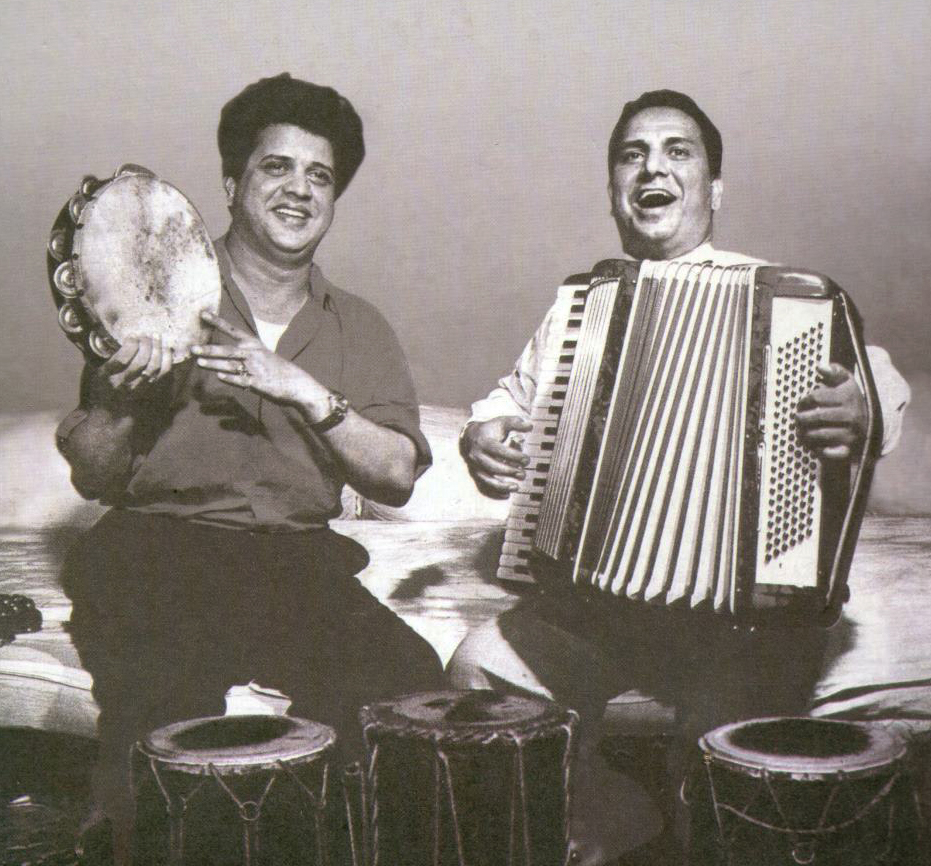 The two became known by the acronym “S-J”, and would form a core team with lyricists Shailendra and Hasrat Jaipuri, and with singers Mohammed Rafi and Lata Mangeshkar (although they also worked with almost all the popular singers of their time). The commercial geniuses lead the Bollywood music in spite of tough competition from maestros like Roshan, SD Burman, OP Nayyar and Madanmohan. S-J were the house composers or RK Films and were on their pay-roll till the end. Even after the termination of the professional association between Shankar and Raj Kapoor (Jaikishan had died by then), Kapoor had used a number of their earlier compositions (which were in his custody) for a lot of his films, though the credits were given officially to other composers.
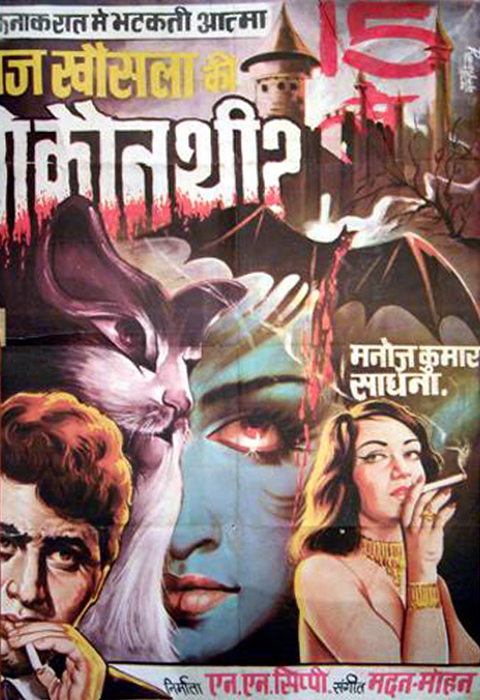 Shankar & Jaikishan’s compositions broke new ground in Hindi film music. Apart from relying upon their knowledge of Indian classical music, they also employed western beats and orchestration, and it became their established practice to have at least one song in a movie based on semi-classical style. While working as a team, Shankar and Jaikishan used to compose their songs separately. Between the two, Shankar was the senior partner and he would usually arrange the orchestra, even for Jaikishan’s songs. There was a gentleman’s agreement between them, for not identifying the actual composer of the song. Dance numbers, title/theme songs and soulful songs were Shankar’s forte while Jaikishan was a master of composing background score, but both Shankar and Jaikishan were equally proficient in scoring western music based songs. Despite their distinct working styles and preferences, it is very difficult to identify who composed what, and best to accept all their work was truly a joint effort.
Shankar & Jaikishan made a major contribution towards the development of jazz music in India and the new genre Indo jazz. Their 1968 album Raaga-Jazz style, the earliest Indo-jazz recording to come from India, and is considered to be one of the most innovative, with 11 songs based on Indian Ragas with saxophone, trumpet, tabla, bass and of course with sitar by Rais Khan.
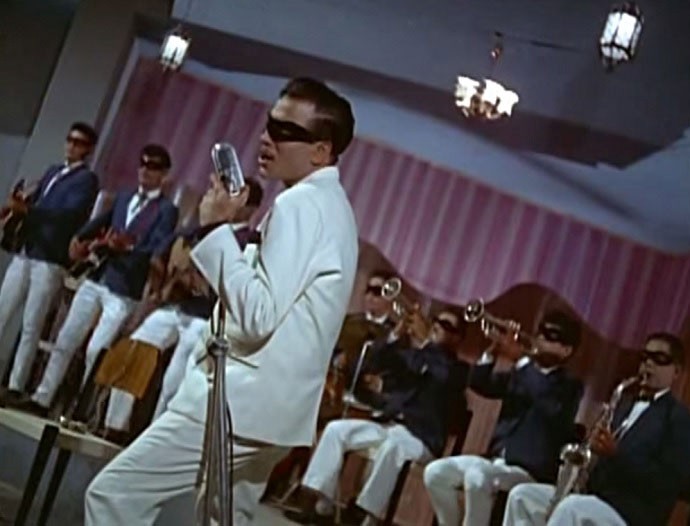 THE LEADING MASKED MAN – That compelling personality who plays the singer-front man to this outrageous cacophony of spectacle, is dancer Herman Benjamin, also known as “Mr. Charisma”. He made his entry into the world of Hindi cinema as a choreographer, or as they were often called a “dance-master”, sometime in the late 50’s. Most often he assisted other choreographers with the more traditional dance routines, but on occasion he was handed one or two songs that leaned more towards the night club rock n’ roll numbers, that were getting more and more popular in the Bollywood films of those days. He also appeared on screen as a dancer in quite a few films of this period. Benjamin is the handsome devil prototype, and has an animalistic magnetism that Errol Flynn would duel to the death for. His apparent charming and humorous nature overflows with his maneuvers. Even among a crowded dance floor such as in the sequence of Tin Kanastar Peet Peet Karhis from the 1958 film Love Marriage, his distinct drawing power is undeniable. It‘s also evident that Benjamin studied Herbert “Whitey” White’s school of Lindy Hoppers and jitterbuggers, perhaps only through film, because some of his moves are brilliantly borrowed from the 40’s and 50’s! While Benjamin plays the moves in grand style, it is believed that Surya Kuma who at the time, was inspired by an English dance craze called “The Shake”, was likely the mastermind behind the Jan Pehechan Ho dance floor phenomena (both he and Benjamin helped choreograph the dances in Gumnaam). Benjamin sadly passed away on 13th September 1968 and was only 37 years old, which is such an injustice, but I’m so grateful he left a huge legacy of film attributions credited up until 1971, for us to enjoy.
 THE LEADING LADY – Strutting alongside Benjamin’s skillful and tight dance floor motions, dressed in tight gold lamé, is the stand out prismatic and blazing lead female dancer Laxmi Chhaya! Her wild energy is captivating and ferocious during the Jan Pehechan Ho routine, and it’s difficult to comprehend that she was only 18 at the time of shooting, when she danced herself into film history. In fact Chhaya was nine when she appeared in her first film Talaq in 1958, when director Mahesh Kaul had spotted her among the guests on the sets. Three years later her role in Bada Aadmi, established her as a dancing star. Although she’s most likely most recognised for her Gumnaam role on this side of the world, Chhaya in fact had a major and successful career in the Bollywood circuit, working in over 55 film productions between 1961 through to at least 1982. Just a year after Gumnaan, Herman choreographed the routine for Aaja Aaja for Nasir Husain’s Teesri Manzil. Chhaya again had a feature role, but this time she is far more sedated, with her part as a spectator. Maybe after her earlier smoking Jan Pehechan Ho performance, the Indian screen management felt they needed to cool things down for a while.
 Chhaya moments of spectacular grandeur are a plenty in this time of Bollywood cinema. One of those spell binding moments is from the 1968 film Suhaag Raat, where there’s a cobra and peacock dance off between two beauties, Madhumati who convincingly plays the sensual serpent, up against the peacock adorned Chhaya! The battle is furiously tense and tight, and amazingly fought til the end! In the 1970 S. Sukhdev directed film My Love, there’s a seductive devilish dance by blond bombshell “Caron Leslie” to some low grinding grooves composed by Daan Singh [2]. With the devil shadowing her moves, the room gets so heated that uncomfortable onlookers almost turn away with embarrassment and guilt. But once Chhaya gets the nod things get even hotter on the dance floor. Miss Leslie is swiped by a far more dominant, spirited and high powered challenger, and the music is to revved up with heated frantic African tribal beats! Below I’ve listed a few of my favourite Chhaya moments of wonderment well worth looking at.
 THE BAND – The brilliance of Jan Pahechan Ho shines further beyond the dance floor and lifts up onto the bandstand. The group “performing” the anthem is known as Ted Lyons and his Cubs. Regardless of the cult popularity of this Bollywood performance, I found it difficult to find a lot of information on this mythical line-up. In fact when watching the clip, the line is blurred between actual bands members from bands actors, especially without knowing the real life line up of the Cubs. But it’s not important and the blend is splendid. I can tell you that the leader of the pack, Terence “Ted” Lyons plays the centered guitarist (with the red guitar) and is brother to the famous dancer/film actress Edwina Lyons (his other sister Marie Shinde was a very active dancer and choreographer also at that time). In the 1967 film Raat Aur Din, Edwina dancers along with Laxmi Chhaya to Awaara Ae Mera Dil, which also features Ted Lyons And His Cubs, however this time Terence has moved away from band member to join the dance floor society (he can be seen, especially near the end of the song, dancing in the shadows to the left of the band). Aficionados of Bollywood cinema would possibly recognise The Cubs appearing frequently in famous films, one other notable presence is in the film of the same year, Janwar. The song is an adopted “I Wanna Hold Your Hand”, titled Dekho Ab To, where this time Ted is behind the drum kit of The Cubs (pictured).
According to Memsaab’s incredible blog dedication, Feel the love! Ted Lyons & His Cubs, he emigrated to Brisbane, Australia, in 1972, resulting with the break up of the band and any further screen appearances. He says that he danced way more than he appeared with his band, and although they played plenty of weddings and events, no studio recordings were ever produced. He spent 20 years in the Bombay film industry as a dancer and drummer/band leader.
THE SINGER – The actual voice behind the man behind the mask, is the legendary and prolific Bollywood singer Mohammed Rafi. He was born 24 December 1924, as the fifth of six sons in a village near Amritsar, Punjab (the family moved to Lahore later in the 1920’s). Rafi’s elder brother, Mohammad Deen, had a friend Abdul Hameed, who recognised Rafi’s talent and would encourage him to sing, and later even convinced the family elders to let Rafi move to Mumbai.
There’s an infamous story about Mohammed Rafi’s rise to stardom. One time he and his brother Hamid went to attend a performance by the renown K.L. Saigal. The power went off (and from my brief experiences in Indian, a common occurrence even these days), and the dignified Saigal refused to sing without the benefit of the sound system. With agitated audiences tempers brewing, Hamid persuaded the organisers to allow Rafi to sing for them until the power was restored. It was readily agreed and everyone in the house was impressed, including the great composer and music director Shyam Sunder who happened to be among the audience. Rafi was invited to sing for one of his films in 1944 at the age of 20, with the song Soniye Hiriye, Teri Yaad Ne Bahut Sataya, for the film Gul Baloch, and was quickly brought to attention of other music directors.
 Early in his career Rafi got a huge break when he got to work with Naushad Ali (pictured), one of the foremost musical directors for Hindi films of the time. His versatile musical vocabulary offered him a myriad of singing roles, one highlight must have been in the 1960 film Mughal-E-Azam, where Rafi sang Ae Mohabbat Zindabad, alongside a chorus of 100 singers. This relationship would establish himself as one of the most prominent playback singers in the industry cinema and he ended up singing a total of 149 songs for Naushad.
Rafi’s partnership with Shankar & Jaikishan was also very famous and successful (Rafi was their favourite singer despite having good reputation with other playback singers of the time). Out of six Filmfare awards, Rafi won three for S-J songs, and sang a total of 341 numbers (216 solo) for the partnership! With the voice in demand, he would also work with other big name producers. S.D.Burman used Rafi as a singing voice of Dev Anand and Guru Dutt, and would end up collaborating on 37 movies. Rafi also worked with the great Ravi Shankar, and in fact received his first Filmfare Award for the title song of Chaudhvin Ka Chand (1960), which was composed by Ravi. Rafi also received the National Award for Ravi’s song “Babul Ki Duaen Leti Ja” from the film Neel Kamal (1968), and admits that he actually wept during the recording of this stirring song. Myself, I love the swaying Baar Baar Dekho he sang for China Town in 1962.
 Mohammed Rafi died on 31 July 1980, following a massive heart attack…his funeral procession was one befitting a king. Said to have been the biggest funeral processions Mumbai had ever witnessed, with over 10,000 people attending despite heavy rains on that day. The government of India announced a two-day public holiday in his honour. In 2010, Rafi’s tomb was demolished to make space for new burials. Fans who visit his tomb twice a year to mark his birth and death anniversaries, use the coconut tree that is nearest his grave as a marker. Rafi was a big player in the history of Indian film which goes with out saying, and there’s actually some great sites out there that celebrate this man’s career and achievements, which I recommend new fans of this genre pursue.
 THE SONG – The lyrics to Shankar-Jaikishan’s Jan Pahechan Ho is by Shailendra (Shankardas Kesarilal), a popular songwriter who had already won the Filmfare Best Lyricist Award twice before Gumnaan. But sadly his promising career was cut short, when he was just 43 years of age. In 1961 Shailendra invested heavily in the production of the movie Teesri Kasam (released in 1966), directed by Basu Bhattacharya and starring Raj Kapoor and Waheeda Rehman. Although the film won the National Film Award for Best Feature Film, it was a commercial failure. Stress, tensions and anxiety due to financial loss quickly contributed to his defeating health, and coupled with alcohol abuse, ultimately led to his death on 14 December 1966.
If you look up the literal interpretation on the song, well the words and meanings kind of bump into each other, which is not uncommon ofcourse. Here’s my blurry attempt at the song’s interpretation, mashing some of those online translations.
Oh you stealer of my heart…you who avoid my gaze…at least tell me your name.
For it will never return, not by anybodys calling…
straight and direct…they have pierced my heart…
All this small talk…should not be a town story…
I am sure my feeble translation is questionable, but do go to grabbingsand.org, for some fun and more in-depth translations, by people far more competent than myself .
IN CLOSING – Indian vinyl is not the easiest to find, especially in good playing condition. But this is a must for 7 lovers and you are rewarded with Lata Mangeshkar’s Gumnaam Hai Koi, a lovely cover version Henry Mancini’s of Charade! I have to mention that you will find an edited cut down version on the EP. (I do find the 3 minute edit version very does the job adequately), so if you’re after the long play version that you know and love from the film cut, them the LP could be a good option, which does appear far more often on the market. Note that the LP cover pictured above is the repress cover from Angel Records that came out the a little later in the same year of ’65.
To have Raja Nawathe and his collaborators all combining visions and talents, at what must have been a most amazing time, and to be rewarded with unbeatable masterpiece that is Jan Peechan Ho, is a blessing that will keep us music lovers dancing and smiling for a very, very long time!
Some great Chhaya dance floor appearances…
1 – Upkar -1967 Gulaabi Raat Gulaabi
2 – Wahan Ke Log -1967 (with Indian space go-go gals!) Woh Pyaar Pyaar Pyaar Pyaar Chanda
3 – Baharon Ke Sapne – 1967 (duel with Laxmi Chhaya and Bela Bose) Do Pal Jo Teri
4 – Suhaag Raat – 1968 “Cobra And Peacock Fight” 1968
5 – My Love – 1970 Laxmi Chhaya and Caron Leslie
6 – Ek Khiladi Bawan Pattey – 1972 (hippie love) Le Le Ye Dil Ka Nagina Bahroopiye Log Saare
[1] In over 16 years of existence, the theater staged some 2,662 performances with Prithviraj supposedly starring as the lead actor in every single show. By the late 1950s, it was clear that the era of the traveling theater had been irreversibly supplanted by the cinema, which was sweeping across the lands. Clearly it was no longer financially feasible for a troupe of up to 80 people to travel the country for four to six months at a time, along with their props and equipment and living in hotels and campsites. Many of the fine actors and technicians that Prithvi Theatres nurtured had found their way to the movies.
[2] Carole Lesley (Maureen Rippingale) was a British actress who had a short but significant career as a “blonde bombshell”. In this film, this particular actress is credited as Caron Leslie. I am almost certain this is not her in this film but a dedicated inspired impersonator instead. But I could be wrong.
References and recommendations…
 Seven45rpm
Recent Comments