

Latest
Joe Meek / Tom Jones – Chills & Fever

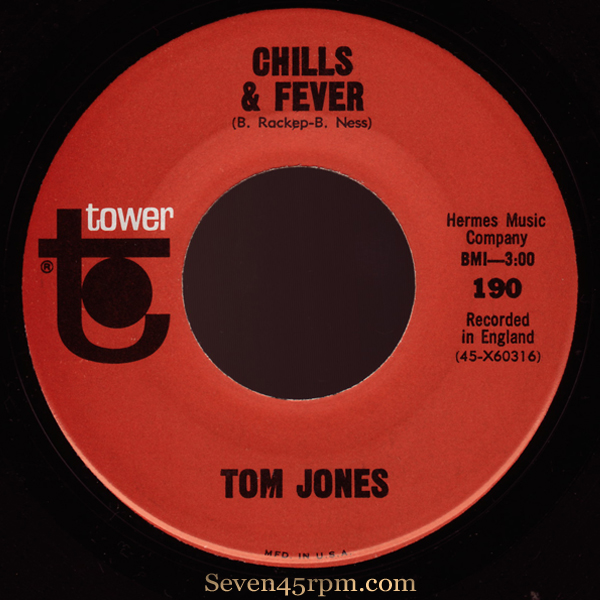
Tower Cat# 190 US – Year 1966
Joe (Meek) Versus The Volcano!
I have to say, Chills And Fever is one of my favourite R&B songs of all time. It’s had a handful of great and worthy interpretations, from reputable artists including Jet Harris, Allen Wayne and of course the unsurpassed Ron Dunbar. But being the Meek Geek that I am, it’s this delectable elusive cut that intrigues me the most, and in which I chosen to share.
But first…a bit about this Mr. Jones.
Thomas J ohn Woodward was born in Pontypridd in Glamorgan, South Wales, on 7 June 1940. His parents were Thomas Woodward, a coal miner, & Freda Jones.
Tom began singing at a very early age, and wasn’t really into sports or even school. But he was a kid who would receive far more fulfillment when singing at family gatherings, weddings and in his school choir. At 12 he was diagnosed with tuberculosis, causing him to spend 2 years in bed recovering. While he does describe it as the worst time of his life, it did give him the opportunity to do nothing other than sing and draw. In his teens he was becoming something of a tearaway, missing school, drinking and chasing girls.
By the late 1950s Tom had become entranced by the new rock ‘n’ roll sounds coming from the radio, and was big on the sound of American soul music, with early influences including blues and R&B singers Little Richard, Solomon Burke, Jackie Wilson and Brook Benton, as well as Elvis Presley, whom Jones idolised and would later become good friends with.
 Tommy Scott and the Senators – In March 1957, Tom married his high school catholic girlfriend, Melinda Trenchard, when they were expecting a child together, both aged 16. The couple’s son, Mark, was born in the month following their wedding. To support his young family, Tom took a job working in a glove factory and was later employed in construction. His big full-throated, robust baritone voice first became apparent when he became the frontman for Tommy Scott and the Senators, a Welsh beat group, in 1963. The band’s leader Vernon Hopkins, lured Tom away from his usual drinking spot after Tommy Redman (their current singer) failed to show up one night. Hopkins persuaded him to perform with the Senators at the local YMCA (with the help of a crate of beer). It was only meant to be a one-off, but Tom was bitten by the bug.
 They soon gained a local following and reputation in South Wales. In 1964 the group recorded several solo tracks with producer Joe Meek, who took them to various labels, but they had little success. Later that year Decca producer Peter Sullivan saw The Senators performing in a club and directed them to manager Phil Solomon, but the partnership was short-lived.
The group continued to play gigs at dance halls and working men’s clubs in South Wales, and one night, at the Top Hat in Cwmtillery (which only just burnt down a couple of years ago), Tom was spotted by London-based manager, Gordon Mills. He became Tom’s manager and took the young singer to London, and renamed him Tom Jones, to exploit the popularity of the Academy Award winning 1963 film.
Joe Meek
Now I’m only going to touch on the genius that is Joe Meek here. This complicated yet marvelous man definitely deserves a much more in depth write up, and I can assure you that this will not be the only Meek production I will cover here on Seven45. This pioneering record producer and songwriter, is most likely known for the that Tornados instrumental Telstar, (which became the first record by a British group to reach No.1 in the “Billboard Hot 100” in 1962), but his life story is truly fascinating, be it too short. A wiz kid with electronics, Meek had a unique sense of adventure when it came to music production.
 Meek was born on April 5, 1929, at 1 Market Square, Newent, Gloucestershire. His early upbringing was rather bizarre, as apparently, the first four years of his life, he was raised as a girl thanks to his mother’s intense desire to have a daughter. As a child, Meek had performed theater plays of his own making with the neighbour’s children, and whenever possible, he himself would play the princess. Of course his classmates bantered him about that, as well as his brothers did. More than likely, this is perhaps why Meek more and more, backed out into his own isolated fantasy world.
He acquired an adventurous passion for performance art and sound experimentation, from a very early age, filling his parents garden shed with begged and borrowed electronic components, building circuits and what is believed to be the region’s first working television. By the age of ten he had built a crystal radio set, a microphone, and a tube amplifier.
At age 14, he expanded his rig, working dance parties as a mobile DJ. And at 16 he acted as a musical supervisor, providing sound effects for local theater groups, that he had recorded on a homemade tape machine. (He built a disc cutter when he was 24 and used it to cut his first record – a sound-effects library).
When he grew up, he did a stint doing his National service in the Royal Air Force as a technician, which only escalated his lifelong interest in electronics and outer space. From 1953 he worked for the Midlands Electricity Board. He used the resources of the company to develop his interest in electronic music production, including acquiring a disc cutter and producing his first record.
Meek In London…
Meek first arrived in London in 1954 after landing a job as a sound engineer for Stones; a popular radio and record shop on Edgware Road. After spending time working at Stones, Meek progressed to a new job, becoming a producer at Lansdowne Recording Studios, moments away from his home on Arundel Gardens in Notting Hill.
 At Lansdowne, Meek proved to be quite the maverick, frequently ignoring his superiors in order to pursue his quest to develop new sound techniques. He maintained a strictly guarded “secret box of sounds”…a container kept under lock and key which held all manner of unusual objects for creating unorthodox audio effects. Confident in his new role, he wrote a letter home to his mother stating, “I’m sure your son is going to be famous one day, Mum.”
But before long, Meek became tired of working within a large organisation and decided to go it alone as an independent record producer and established his own label, RGM Records (Joe’s full birth name actually being Robert George Meek).
 Between 1961 and 1967, the accommodation above 304 Holloway Road was rented out by Meek, where he set about creating a makeshift but innovative studio. Back then, such a move was revolutionary, as it was a time when pop records were the domain of big corporations, tightly controlled by cigar-puffing businessmen. The sound engineers who worked for these companies did so in strict, clinical environments, armed with clipboards and donned in white lab coats.
Joe Meek’s way of working was the complete opposite to the traditional methods. From the stairway to the bathroom, all rooms were made available for recording sessions. Joe would also use seemingly every day domestic items to create all manner of new sounds, the flat itself more or less becoming an instrument in its own right. He was particularly fond of stamping on the upper floors to enhance drumming effects.
As his experiments developed, Joe Meek’s work took on an eerie, futuristic sound; one which he hoped would define an era as the space-age began to grip the 1960s.
The first major hit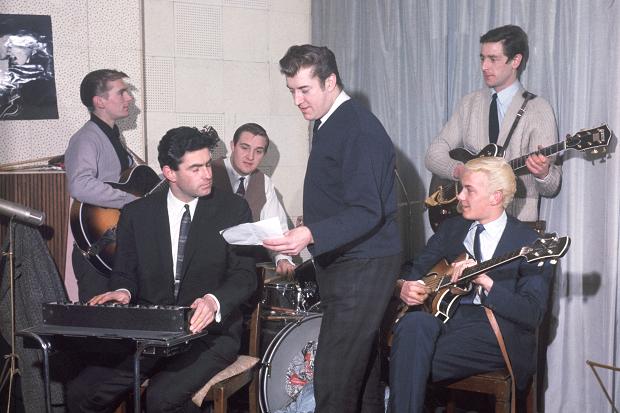 to be produced at Holloway Road was John Leyton’s Johnny Remember Me, a song about a young man haunted by his dead lover. The single reached UK number one in July 1961. But that success was followed by an even bigger hit in August 1962, with Telstar, an instrumental track created to celebrate the success of the radical new communications satellite which had been launched in July 1962. Played by Meek’s (other) backing group, The Tornados, the ode to space technology featured all manner of sci-fi sounds which had been concocted in the unlikely setting of the north London studio. The record was an instant success. It became the first record by a British group to reach No.1 in the Billboard Hot 100 in the United States, which was a massive achievement!
Telstar’s popularity should have set Meek up financially for life. However, a French composer by the name of Jean Ledrut claimed that the tune was pinched from a score he’d written for the Napoleonic film, Austerlitz. This led to a lengthy legal battle which prevented Joe Meek and the Tornados receiving any royalties from their hit.
In 1963, Meek had himself another band to record, a bunch of fairly unknowns who went by the name Tommy Scott & the Senators. They recorded seven tracks with Meek, who then used Ritchie Blackmore (and The Outlaws) to enhance some of those RGM recordings which were done in a single day session. Meek took them to various labels in an attempt to get a record deal, with no success.
 But soon Jones, who had had a name change and a fresh signing to Decca, would score that worldwide hit with It’s Not Unusual in 1965, and shot to mega stardom. With this sudden popularity, Meek, who had always refused to release his “Jones” recordings, now decided to cash in and sold the tapes to Tower (USA) and Columbia (UK)…releasing Little Lonely One – That’s What We’ll All Do. This was all done much to the singer’s annoyance. Jones -“We really pinned our hopes on that recording session. Meek said it was going to be released but we never heard anymore…I want to disassociate myself from it”. Meek released another single in October, Lonely Joe – I Was a Fool, then finally Chills And Fever – Baby I’m In Love.
Chills And Fever fever!
The first and original release of Chills and Fever was on the Detroit label Startime (Cat# 45-5001), who credited the track to Johnny Love and his Orchestra. But when it was picked up for national distribution by Dot Records (a label that licensed a huge array of records including some of my most treasured gems) Johnny was changed to Ronnie Love…and it signaled the beginning of one man’s incredible career in music.
Turns out the man behind the record was neither the earlier personas, but instead one Ron Dunbar. A man of talents who ended up becoming one of the most prolific writers in Detroit this side of Holland-Dozier-Holland, and his name appears on a mind-boggling assortment of writing credits, including Patches, Give Me Just a Little More Time and Band Of Gold. Ron also had a hand in A&R work, most notably with Holland-Dozier-Holland when they split from Motown in ’68 to form their Invictus/Hot Wax production company.
Love laid down Chills and Fever, which was penned by Bobby Rackep and Billy Ness, in 1960, and managed to make it to #15 in R&B and #72 in Pop.
Tom Jones & The Squires did finally make it into the Decca studios in the summer of ’64, to re-record Ronnie Love’s hit for a second time. While the band were comfortable with the “demoed” version, the label wasn’t happy with quality, and took the opportunity to augment the arrangements with experienced session musos. The result is a go-go stomping version with classy backing gals and sharp horns, but some would say, all too over produced. To me this version sounds more like a session studio band, and not so much a closely bonded band, but either way, a far turn from Meek’s production. It was Tom Jones’ official first single, and it failed to chart when it was released in late 1964 through Decca.
 I just adore Love’s version, and it’s the one that I like to play out the most…the kids love it! But when I first found out that Meek had a version with Jones, I just had to find it. I love the meek sound. It’s really grown on me over the years, and I love the man and his story. As I said, there’s just too much Meek to write about in one post, and I have to encourage you all to read up more on him (there’s some amazing posts mentioned below, and even a movie was made about him recently called Telstar: The Joe Meek Story). He had a tragic ending to his short life and obviously he had his issues and faults. But he left us some very cool and diverse yet Meek typical tunes. The Rondos, Little Baby is one of my favourites, driving and dreamy. The Honeycombs Can’t Get Through To You is fab raw pop punk garage and The Moontrekkers spooky Night Of The Vampire is a hoot! But when I listen to The Cryin Shames Please Stay…well…there’s proof that this “tone deaf” sensitive genius, had an incredible talent that should have made him far, far more recognised.
Side Notes…
The Outlaws, who’s name was originally conceived by Meek , were the house band that did all the session work for his productions. As such, they were used for recordings,”Demo (music)” and Audition. Many of the The Outlaws’ songs were written by Meek and credited to his pseudonym Robert Duke.
The Cryin Shames Please Stay is a cover version of The Drifters’ 1961 release, written by Burt Bacharach and Bob Hilliard.
Ron Dunbar’s Grammy for Patches was recently pawned on an episode of “Pawn Star”. Rick admits to not having a clue about the song or even Dundar. He ends up with it for $2350 (thinks he can get $5000 for it). News is from Dunbar’s facebook page, it is now back with it’s rightful owner.
Tower Records was a subsidiary of Capitol Records from 1964 to 1970. A label that often released music by artists who were relatively low profile in comparison to those released on the parent label, including a number of artists such as The Standells and The Chocolate Watch Band. For this reason Tower is often associated with the “garage” rock phenomenon of the 1960s. Freddie and the Dreamers‘ I’m Telling You Now, became Tower’s only #1 hit on Billboard. Tom Jones’ only 6 songs recorded in 1963 by Meek, were released by Tower two years later in 1965, while he was actually signed to London subsidiary, Parrot. Four of those singles were released in the U.K. (Columbia – Meeksville Sound) but Meek’s version of Chills wasn’t, making it very much “in demand”.
Little Lonely One (US #42, 5/65) B-Side That’s What We’ll All Do – Tower 126
Lonely Joe B-Side I Was A Fool Tower 176
Chills And Fever (US #125, 12/65) B-Side Baby I’m In Love Tower 190 US #125, 12/65
Reference and great reads…
Photo credits…
Meek at Lansdowne – David Peters?
Joe with The Tornados – John Pratt/Getty Images


Maria Dallas – Ambush
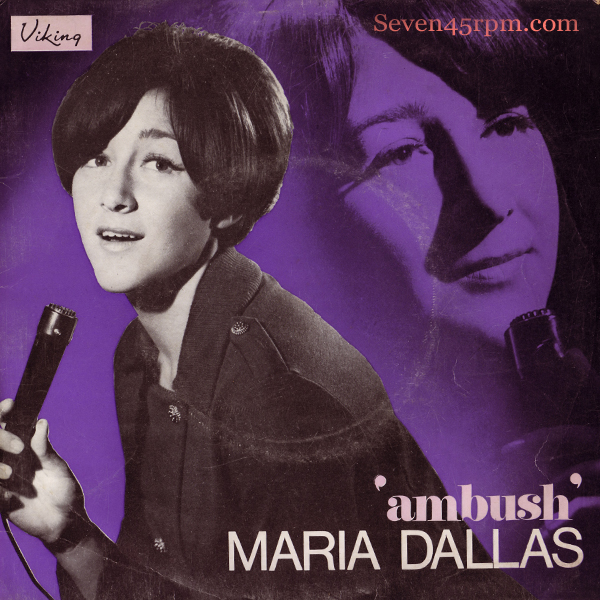
 Viking EP – Cat# VE-1001, (EMI) Australia Recorded 1967 Released 1968
Ambush (Side 2 Track 2)
I only just recently stumbled across this gem in a box of random rough 45’s in my favourite local record store, but somehow, I just knew there was going to be a little “something special” about it, so I grabbed it. When I got home, I polished it up, flicked the switch to 45 and placed the needle down. Yeah, it was alright, straight country beat…but as track 2 on 2 started up, a feeling inside told me to turn up the volume…and that something special was certainly affirmed! I had to find out more about Miss Dallas!
So I start to dig around for some history lessons on who I thought was certainly a Nashville singer, but to my surprise, I find out that she is in fact currently living here in the north of Australia, in Queensland. But that wasn’t the only surprise…she was actually born and breed in New Zealand!
And once again, I find that not a lot of information can be found on her, but I wil try and gather what I can, mash it all together, with hopefully some facts here and there.
Marina Devcich was born to a Croatian family, on April 14th 1946, in the provincial town of Morrinsville (in the Waikato region of New Zealand’s North Island) and was the second youngest of twelve children. She was gifted with a distinctive voice which you seriously could compare to say, Wanda Jackson, with a stir of Brenda Lee.
In 1964, Marina (wh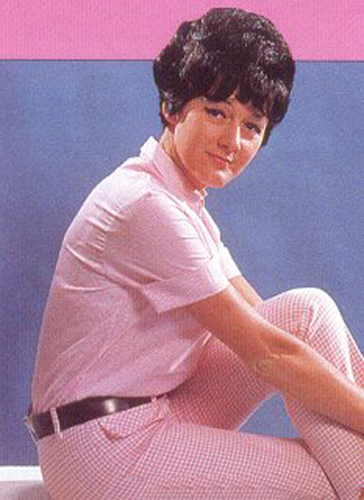 o was a hairdresser at that time) and Isabel Leigh won a Johnny Cooper talent quest in Morrinsville. Further solo performances with the Lew Manson Band around the Waikato area followed. One night in 1965, she was booked to appear in a Morrinsville hotel with Howard Morrison (who started up the very popular Howard Morrison Quartet with guitarist Gerry Merito) and Auckland bandleader Mike Perjanik (who formed The Mike Perjanik Band after departing The Embers, and would go on produce the “sound” for the NZ beat girls The Chicks, write hits for Dinah Lee and arrange for Ray Colombus).
Perjanik went straight back to Auckland to tell Viking Records’ chief Ron Dalton that he’d found his next star in the Waikato. Dalton decided to rename her Maria Dallas, and almost overnight the girl with the power packed voice found herself in an Auckland professional recording studio.
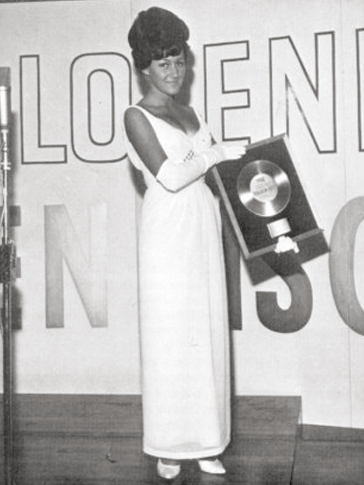 In ’66, Viking released a bunch of 7’s for Dallas including an EP titled Queen of the House (VE 224), which included a very oddly produced version of How Does That Grab You Darlin’, with very kooky keyboard backing. But it was her recording of Jay Epae’s Tumblin’ Down, that would bring her success! It in fact became a massive hit and it would be Maria’s signature tune. The song made it to number 11 on the national charts and was entered into the Loxene Golden Disc Awards, where it took first place!
Tumblin’ does have a catchy pop quality to it, and it has grown on me. It is also included on this EP, but it certainly isn’t the star on this spinner as far as I’m concerned. That title goes to…well…the infectious title track…Ambush! With it’s big kick start, instantly we have fuzz guitar, searing keyboards, and killer cool backing vocals. And who doesn’t love a song that starts straight into it’s punchy chorus?! This track has got a lot of sass to it…that kinda Ann Margaret sass (well I think it does), and it’s relentlessness makes it a good dance floor shaker! And it looks like it made it to number 12 in Oz, in October of 1967!
Viking churned out six albums during 1966 and 1967, and a similar number of singles. None of the singles fared as well as Tumblin’, and despite it’s success, Maria never felt at home as a pop singer, so she would return to her country music roots. She moved to Australia in late ’67, before venturing off to Nashville where she recorded in the famous RCA Victor Studios with producer Felton Jarvis (who was working with Elvis at this period and almost until his death) and also with Chet Atkins.
Although singles were still released during her absence, New Zealanders had almost forgotten about her until she returned in 1970 with a song called Pinocchio, which went all the way to number 1 on the national charts. Viking capitalised by releasing another album in 1971 and a follow up in 1972, but Maria wasn’t able to reproduce her success after that. She would also release a few more singles on the Kontact label, in ’73, ’75 and even up to ’81.
Maria married an Australian an has lived here for many years. I would love to hear from anyone who knows how she’s doing!
Referencing sites and related links…
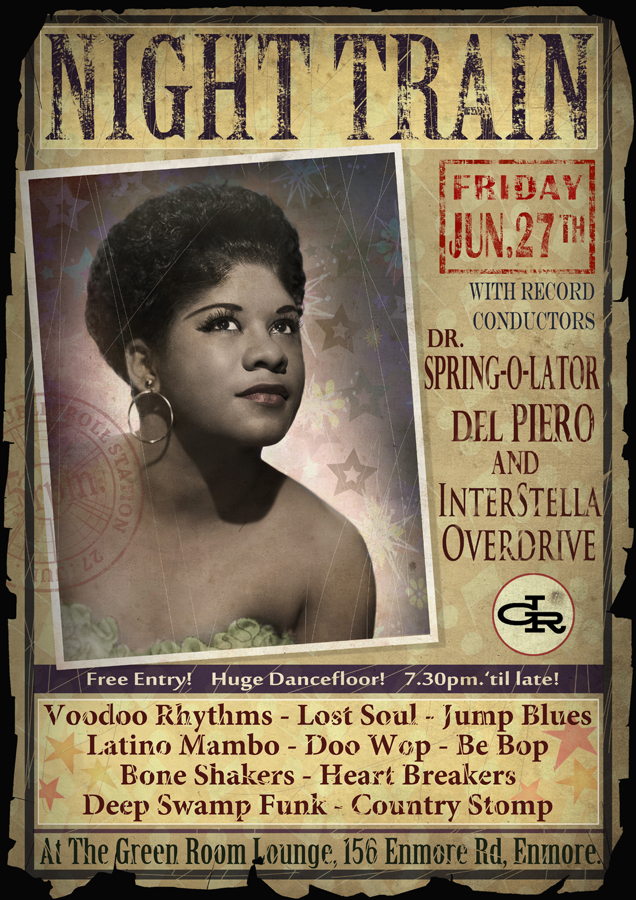

Little Walter And His Jukes – EP 1956

 Little Walter And His Jukes EP London REU 1061 Oct 1956
Track 1 – My Babe Written By – Willie Dixon
Track 2 – I Got To Go written by Marion Walter Jacobs
Track 3 – Roller Coaster Written By – E. McDaniels
Marion Walter Jacobs was born in Marksville, Louisiana, on May 1, 1930 and picked up the Harmonica at a very early age.
By the age of 12, the “unruly” but vastly talented youth decided to quit school and head for the Chicago, to become an itinerant street musician. On his travels, he would stop for the bright lights of New Orleans where he would pick up on odd jobs and busking. He would proceed to Memphis Tennessee, and then over to Helena Alabama, and also Arkansas and St. Louis Missouri, and then finally grounding down into the Windy City in around 1946. The thriving Maxwell Street strip clubs offered a spot for the still-teenaged phenom to hawk his wares, where he played with Tampa Red, Bill Broonzy, and Memphis Slim.
During this time, he also honed his musical skills on guitar performing with much older bluesmen such as Sonny Boy Williamson II, Sunnyland Slim, and Honeyboy Edwards, but garnered more attention for his already highly developed harmonica work.
Ora-Nelle. Little Walter would have been around 17 when made his first debut recording for Bernard Abr ams’ tiny Ora-Nelle label in 1947. The label was set up out of the back room of Abrams’ Maxwell Radio and Records store and only operated for a year or two. In that time the label only managed two releases, although 10 sides of alternate takes and unreleased material have since been discovered. Ora Nelle was named after a female relative, and the release series began at 711, not for numerological reasons, but on account of the winning combinations when shooting dice.
Ora Nelle w as the first label to record Little Walter, although according to fellow Chicago bluesman Floyd Jones, who suggests Walter’s first recording was an unreleased demo recorded soon after he arrived in Chicago on which Walter played guitar backing Jones. Ora Nelle was the only label to record guitarist Othum Brown, and the second to record guitarist Jimmy Rogers. On the debut 771A side we have the hard and heavy Ora-Nelle Blues, with Othum Brown accompanying Walter’s harp skills. Lovely stuff! And on the 711b flip, there’s the much faster foot stomping tune called I Just Keep Loving Her. Incredible! Still trying to confirm whether Othum or Walter sang on these tracks.
Note that the label never had distribution; Ora Nelles were sold out of the store, where copies were still in stock 20 years later, or resold by people who had bought them there. Good luck finding this original 78!
Little Walter joined Muddy Waters’ band in 1948, and by 1950, he was playing acoustic (unamplified) harmonica on Muddy’s recordings for Chess Records. In October of that year, they recorded the Waters classic Louisiana Blues. Nearly a year after Little Walter used an amplified harmonica for the first time on a groundbreaking July 1951 session that yielded She Moves Me.
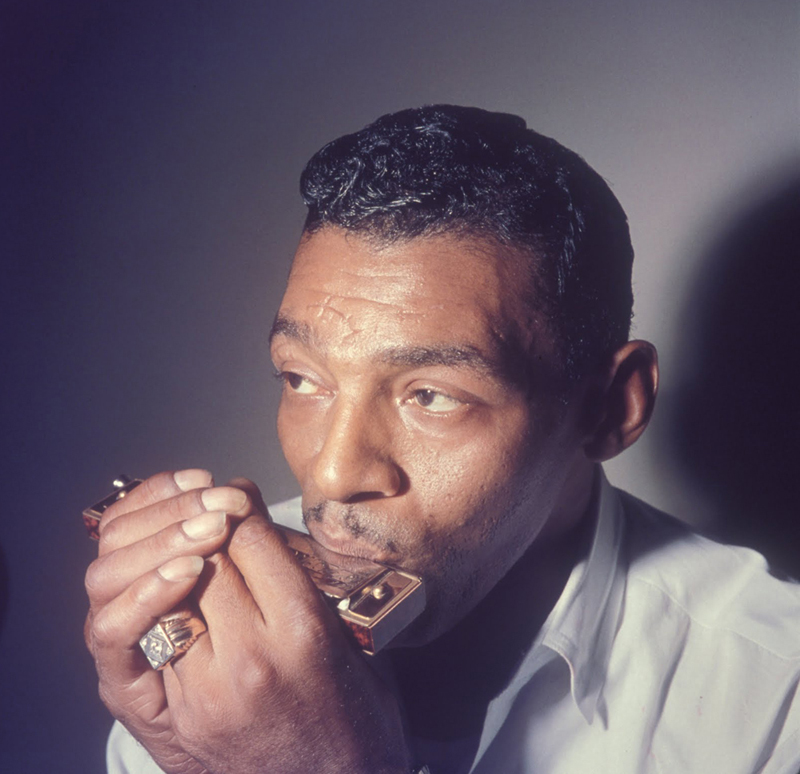 Little Walter reportedly grew frustrated with having his harmonica drowned out by the electric guitars, but would soon find a way to attack that problem. He adopted a simple yet effective method…he cupped a small microphone in his hands along with his harmonica, and plugged the microphone into a public address system or guitar amplifier. And now he could compete with any guitarist’s volume. There were other contemporary blues harp players such as Sonny Boy Williamson I and Snooky Pryor, who had also begun using the newly available amplifier technology for added volume, however Walter purposely pushed his amplifiers beyond their intended technical limitations, using the amplification to explore and develop radical new timbres and sonic effects previously unheard from a harmonica, or any other instrument. Madison Deniro wrote a small biographical piece on Little Walter stating that “He was the first musician of any kind to purposely use electronic distortion.”
Waters was among the earliest to recognize that blues possessed a formidable power when electrified, and along with Jimmy Rogers on electric guitar, Muddy had himself the hottest blues band in Chicago.
Little Walter And His Jukes – Walter had put his career as a bandleader on hold when he joined Muddy’s band, but stepped back out front once and for all when he recorded as a bandleader for Chess’s subsidiary label Checker Records on 12 May 1952. The first completed take of the first song attempted at his debut session became his first release. The cracking instrumental was called Juke (the retitled Your Cat Will Play), and it was the first real success for him. Deservedly, it topped the R&B charts for eight weeks, and is still the only harmonica instrumental ever to be a number-one hit on the charts, securing Walter’s position on the Chess artist roster for the next decade.
 Walter’s now had a pretty impressive band to himself, recruiting a young backing band that was already working steadily in Chicago backing Junior Wells, The Aces. They consisted of brothers David Myers and Louis Myers on guitars, and drummer Fred Below, and were re-christened “The Jukes” on most of the Little Walter records on which they appeared. Their first recordings were for the Checker subsidiary of Chess in 1952.
Some great stomping 45’s were to follow in the next couple of years including Crazy Legs which was released in ’53, Rocker from ’54, and Hate To See You Go, released in ’55. But for this post I’ve decided to showcase this fab Little Walter And His Jukes EP for a couple reasons! Firstly, that packaging! The art is eye popping and graphic, and the label itself with the gold text on the deep red, is just class in it’s purist form. Secondly, here’s a few of what I think are Little Walters’ best tracks, all one the one 7″!
My Babe, which was written by Willie Dixon, who also wrote (Little Red Rooster and I Just Want to Make Love to You), was originally released in 1955 on Checker Records. This composition was based on the traditional gospel song This Train (Is Bound For Glory), a hit when recorded by recorded by Sister Rosetta Tharpe in 1939. Dixon reworked the arrangement and lyrics from the sacred (the procession of saints into Heaven) into the secular (a story about a woman that won’t stand for her cheating man). The song was the only Dixon composition ever to become a #1 R&B single. (Note that Ray Charles had famously, and controversially, pioneered the gospel-song-to-secular-song approach also, and just prior to Walter’s release, with his reworking of the gospel hymn It Must Be Jesus into I Got A Woman,which hit #1 on the Billboard R&B).
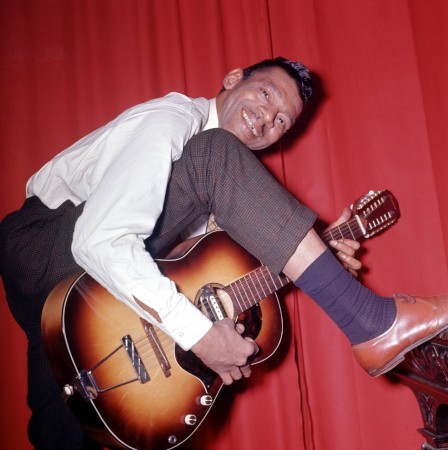 Backing Little Walter’s vocals and harmonica were Robert Lockwood and Leon Caston on guitars, Willie Dixon on double bass and Fred Below on drums. Guitarist Luther Tucker, then a member of Walter’s band, was absent from the recording session that day. My Babe was re-issued in 1961 with an overdubbed female vocal backing chorus and briefly crossed over to the pop charts. Ricky Nelson would release a far more pop version in 1958, while Dale Hawkins released a pretty fiery rockabilly version that same year.
I Got To Go is an up-tempo rocker reminiscent of his earlier 1953 Tell Me Mama…and this really is a rocker in it’s full glory. His playing of minor key scales over the major chord guitar backing adds, to a tension and energy to the piece as does his slightly fuzzed out vocal! Wild blues!
Roller Coaster, I have to say, is one of my favourite Walter tracks, and it’s the tasty icing on this sort after EP! His take on Diddley’s groover is quite sneaky, before it takes off with electrifying force. One glorious minor chord arpeggio throughout, nice and low and slithering, and it’s not long before Walter’s expressive tones really start to howl up a nice, maybe even gentle storm. With Diddley himself providing some rattling fretwork alongside the snappy kick and snare, it is just nothing but a blues dance floor masterpiece!
Thunderbird, the fourth track on this Ep, shouldn’t be ignored either, with it’s strong hustling locomotive rhythm. A more mild tempo possibly, but that does not deter Little Walter for a moment, as he burns up his harmonica skills quite feverishly and cleverly. Originally flipped to the 10″ My Babe, I’m almost certain this is the only 45 it was released on. Even another reason why you must seek this 7″ down!
Between 1952 and 1958, Little Walter on his own, charted 14 Top Ten R&B hits for the Chess label’s Checker subsidiary, including two number one hits, a level of commercial success never achieved by his former boss Waters, nor by his fellow Chess blues artists Howlin’ Wolf & Sonny Boy Williamson II. In the first part of the sixties he traveled to England winning over a new audience of white blues fans, and in 1964 he toured with the Rolling Stones (although this seems to have recently been refuted by Keith Richards). But Walter’s once phenomenal instrumental skills also diminished during the 1960s, plagued by alcohol abuse, a quick temper, and the bluesman’s penchant for barroom brawls. He did have a mean streak, and would never back down from a fight…and it was this belligerent attitude which lead to his death, after suffering head injuries from a street brawl. On Feb 1968, in Chicago, he sadly passed away at only 38 years old, a victim of his own indulgence.
 Of all the great bluesmans who were part of Chicago blues school, he is the only one that has never been imitated. He’s solos were carefully constructed masterpieces of energy that were never self indulgent. With his precision and control he was able to regulate the length power and sharpness of every note he played with furious yet calculated speed. His influence remains inescapable to this day, and it’s unlikely that a blues harpist exists on the face of this earth who doesn’t worship Marion “Little Walter” Jacobs. He was a skilled guitarist, and hell of a singer and songwriter, and is widely considered the greatest blues harmonica player ever. From the outset, he was a true original, a visionary musician and his influence goes beyond harmonica players.
Little Walter was inducted to the The Rock and Roll Hall of Fame in 2008 in the “sideman” category, making him the first and only artist ever inducted specifically as a harmonica player. His grave remained unmarked until 1991, when fans Scott Dirks and Eomot Rasun respectfully had a marker designed and installed.
photo credits: Don Bronstein, Jim O’Neal
Ora Nelle reord is from the collection of George Paulus
Essential reading by George Paulus & Robert L. Campbell
Referencing…
Blues Singers: Biographies of 50 Legendary Artists of the Early 20th Century By David Dicaire
Rockhall All Music Bill Dahl Masters Of The Blues Harp BluesWeb
Footage of Little Walter backing the great Hound Dog Taylor and Koko Taylor on a television program in Copenhagen, Denmark on 11 October 1967 was released on DVD in 2004 (performing Wang Dang Doodle). Further video of another recently discovered TV appearance in Germany during this same tour, showing Little Walter performing his songs My Babe, Mean Old World, and others were released on DVD in Europe in January 2009, and is the only known footage of Little Walter singing. Try and find it…sometimes some clips appear on you tube for brief moments. Amazing!


 Seven45rpm
Recent Comments