
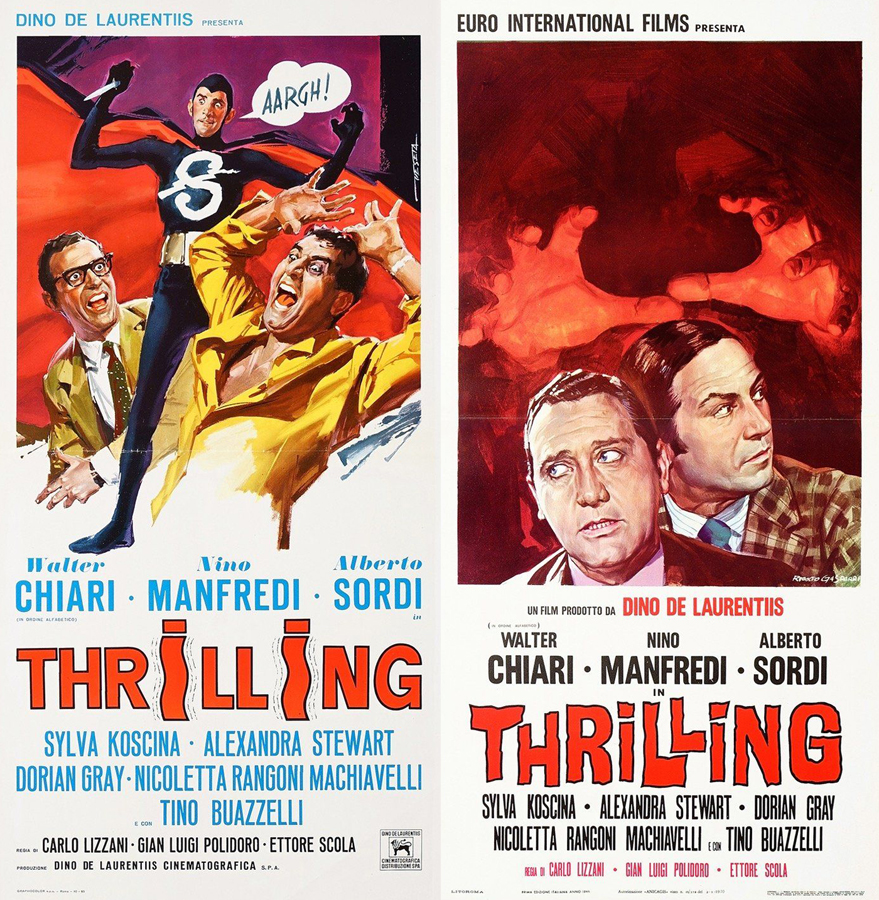
Rita Monico – Thrilling (La Regola Del Gioco)

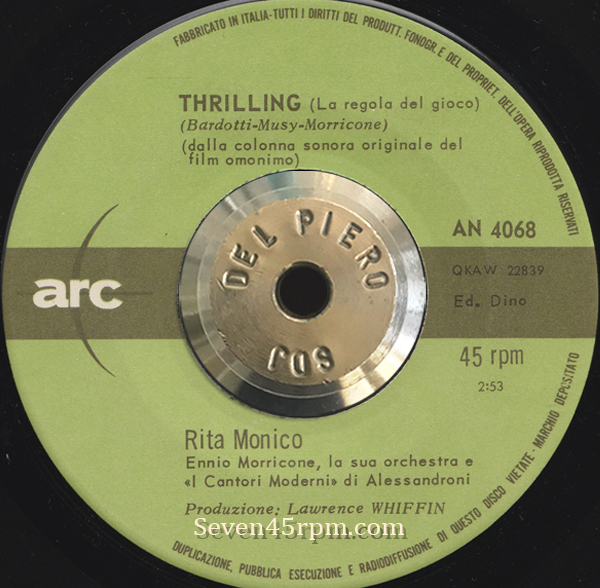
Label: Arc – AN 4068 Italy Released 1965
Track A: Thrilling (La Regola Del Gioco)
Thrilling: adjective – causing excitement and pleasure; exhilarating… “a thrilling adventure”
That’s a definition that is so well suited to this Rita Monico soundtrack single, released back in 1965. This featured track defines the Italian dramatic movie theme sound of the sixties.
I’m finally diving into this Morricone-Monico thriller title track, a much loved record, and a rare diamond in my collection. Quite a notable singer in Italy, and releasing a modest amount of singles early in her career, I mistakenly thought I would be able to uncover a whole lot more about Rita than I could. There has to be fans out there that can shine more light on her than I can here, but for now, I need to share what I have found out about her release.
Monico was born in Milano in 1950, and began singing at a very early age. She participated in the Zecchino d’Oro, an Italian festival/competition held annually since 1959, showcasing children singing songs (the winners are the writers and composers of the songs, not the young performers). She also sang in other competitions such as The Golden Mask and Golden Colosseum.
Her first credited recording release was in 1960 (she must have been 10), a collaboration with Armando Galimberti, singing the children’s Rhyme “Vorrei Volare”. At 11, alongside Laura Belloni, she narrates a record of “Tiritera Dell’Arcobaleno”, which I am assuming is a children’s story accompanied by music. Then in 1964, she had her first actual pop (chanson) release on the ARC label with “Se Tu Non Mi Vuoi” and “Di Sera”. That same year she release “Non Ho L’Eta (Per Amarti)”, a song also sung by Gigliola Cinquetti, who would end up winning the 1964 Eurovision song contest, with her performance of it.
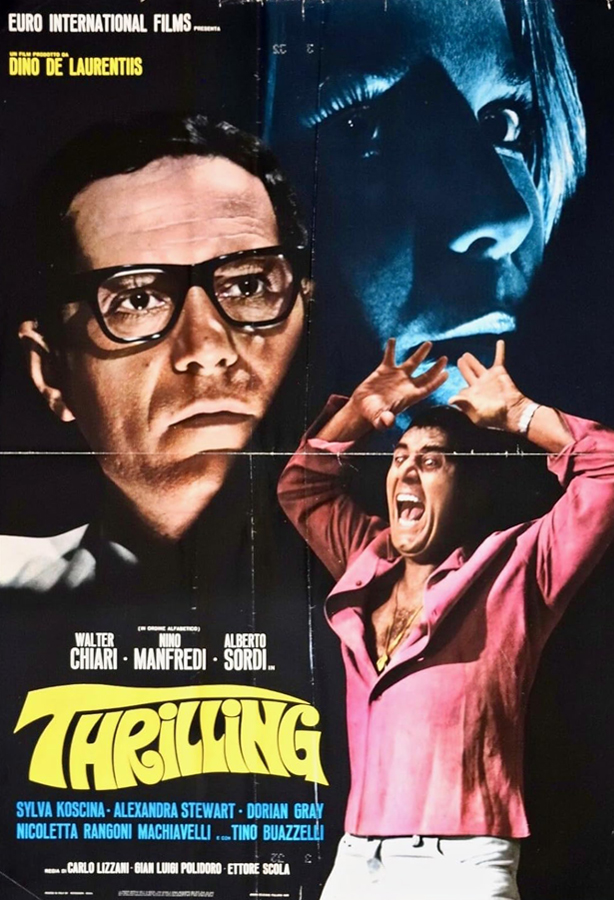
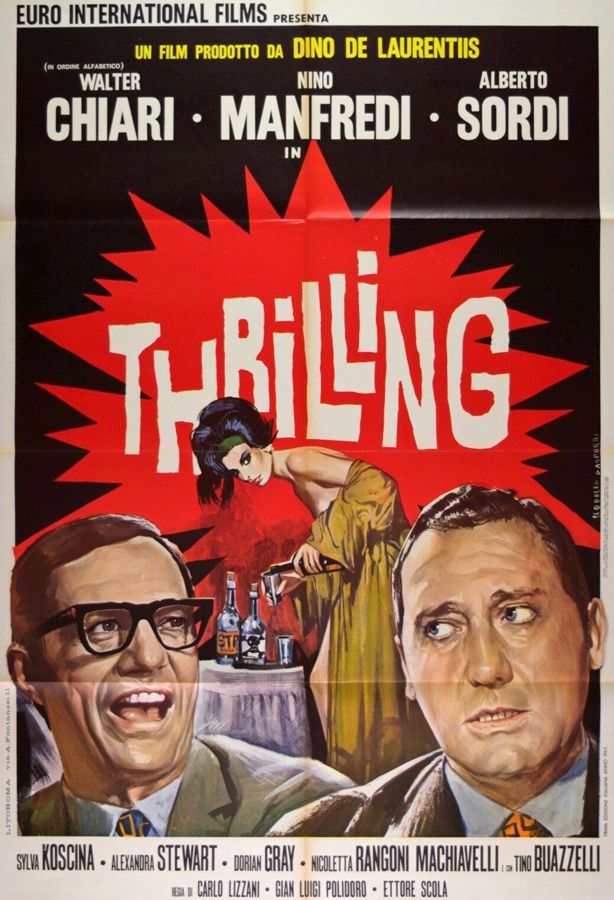
1965 saw the cinematic release of “Thrilling”, released in Italy by Dino De Laurentiis Cinematografica, filmed in Rome, Lazio. Filed as “mystery/thriller/comedy”, it’s an anthology made up of three short films, about three ordinary men who become involved in violent crimes. Each chapter had it’s own director and each included an array of iconic or up and upcoming Italian actors and actresses, all brilliantly cast. Here’s a brief depiction of the three chapters that make for the fun kooky ride.

Il Vittimista (The Victim) – The first story is about a Latin teacher named Nanni Galassi, who suspects his wife Frida (who also happens to have a creepy doll collection), is out to kill him. So convinced that she wants him dead, he consults a psychologist, to determine if it’s a reality or just a wild paranoid fantasy. His anxiety becomes so overbearing, and his tired hallucinating mind starts to break him down. His psychoanalyst reveals that his obsession is caused by a guilt complex stemming from an extramarital affair, so he breaks off all ties with his lover and resumes a quiet life with his wife. But his lover Luciana, isn’t too pleased to be brushed aside, and Nanni may have to pay the price. If you like Italian black humour and absurdity, then this is very enjoyable. Nino Manfredi plays the manic, witty Nanni superbly, and having both Alexandra Stewart as Frida and Magda Konopka as Luciana in the cast, makes it a delicious, if hardly thrilling short film. Ennio Morricone scores this first chapter with thriller instrumental themes, but the celebrated track to Il Vittimista is from Petula Clark, and her song Ciao Ciao (her Italian take on Downtown). It is heavily used in this first episode of Thrilling , and it is both genius and hilarious, as how it is placed in the final sequence.It’s the final master stroke by director Ettore Scola.
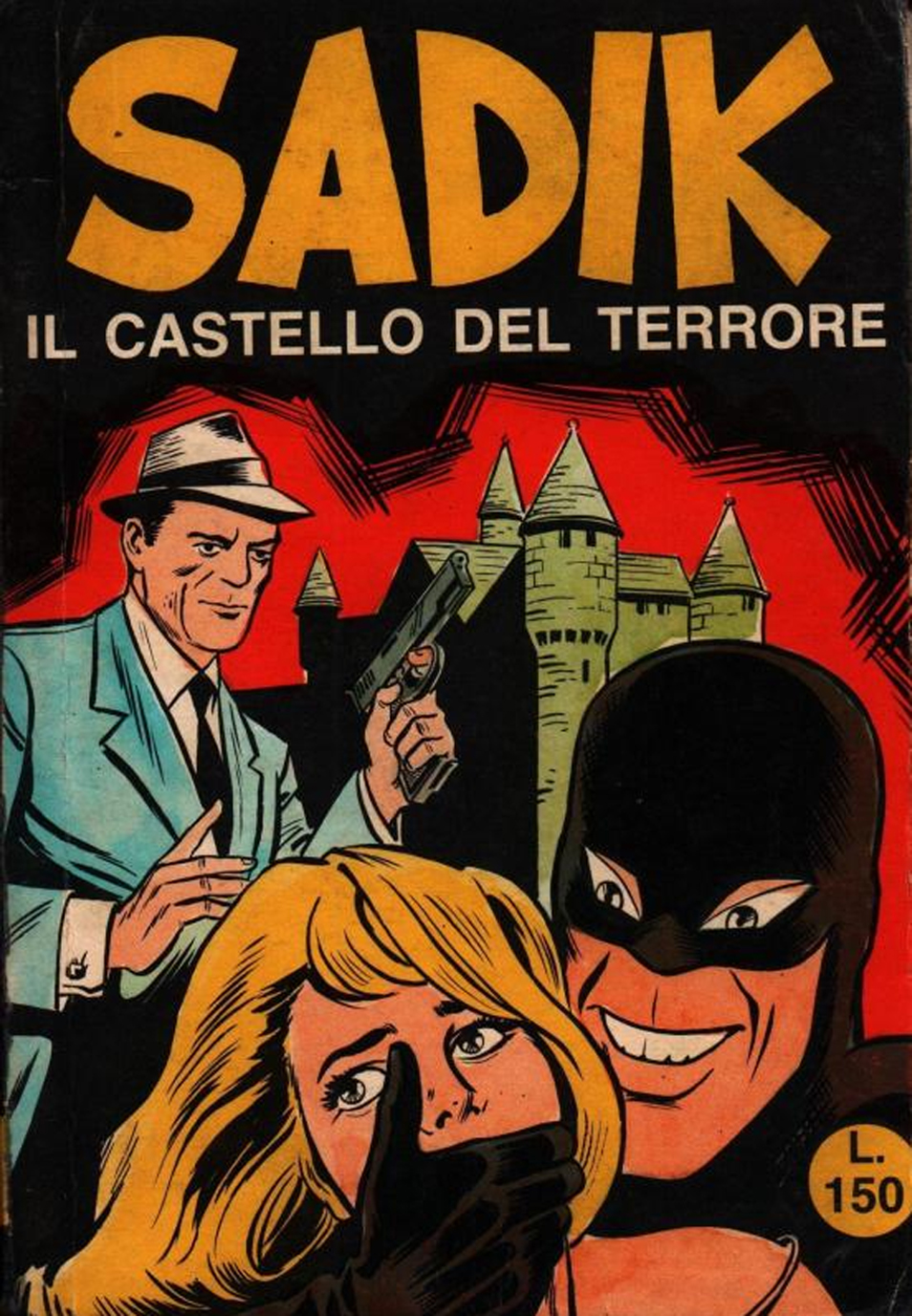
Sadik – Based on the comic series of the same name, this is the second story about a very stressed out business man-engineer named Bertazzi, who is struggling with debt and unpaid bills, but also having relationship troubles in the home, with his comic book obsessed wife. When Bertazzi comes home after a big day at the office, we first meet Veronique, lost deep into one of her comic books, that litter their living area. She pays him very little attention, far more interested in the adventures that picture the pages of her favourite Sadik paperback. After failed attempts of any real conversation, Veronique springs up an idea that may just spice up their relationship. She convinces her husband to dress up as her comic book hero and then break into their house, while she innocently waits in the bedroom. And yes she happens to have a replica costume, that really looks like she made it herself, ready to go. And miserable husband is willing to give it his all. The exotic escapade starts off well, but of course we know it’s not going to go to plan. The phone rings, his wife rejects a valuable business phone call from Switzerland, and he reacts by completely identifying with the comic book role imposed on him. Directed by Gian Luigi Polidoro, and starring Walter Chiari as Bertazzi and Dorian Gray as Veronique, this is a short but amusing adventure, with Monico’s title track used perfectly throughout, to give that wonderful Italian melodramatic and utmost thrill.

L’autostrada del sole (The Highway of the Sun) – The final film of the trilogy starts with Fernando Boccetta, driving sporadically on a freeway, deluded he’s behind the wheel of a Ferrari rather than the incredibly tiny Italian car he actually is driving. Whippin’ and zippin’ through frantic traffic, throwing out attitude to truck drivers, flirty looks to passing ladies, and just being a little insane really. After ditching a suspicious hitch hiker, he ends up having a little bungle with the driver of a sports car he was egging on. The driver takes off and the pursuit starts. But Boccetta breaks down and is forced to spend the night at a mysterious inn run by a very strange family, that it seems are murdering their guests. He meets Paola, a beautiful guest also staying at the inn, along with the very suspect family members. Boccetta senses evil doings and after discovering a body in his cupboard, he really starts losing the plot. He tries to warn an unconvinced Paola, but realising he is likely the next guest to be disposed of, he does his best to make his own getaway. The framed Bocetta almost succeeds, until the final reveal. Director Carlo Lizzani chose well to cast Alberto Sordi as the hilarious and cowardly buffoon lead. And if you have a thing for Italian screen starlets, this short film is a delight! Two sisters of the creepy family are played by Nicoletta Machiavelli as Lea, and her sister Claudia, played by Oretta Fiume, and also the female lead Paola, played by Sylva Koscina, who was actually a Croatian starlet, very popular in Italy in those days.
The title track “Thrilling (The Rules Of The Game)”, is another Morricone film score masterwork, and even though it was only this single that come out for the films release, I peak it very high, as one of his best. He’s collaborated with the highest calibre of female vocalists, but no one could ever better Rita Monico’s performance, or even be more suited for this particular track. It’s really hard to believe she was 15 or 16 when she recorded this! What an incredible range, from her sultry verses to the the big beautiful choruses. And so dramatically performed, in the way that only the Italians can do. And there is also icing of this cake with Alessandro Alessandroni’s musical vocal group Cantori Moderni di Alessandroni helping this become such a Morricone masterpiece. “Thrilling” is predominant used in the second act, but Morricone did create similar themes that really carries that beautiful eerie background atmosphere that is so good for this genre of Italian film making. There was never an actual LP soundtrack released for the film, however just recently in 2024, Solisti E Orchestre Del Cinema Italiano & EverKent, had released a “reconstruction” of Morricone’s music score for the three episodes as a limited run on CD. I’m honestly not a big fan of such modern day re workings (I struggle with the modern production sound, and definitely not the talent), but it could be good, and may even give Monica’s obscure original release more recognition.

The flip side to this official release has Monico singing what is now a Hal David – Burt Bacharach classic, Quando Tu Vorrai (What The World Needs Now Is Love), which has nothing to do with the movie, but it is such a beautiful version. On record, it is Jackie DeShannon who was first to release the vocal song version in April of 1965, so possibly it was some very clever marketing to have an Italian version on the shelves. Not an uncommon occurrence from European or foreign labels at that time. Also, if you want this version of Thrilling, a more achievable 7″ to find, was an EP released in France which also includes “Non È Mai Tardi”, a take on The Shangri-Las 1966 track “Dressed in Black”. Another beautiful cover from Monico, but not as dark as the original, which is always so alluring about The Shangri-Las.

Monico would release singles yearly up until 1975, but I really couldn’t find too much about her career movements or personal life after that period. If I was going to pick a stand out from her further releases, I would suggest the 1975 single Sono Mia / Leggenda Del Futuro, which was used for the documentary “Pianeta Donna – Italia”. The first in a series of documentaries dedicated to the condition of women around the world, produced to coincide with the UN’s “International Women’s Year”. The documentary explores the daily life of Emilia, a 28-year-old woman who emigrated from sunny southern Italy to foggy Turin, northern Italy. She lives with her large family (herself, her husband, four children, two sisters, and a nephew) in a squalid attic, and tries to make the income by working as a housemaid. Her life is devoid of entertainment and discusses the difficulties faced by immigrant families, similar to those faced by approximately 7 million Italians living in the North. The only footage I could find of this, was through the two clips of both songs posted on you tube. It actually looks ethereal and psychedelic, with trippy dance sequencing that plays against both songs, but particular well over Sono Mia. I believe Monico’s tracks are played for both the opening and closing sequences, but I would love to find the series… it’s very intriguing.
I must recommend the film “Thrilling”, to put on your watch list if you have never seen it, especially if you love this era of Italian cinema. The film has never had an official non cinematic re-release, on DVD or for purchase, other that the exclusive VHS (Domovideo and BMG) releases many, many years ago. This is madness! There are some shared opportunities online, but none of the recordings were of the best quality, and likely taken from a VHS copy. Most versions were in Italian with no subtitles, and while my Italian is very poor these days, that didn’t stop me from absolutely enjoying the whole ride, from beginning to end.
If you adore Morricone’s soundtrack work particularly from the sixties and seventies, you will understand why I absolutely treasure this obscure Monico release.
– del Piero

André Previn – Rollerball OST – Executive Party


United Artists Records – UA 36 033 Releaesed 1975
Track A: Executive Party
Track B: Executive Party Dance
Jazz influenced classical music composer-conductor, Andre Previn was responsible for one of the most funkiest spaced out film tracks you will ever hear, called Executive Party, released for the Rollerball soundtrack in 1975. Although I had watched this movie numerous times, the first time I really gave this track some serious and well deserved attention, was when I purchased the The Mighty Mellow (A Folk – Funk Psychedelic Experience) compilation in 1997, from the infamous Sydney record store Good Groove, which was recommended by the owner Tom. The comps linear notes and information was vague, mixed up and song titles were incorrect. I was certain that Andre Previn was incorrectly credited until I discovered it was from his Rollerball soundtrack.
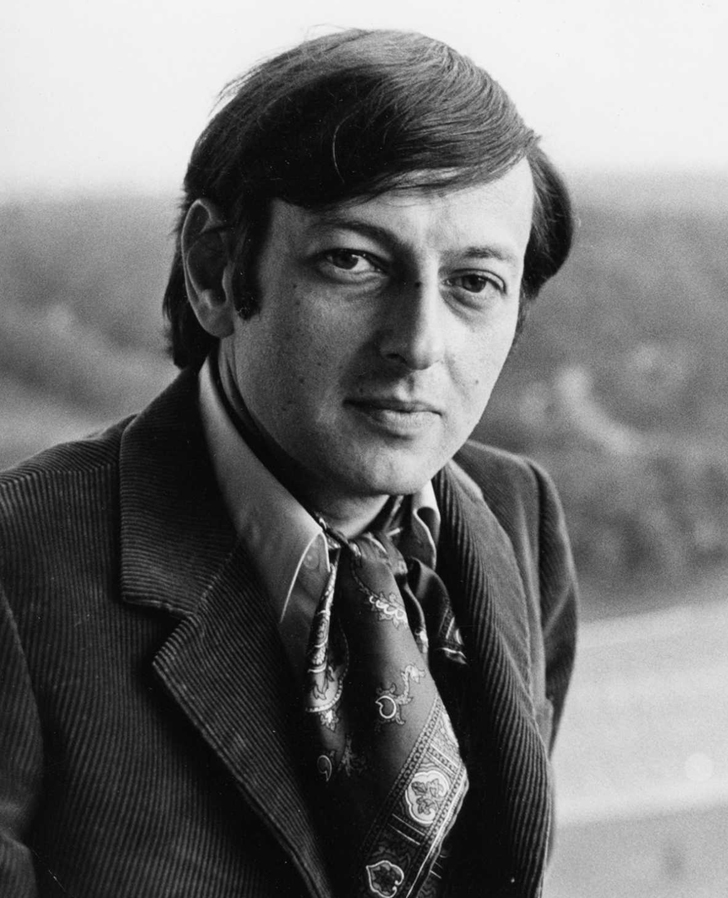
Previn was born in Berlin to a Jewish family, with three children of Charlotte and Jack Previn, a father who was a lawyer, judge, and music teacher. All three children received piano lessons but André was the one who enjoyed them from the start and displayed the most talent. At six, he enrolled at the Berlin Conservatory. In 1938, Previn’s father was told that his son was no longer welcome at the conservatory, despite André receiving a full scholarship in recognition of his abilities, on the grounds that he was Jewish.In 1938, the family left Berlin for Paris, and Previn’s father enrolled him into the Conservatoire de Paris where he learned music theory. In 1938 his family left Paris and sailed to New York City, then their journey continued to Los Angeles, and Previn learned English, his third language after German and French, through comic books, reading the dictionary, and watching films.
In 1946 he graduated from Beverly Hills High School, but had already started working for Metro-Goldwyn-Mayer as a composer-conductor, and arranger, after their music department noticed his work for a local radio program and hired him. Previn recalled that MGM was “looking for somebody who was talented, fast and cheap and, because I was a kid, I was all three. So they hired me to do piecework and I evidently did it very well”. Previn focused his attention on film scores and jazz, and stayed at MGM for 16 years, but despite the secure job and good pay, he had come to feel increasingly confined, and consequently desired to pursue classical music outside of film scores. He resigned from MGM at 32, wanting “to gamble with whatever talent I might have had”.

Previn would branch out into classical music, theatre, easy listening music and contemporary classical music. His jazz recordings, as both leader and sideman, were primarily during two periods: from 1945 to 1967, and from 1989 to 2001, with just a handful of recordings in between or afterward. Previn was involved in creating the music for over 50 films and won four Academy Awards* for his work, and in 1966, Previn was the first person in the history of the Academy Awards to receive three nominations in one year. Some of his releases that I lean towards to, are two collaborations…Ravi Shankar & André Previn – London Symphony Orchestra Concerto For Sitar & Orchestra, from 1971, and the Valley Of The Dolls soundtrack, which was conducted by John Willams, and feature song composing by Previn and his then wife Dory, who was a poet, lyricist and singer song writer. I’m also a admirer of his Holst release of The Planets, Op. 32, in 1974.
Rollerball is a classic seventies sci-fi action film, with a large cult following and a very iconic look. It was directed by Norman Jewson, who had also directed The Cincinnati Kid (1965), In The Heat Of The Night (1967), The Thomas Crown Affair (1968), amongst others. These all did well for him, and taking on this dark, futuristic, violent action film, must have been a challenging curve ball he was looking for.
The Storyline: In a futuristic society where corporations have replaced countries, the violent game of Rollerball is used to control the populace by demonstrating the futility of individuality. However, one player, Jonathan E., rises to the top, fights for his personal freedom, and threatens the corporate control (IMDB – Jeff Hansen). The film is based on a short story by William Harrison’s “Roller Ball Murder”, first released in Esquire magazine in 1973. Although Rollerball may first look like a science fiction sports movie, it’s actually a deep philosophical look into a dystopian future, and looks into government control versus free will. James Cann plays the hero Jonathan, the ultimate champion and hero of Rollerball, and is adored by masses of fans of the blood sport. But he is getting on, well for a demanding sport that is evolving by becoming increasingly more violent. However the head of the energy corporation who runs society, wants him to retire, but when Jonathan refuses, things get intensely dangerous, and the game becomes a fight for his life. The film demonstrates that the individual can triumph over insurmountable odds and cautions against corporate control of society.

Jewson was a big fan of A Clockwork Orange, and used the film as a reference point for defining a world of concrete and steel imagery. He also adopted the idea of using classical music for this fierce movie, because of Clockwork, and also 2001 A Space Odyssey, and believed the timeless score would less likely age the film in the future. Previn composers The London Symphony Orchestra to perform Shostakovich’s Symphony No. 5 movements to establish tone, mood, and atmosphere for certain scenes, and also cunningly uses Tchaikovsky’s Sleeping Beauty Waltz for action and drama. Bach’s Toccata and Fugue in D minor plays during the opening title sequence and again at the final scene, book-ending the film. Previn wrote the space jazz track Executive Party and it’s lounge accomplice Executive Party Dance, and as isolating as they may seem on the album, they sit well within the more laid back dining scenes in the movie. Unfortunately Executive Party, one of my most favourite soundtrack instrumentals of all time, clocks in at only 1. min 47sec. But there’s also something nice about that.
These two tracks may feel odd or misplaced on the LP, amongst Previn’s composed The London Symphony Orchestra works. And I’m sure many like myself, that knew this track, before finding a copy of the soundtrack, were expecting and hoping for more wigged out grooves, like these featured tracks. But it shows us the diversity and dexterity of Previn’s mind, and how he was an artist of all musical styles. After learning more about Previn and this soundtrack, I like how the tracks sit amongst the classical tracks on film and on vinyl. I do admit I wish there was more of this to be found in his extensive catalogue, but I’m ever so grateful that these tracks not just made their place onto the LP, but also were released as 7″ singles.
* Previn won four Academy Awards for Gigi (1958), Porgy And Bess (1959), Irma La douce (1963) My Fair Lady (1964) and was nominated 11 times.
Previn was married four times which included 9 years with Mia Farrow.
Newsom has been nominated for the Academy Award Best Director three times in three separate decades for In the Heat of the Night (1967), Fiddler on the Roof (1971) and Moonstruck (1987).


Japanese and French movie poster releases.
If you like this kinda stuff, check out some other soundtrack titles I’ve dug into….
Berto Pisano featuring Doris Troy – Kill! Them All!
Ennio Morricone – Svolta Definitiva (Città Violenta)


RCA SS 1985 Japan Released 1970
Track A – Città Violenta
Track B – Svolta Definitiva
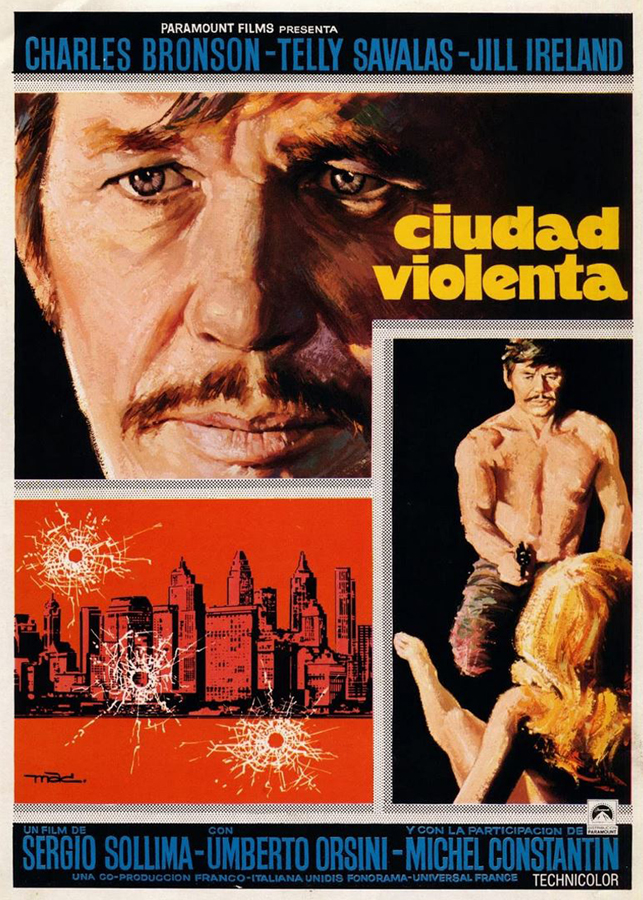
Legendary master composer Ennio Morricone, is behind the soundtrack for the 1970 film Città Violenta, and this Japanese single release gifts us with two outstanding tracks from Sergio Sollim’s film. Italian soundtrack collectors…you need this!
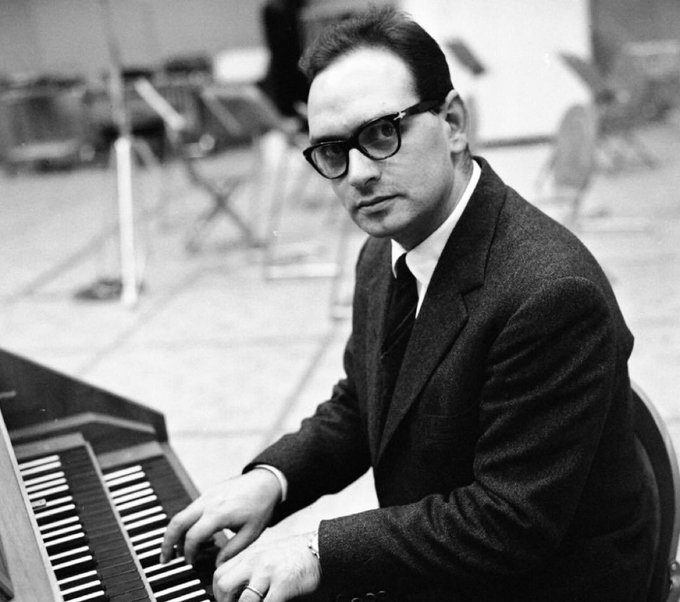
Morricone was the unquestionable leader for scoring Italian cinema, and although he achieved wide recognition with Sergio Leone’s series of Westerns, we all are aware of his diverse range of colour, style, methods and moods. He was always exciting and knew how to create atmosphere, even if it was a totally new angle, and opposing the predictable. I get this feeling, when Ennio was composing scores for these kind of action thrillers of the 60’s and 70’s, it’s like he’s at the wheel of a Ferrari Dino 246, steering us in and out of dangerous and intense situations, speeding up, slowing down, then flooring it even more. And when things are calm, you’re still anticipating the unexpected. Morricone knows how to create atmosphere. He invented it for this era of cinema, and today we still love it, because it just belongs…it’s the right time and place for his mastery. Yes, we all are aware of Morricone’s talent, but what we have to keep reminding ourselves, is the amount of work he was producing and the variety of projects he was taking on. In 1970, the year Città Violenta was released, I count Morricone’s soundtrack tally to 15 films just for that year alone!
Directer Sergio Sollim’s crime thriller is released as Città Violenta in Italy, but it also had two additional releases in the US, the first as Violent City, then a later and wider release as The Family. This was an intentional name change for the 1973 release, to try and jump on the success of The Godfather that had been released the year earlier in 1972. The marketing department were even influenced by the famous Godfather font, with some blatant borrowing. This would be Sollima’s 7th (I think) feature film and would call on Morricone again, for his talents to score his new film as he had done with 3 of his earlier films, The Big Gun Down, Face to Face and Run, Man, Run, featuring Christy. I can assume their working relationship together was reverent and successful, however all Sollima’s three previous films they collaborated on, were westerns. I’m not sure how Sollima discussed or briefed sound concepts with Morricone for Città Violenta, but with hindsight, it would definitely become a new sound for his film catalogue.

Città Violenta carries some good acting talent as well, with Telly Savalas, Charles Bronson and his fairly new recent wife, Jill Ireland (Ireland’s former husband-actor David Mc Callum, first introduced them on the set of The Great Escape in 1963). Bronson was just becoming a major star in Europe after the success of recent and broad films such as London Affair, Adieu l’ami, and Sergio Leone’s Once Upon a Time in the West, and for a good period of the seventies, he would rival Clint Eastwood as the biggest movie star in the world.* So it’s great to see Bronson here at this important part of his acting career, and working alongside his wife. That same year and Bronson would also star in Cold Sweat, directed by Terence Young, and again co staring Ireland.
Synopsis – Jim Heston (Bronson) a professional hit man, is left for dead after a double cross murder attempt by a his wife Vanessa Shelton (Ireland) and another hit man. The set up costs him four years in jail, but when he gets out, he sets out to take revenge on his wife and the mob who put her up to it. He finds himself blackmailed by a powerful crime boss (Savalas), who wants the fiercely independent gunman to join his organization. Jeff who wants to leave that line of work, refuses, and is hunted by killers for the effort. Vengeance and love drives him through detrimental roads of uncertainty and it’s consequences.
The opening title sequence is beautifully stylised and features the main theme Città Violenta, straight up creating a mood of excitement, intrigue and suspense. And what soon follows, is a exceptional and insane thrilling car chase in the small streets of a tight Italian country town, where Sollim decides to take away the music for impact, and unusual but very effective decision for action sequences. I know when I’m discovering a new soundtrack track list, I usually go straight to the “car chase” theme, as it’s usually the one with the big beats and drive. So audiences are right in from the get go, and you already can tell this is no novice in the directors chair. Sollim knows about the film making and how music can be used to paint, just as much as visuals. And he wouldn’t be afraid to NOT use it, if he felt it may deter from story or action, or if it felt too predictable or typical to do so. The track Città Violenta gets a good run through the film as does a few nicely composed variations on the theme, but it is all for a reason. Svolta Definitiva is the perfect background music to a bar sequence where the patrons are the in-crowd… a bit hippy trippy, but an exclusive scene. Models, dancers and gangsters. It’s perfect! I have loved this track for many years before I knew this movie, and I was so please to discover that it belonged in such a great sequence! Later in the film we get some memorable hard hitting and surprising moments, and again Sollim creates such an impact with his music direction, and how effectively he uses it, and again, not uses it. Together the movie and music direction entwine effortlessly and results with a strong action film of it’s time, that both hold proudly in their catalogue of successes.
And this is also why Morricone’s music is so revered today. The impact it leaves on the audiences. His scores are often considered as much as part of the experience, as the story or cast of the film. A lot of the times, his scores are more remembered than the films itself. But in this case Città Violenta is a perfect score to a great crafted Sollim film. – Piero Sgro
Here is a link where you can watch Sollim’s Violent City, which is a nice print, but note that it will only on the occasion, revert to Italian dialogue every now and then. But it’s a good source.
Other Ennio Morricone scores for Sergio Sollima…
- The Big Gun Down 1967 (La resa dei conti) lit. ’The Settling of Scores
- Face to Face 1967 (Faccia a faccia)
- Run Man Run 1967 featuring Christy (Corri uomo corri)
- Devil in the Brain 1972 (Il Diavolo Nel Cervello)
Piero Umiliani scores for Sergio Sollima…
- Agent 3S3: Passport to Hell 1965 (Agente 3S3: Passaporto per l’inferno)
- Agent 3S3: Massacre in the Sun 1966 (Agente 3S3, massacro al sole)
* Sergio Leone once called Bronson “the greatest actor I ever worked with”, and had wanted to cast Bronson for the lead in 1964’s A Fistful Of Dollars. Bronson turned him down and the role launched Clint Eastwood to film stardom. The film was the biggest hit of 1969 in France.
Image 1 – Ennio Morricone (photo credit unknown)
Image 2 – Charles Bronson and fellow actress wife Jill Ireland (photo credit unknown)
UPDATE Alternate version of Violent City
– Everlasting Screen Themes
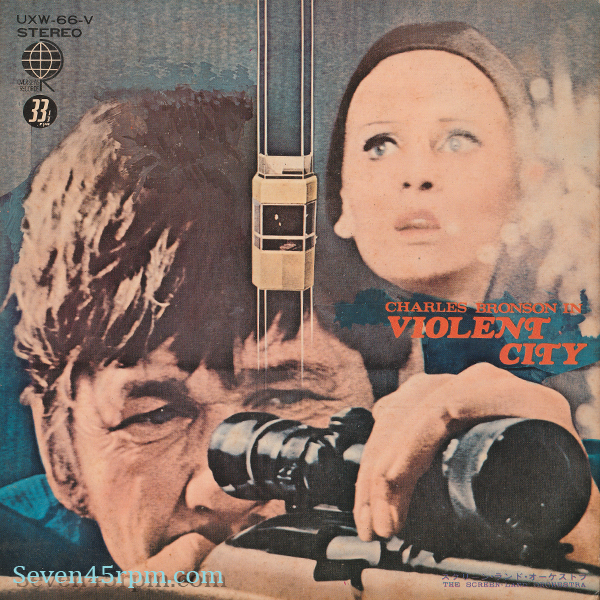
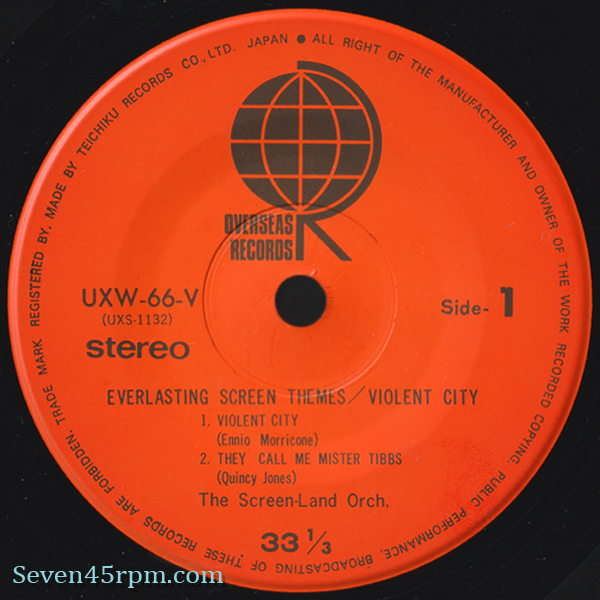
JAPAN Overseas Records UXW -66-V
Track 1: Violent City
Here is a Japanese alternate version of Violent City, that’s pretty great and different enough from Morricone’s original. Had to share this also. This rare EP also includes a wild take on Quincy Jones’ Mr. Tibbs.
Berto Pisano featuring Doris Troy – Kill! Them All!


CineDisc – M-5 Released 1972
Track A – Kill! Them All!
Italian composer, conductor, arranger and bassist Berto Pisano is behind this wild score for Romain Gary’s 1971 film Kill! Kill! Kill! Kill! This Japan release of the single includes the explosive main track with Doris Troy providing some beautifully brutal vocals, and also includes the lovely instrumental main title theme on the flip! Stand back! This is explosive!
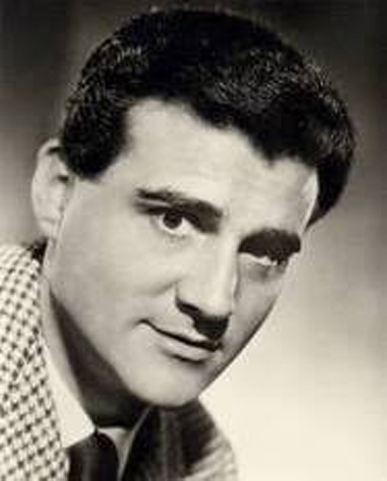
As brilliant as Pisano’s work is, I can’t help feeling his musical accomplishments are still very overlooked, and when I went searching for anything on this incredible musician and important composer, I really couldn’t come up with much at all, which may sound familiar… and it’s unforgivable! I do know Umberto Pisano (real name) was born in Cagliari,on October 13, 1928 and passed on January 29, 2002, and was the younger brother of Franco Piano who would also in time, become a composer and conductor. Berto began his career as a jazz musician playing the bass, first in Quintetto Aster (this was during WWII, then working for the allied radio and Radio Sardinia) and later in Orchestra Gli Asternovas along with his brother on guitar. This group would release around ten singles, more in the style of Latin pop jazz, between 1960 to 1961. Really quite a lot of records in a short time span.

When I look through Berto’s discography, his first soundtrack release is in 1966, a single release, the track is called Ma Se Tu Vorrai featuring Ella Gaby, for the film La Spia Che Viene Dal Mare (directed by Lamberto Benvenuti and starred the statuesque model Janine Reynaud). I’m not sure how Berto made this transition into Italian film scores, but already you can hear something pretty strong developing here, that would be a trade mark staple sound. Big band Bond-esque like orchestration with big dramatic Italian vocals by Gaby, would become a popular style for Italian cinema in the sixties. I also wish I could find out more about Ella Gaby, who only had one other single release that same year in 1966.
1967 draws the release of Pisano’s western soundtrack to the film Bill Il Taciturno, also titled Django Kills Softly and one of many films that were given a “Django” title in order to cash in on the success of Sergio Crobucci’s 1966 masterpiece “Django”. Directed by Massimo Pupillo, a film from what I read from quite a few reviews, follows a lot of typical western formulas of that time, and I feel I have to say the same about the score. Both tracks on the single release are great, but yes, sounding very “borrowed” from the Morricone path that was already heavily cemented. This really isn’t a bad thing as it really ties in well with the genre, with big iconic horn instrumentation and chorale. I did find the whole film on line so I am keen to have a good watch, although I will have to brush up on my Italian.

Interrabang was Pisano’s followup single in 1969 and this one is a delight and more towards my erotic kitsch tastes! So this is the storyline… A photographer is sailing with his wife, her sister and his nympho-maniacal model. He leaves the three women alone to get a part for his boat. A mysterious man shows up, who might just be an escaped criminal the police are searching for. This doesn’t alarm the three women too much, and he rapidly seduces all three of them. Directed by Giuliano Biagetti and starring the radiant actresses Beba Loncar, Haydée Politoff and Shoshana Cohen, this is again another film I have yet to see in it’s entirety, but what I have seen, is pure 60’s kitsch Italian film making with it’s adult vibrancy, Pucci paint strokes and it’s stunning water locations. Pisano has managed to bring in the great Edda Dell’Orso for this soundtrack, which is always the exact right thing to do, and takes things up to the next level. You can hear her beautiful distinctive voice on the single release of Il Colore Degli Angeli. This film would also give Pisano his first LP soundtrack release in 1970. *

KILL! So here we are, 1971, and Berto Pisano presents the soundtrack to Romain Gary’s second film after Birds In Peru (1968). Where do I start? This film was also released as Kill! Kill! Kill! Kill, and starred Romain’s wife Jean Seburg, Stephen Boyd (Fantastic Voyage) and also one James Mason who starred in one of my favourite childhood movies Journey to the Center of the Earth. If you have the opportunity to watch this movie, you will need to hang on with both hands as it’s a bizarre roller coaster ride which will go off the rails! When the story begins, a big-time drug kingpin is inexplicably released by a judge, and as a result, most of the drug detective agents resign in protest. Hamilton, a Federal Narcotics Bureau Chief Inspector (Mason) remains on the job and is sent by his boss to Pakistan with $5 million worth of heroin, in hopes of unmasking a global narcotics kingpin. At the same time, heroin dealers around the world are being assassinated. Hamilton’s bored wife Emily (Seberg), secretly follows her husband in hopes of joining him on this insanely dangerous mission. Emily is soon lost and alone in a foreign land, is stalked by hitmen, but is also aided by rugged, ex-cop, potentially unhinged American Brad Killian, who by the way, has a personal mission to slaughter everyone involved with the heroin biz – transporters, processors, corrupt cops, scumbag lawyers…everyone! Brad also takes home movies of his executions and enjoys watching them afterward, with an equally-drug-loathing 12 year old Arab boy (yeah…pretty weird right?). Emily quickly falls for Brad, although she tells him she hates him and he’s insane…possibly because she craves the excitement of his murderous ambitions?

Pisano’s Kill! Them all! is the perfect savage and explosive introduction to this film, which embraces the high powered voice of R&B singer Doris Troy! Immediately your punched in the face 4 times with the impact of the opening horns. The driving bass, background fuzz, and the spine chilling grit of Troy’s voice, to Romain Gary’s lyrics, is absolute! The whole structure of this composition is pure accomplishment, with it’s build ups and it’s quiet junctures, and I will say this has to be one of the top of all time, title themes for any thriller action film, period! The film would also have an LP release is with original copies of course being incredibly difficult to get your hands on. Again Pisano brings in Edda Dell’Orso for the beautiful track To Jean, which alone makes this LP a must have. But there’s also beautiful instrumentals including the dizzying Allucinazion, the transcending Indian inspired Khanpur, and further hypnotic tracks Il Deserto and Souk Tawil. As a side note, Tennessee blues artist Memphis Slim performs in a surreal nightclub sequence filled with trippy sensual naked women, which does not appear on the LP release.

I couldn’t imagine anyone else fronting this killer big beat track other than Doris Troy, and when I first heard this, I had to check it was the same Doris that gave us Just One Look and What’cha Gonna Do About It? The daughter of a Barbadian Pentecostal minister, that cut her teeth singing in her fathers choir, with parents that both disapproved of “subversive” forms of music like rhythm & blues. A hard and more gutsy song perhaps for Doris, but it shows us a side of her diversity, which would bet proven more and more times in her future recording career. She would go on and contribute her voice to The Rolling Stones, Carly Simon (You’re So Vain), Pink Floyd (Dark Side Of The Moon), and also Nick Drake, Dusty Springfield and a heap more.
This Japanese release featured here, has an exciting flip, an instrumental less abrasive version of Kill Them All! It has beautiful cover art with striking font, and the production quality on this is super clean and loud (as most of these Japan pressings are). There’s also an Italian release on General Music which includes a surprising Jean Seberg track Hiasmina, also composed by Pisano. Her only recording that I could find and although she’s not really “singing”, it is a lovely treasure that exists.
Pisano would further more, work on jazz instrumental albums and soundtracks and would continuing recording with Edda Dell’Orso, including on the soundtrack La Novizia (recorded in 1975 but just properly released by Four Flies) and La Svergognata (1977). While his recording legacy isn’t as accomplished and extensive as some his other colleagues, I highly recommend if you haven’t already, to take a dive into his works! And like I said, I would place Kill Them All! extremely high up and as one of the best and sublime film theme tracks of all time!
Referencing…
Shock Cinema – Great stuff here!
* An interrabang (more commonly interrobang) is a non-standard punctuation mark combining through superimposition a question mark and an exclamation point. It was invented in 1962 by an American advertising executive Martin K. Speckter.
If you find this genre interesting you may also like these…
Zeudi Araya (Piero Umiliani) – Oltre L’Acqua Del Fiume

 La Ragazza Fuoristrada OST Piero Umiliani – Bla Bla – BBR 1338 Italy 1973
Track A: Oltre L’Acqua Del Fiume
This is a pretty special one, among my beloved mountain of 7″ soundtracks, and these tracks are in fact the only recordings by Eritrean-born Italian actress Zeudi Araya. The A track is fascinating and quite a hypnotizing piece, that pulls you right down into the beautiful deep dark water of sensuality. Composer Piero Umiliani recorded the soundtrack for La Ragazza Fuoristrada in 1973, which starred Zeudi in the lead role as Maryam, but for some reason the two vocal recordings for the film, did not end up on the soundtrack LP. But instead, and thankfully, they did end up on this Italian released single!
Piero was much more than a talented piano player and composer. He truly was one of the top master and pioneer composers of cult Italian films of the 60’s and 70’s. Providing soundtracks to films such a Il Marchio Di Kriminal 1968, Paranoia (Orgasmo) 1969, Five Dolls For An August Moon (5 Bambole Per La Luna D’Agosto) 1971, My Darling Slave (La Schiava Io Ce L’Ho E Tu No) 1973 and of course Sweden Heaven and Hell (Svezia, Inferno e Paradiso) 1968 in which Umiliani composes his famous Mah Nà Mah Nà, made famous by The Muppets.

Umiliani also founded his own label Omicron in 1964, where many more of his soundtrack works would be released. As he would also compose a lot of way out compositions that would not appeal to the Italian producers, this became the perfect outlet for him to release some of his incredible abstract, experimental and library albums such as Preistoria, Atmospheres, L’Uomo Nello Spazio and Psichedelica (Umiliani was also a great collector of music instruments from all over the world, and was one of the first in Italy to experiment with the Moog and other electronic keyboards). Some of his releases were under the alias Moggi, including my favorite Tra Scienza E Fantascienza from 1980, and also Omaggio a Einstein, Tensione and News! News! News!. By the end of his career he had written more than 150 soundtracks, without considering the music composed for documentaries, theatre and television.
While there’s so much to know and discover about the great Umiliani, unfortunately there’s not a lot out there regarding Zeudi. No official website and all the general film and music go to sites are very brief and unhelpful. Which is a real shame of course. Thankfully there’s one or two Italian websites that share a few details, that I’ve hopefully translated correctly.

Zeudi Araya was born on the 10th of February, 1951, in Asmara, Eritrea, Ethiopia, and is a former actress, singer, model and currently a film producer. Zeudi was the daughter of a politician and granddaughter of an Ethiopian ambassador to Rome. She graduated in 1969, and the same year she was elected Miss Eritrea. She is one of the best-known actresses of the Italian erotic cinema of the seventies, thanks to films such as La Ragazza Dalla Pelle Di Luna, La Ragazza Fuoristrada, and Il Corpo, and was second only to Laura Gemser, another icon of that particular Italian genre of cinema.
A trip to Italy opened the doors of Cinecittà to her almost by chance. In 1972 Araya starred in a commercial for a coffee, where director Luigi Scattini noticed her, and would cast her along with Beba Lončar, in his film La Ragazza Dalla Pelle Di Luna, shot in the Seychelles. The film is noted as being quite successful with the Italian audiences. The role was that of a girl from the Tropics who screwed up the marriage of a middle-class couple, with her overwhelming eroticism. Alberto, an engineer, and Helen, a magazine photographer, had been married for a few years, but their marriage was in crisis and they would betray one another. This debut film launched Araya as an up and coming actress. Mass media interest followed, as did other erotic films roles, mostly directed by Scattini from 1973 to 1975.
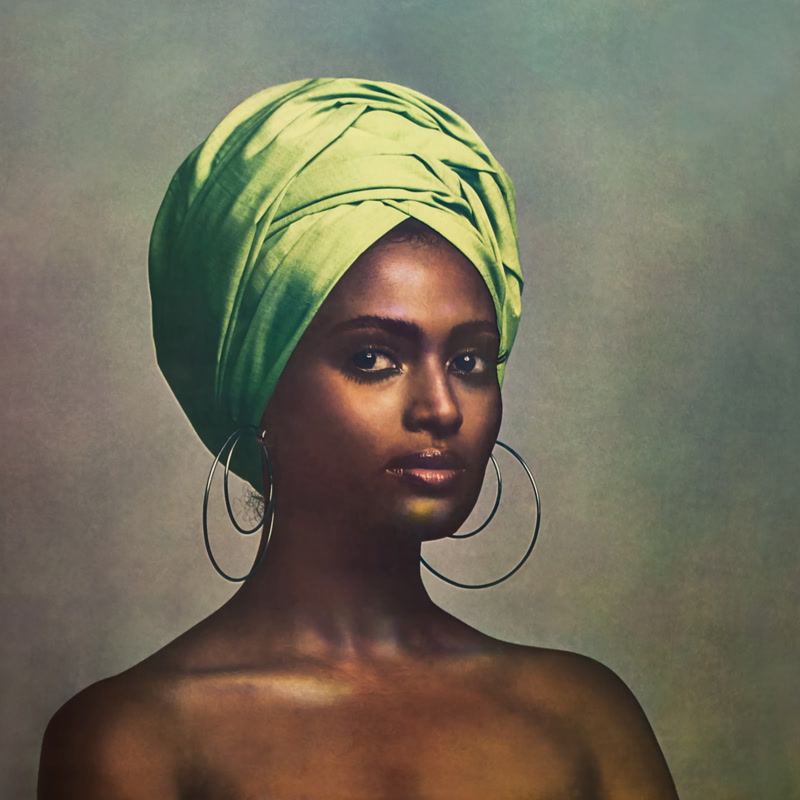
So the plot in her follow up film, that includes this feature track, La Ragazza Fuoristrada, again really circles deeply around Zeudi and her stunning model looks. Giorgio Martini, an advertising journalist who went for a shoot in Egypt, falls in love with the beautiful Maryam. He takes her with him to Ferrara, Italy, introduces her to his perplexed (perhaps disapproving) parents and marries her. Maryam’s ingenuity, spontaneity and sincerity burst into this provincial town and collide with a hypocritical, mean and racist environment. He will then be the victim of the cruel game of a former mistress of the journalist and of a joke combined by two rejected friends. Giorgio, thinking that Maryam has betrayed him, begins to neglect her. After having an abortion, she abandons him and returns to her people. Umiliani’s score throughout this film is wonderfully suited and at times just breathe taking (I’m basing this from the clips I have seen and knowing the official soundtrack). Zeudi sings two songs in the movie, Oltre l’acqua del fiume in Italian and Maryam, in Amharic. If you spend most of your life tracking down this rare record, and you do happen to get your hands on it, you’ll likely not be disappointed that it doesn’t contain the two vocal tracks, although you will then need to track done this featured single.
After Araya’s marriage with the film producer Franco Cristaldi, she would go on to star in the films Mr. Robinson in 1976, Atrocious Tales of Love and Death in 1979, and staring Marcello Mastroianni and Ornella Muti, Tesoro Mio also in 1979, than a fantasy film called Hearts and Armour in 1983, and starring the late Tanya Roberts as Isabella, and finally in Control in 1987.
In the early 1990s, Araya withdrew from the film scene. After the death of her husband, Araya became an active part of film production work, and still today produces several films for cinema and television, always remaining behind the scenes (she returned to television only in 2001, interviewed by Daniele Luttazzi, for the program Satyricon), with her new partner, the director Massimo Spano, with whom she had a son.
As is the case with a lot of these obscure Italian films, they are difficult to source, and therefore I have not had the privilege to enjoy many of them, including the film that has this featured track. But for me, that doesn’t really matter so much as I love the music enough and that’s where it holds that special place. I will continue to try and find these obscure films ofcourse but it is a challenge, trust me.
Zeudi Araya also also appeared in the Italian version of Playboy magazine in March 1974, which I may have to track down, to you know, maybe find out more information about her.
Araya’s starring films…
1972 La ragazza dalla pelle di luna – Also known as The Girl With The Moon Skin, Sex of Their Bodies, Moon Skin and The Sinner
1973 La ragazza fuoristrada
1974 La Preda – Also known as The Prey
1974 Il Corpo – Also known as The Body
1975 La peccatrice – Also known as The Sinner
1976 Il signor Robinson, mostruosa storia d’amore e d’avventure – Also known as Mr. Robinson
1979 Giallo Napoletano – Also known as Atrocious Tales of Love and Death
1979 Tesoro Mio
1983 Hearts and Armour – Also known as I Paladini: Storia d’armi e d’amori
1987 Il giorno prima – Also known as Control and Mind Control
Websites and referencing…
Piero Umiliani official web site
Mitiche attrici anni 70 – ZEUDI ARAYA
Top photo taken from Umiliani’s official site (link above). Director Luigi Scattini, Zeudi Araya and Piero Umiliani in the studio for the La Ragazza Fuoristrada sessions.
If you’re interested in more Italian 7″ soundtrack singles, see links below…
R. D. Burman – Baby, let’s dance together – Shalimar (OST)

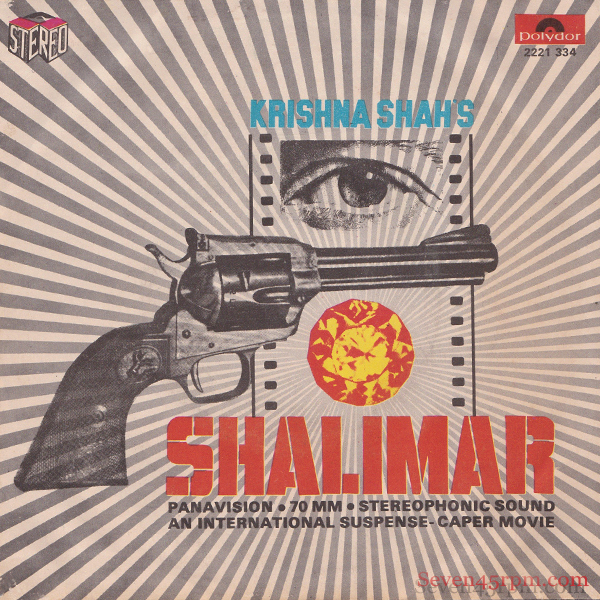 Polydor Cat# 2221 334 India 1978
Track 1- Let’s Dance Together Track 2 – Cha Cha Cha!
Rahul Dev Burman was born on June 27, 1939 in Kolkata, to the Bollywood composer/singer Sachin Dev Burman and his lyricist wife Meera Dev Burman. According to some stories, he was nicknamed Pancham da because, as a child, whenever he cried, it sounded in the fifth note (Pa), G scale, of music notation (the word Pancham means five, or fifth, in Bengali, his mother tongue). Another theory says that little Rahul received the nickname because he could cry in five different notes.
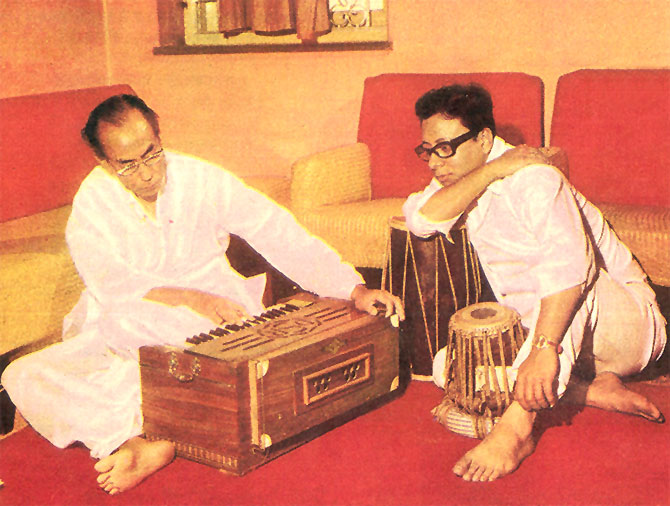 When Burman was nine years old, he composed his first song, Aye meri topi palat ke aa, which his father used in the 1956 film Funtoosh. Sar jo tera chakraaye was included in Guru Dutt’s 1957 soundtrack for Pyaasa, and was also another father/son collaboration this time sung by Gumnaan singer Mohammed Rafi. In Mumbai, Burman learnt to play the sarod by classical musician Ali Akbar Khan and also the tabla by Samta Prasad . He also considered composer poet and a playwright, Salil Chowder as his guru. He served as an assistant to his father, and often played harmonica in his orchestras.
RD Burman’s first released film as an independent music director was Chhote Nawab (1961). Popular Bollywood comedian Mehmood was the producer and first approached Burman’s father for the music, however he had to turn down the offer, saying that he did not have any free dates available. At that very meeting, Mehmood noticed Rahul playing tabla in a back room, and signed him up as the music director for the film. Burman’s first hit movie as a film music director was Teesri Manzil (1966), which starred Shammi Kapoor, who is hailed as one of the most entertaining lead actors that Hindi cinema has ever produced, and was married to actress beauty Geeta Bali. The scored had six songs, all of which were written by Majrooh Sultanpuri, and sung by Mohammed Rafi. Four of these were duets were with his future wife and superstar Asha Bhosle (apparently they first met when she was the mother of two and he was in 10th grade having dropped out to pursue music). I advise you to search for the brilliant Hassina zulfo walli clip, where you witness some amazing set designing, which is actually quite typical in this wonderful film genre. Nasir Hussain went on to sign RD Burman and lyricist Majrooh Sultanpuri for six of his films.
 In 1971, Burman composed the music for Dev Anand’s Hare Rama Hare Krishna. Asha Bhosle won the Filmfare Best Female Playback Award for the infamous electrifying Dum Maro Dum (Take Another Toke), from this film, which was a huge hit and proved to be a seminal rock number in Hindi film music. Dev Anand did not include the complete version of Dum Maro Dum in the movie, because he was worried that the song would overshadow the film. The hit film was a star-making vehicle for the model and beauty queen, Zeenat Aman, who won over the heart’s of world audiences, in her role as the westernized hippie, Janice. [1] The film was a huge success for her, going on to win the Filmfare Best Supporting Actress Award, as well as the BFJA Award for Best Actress. She would become one of the highest paid Hindi actress between 1976-80 and appeared on every Hindi film magazine’s cover during the 1970s. Hare Rama Hare Krishna dealt with the decadence of the Hippie culture. It aimed to have an anti-drug message and also depicts some problems associated with Westernization such as divorce, and is said to be loosely based on the 1968 Richard Rush movie Psych-Out.
Bombay to Goa is a 1972 Bollywood adventure-comedy film directed by S. Ramanathan, and is actually a remake of a 1966 hit Tamil film Madras to Pondicherry. The movie is known particularly for its catchy tunes and includes Usha Iyer’s incredible Listen To The Pouring Rain which is a cool mashup of tunes such as Temptation, Fever and ends with a frenzied Be-Bop-A-Lula! In 1976, the Vijay Anand directed spy thriller, Bullet was released with yet another exciting soundtrack. This time Asha Bhosle is back providing the vocals on the trippy Peene Ke Baad Aati Hai Yaad Bhooli, again with suitable bizzaro film sets to match! Oh to be on that set when this was all happening!
 The 1978 Hollywood and Bollywood joint production film Shalimar starred Dharmendra, Shammi Kapoor, Prem Nath, Aruna Irani and once again Zeenat Aman (pictured right). Also in supporting roles in their first and only Bollywood film was, English actor Sir Rex Harrison, and American actors John Saxon and Sylvia Miles. The film was released in two versions; Hindi in India and also an English version in the US, known as Raiders of the Sacred Stone (and supposedly also as The Deadly Thief). All versions however were unsuccessful, although later gaining cult status. In this Indian crime adventure, the world’s best jewel thief invites his illustrious peers to try to steal the world’s most priceless jewel, the Shalimar ruby, from his home on a remote private island. If they fail, they will die.
The Shalimar soundtrack is packed with Burman gems! While the credibility of the film plot may be somewhat questionable, Burman’s work on the score is genuinely masterful and simply like nothing else. The Title Music has to be the number one all time opener to come from the Bollywood genre, and how I wish it was circulated on a 7”. Intense off beat jazz constructions, over operatic vocals, this masterpiece is a tip of the hat to greats like Morricone and John Barry, and I don’t say that lightly.
One of the film’s o n going musical themes, is the delightful Hum Bewafa Hargiz Na Thay, which at one time comes with a pretty extraordinary beach tribal dance scene filmed at night. And Mera Pyar Shalimar with Asha Bhosle’s dreamy vocals is pure ecstasy. Sylvia Miles who had won two Oscar nominations for Best Supporting Actress in the movies Midnight Cowboy and Farewell My Lovely, apparently snatched the role of Countess Rasmussen, from the intended Gina Lollobrigida, Italian sex symbol of the fifties and sixties. She plays a far fetched trapeze artist-master thief, who seems to have a love for doing an over excessive amount of somersaults and cart wheels that’s really ever necessary. In one scene where the countess is attempting a break in and theft of the Shalimar jewel, one of Burman’s big jazz tracks Countess’ Caper, plays over the top, doing it’s best to add drama, but really only adding even more lunacy to the moment.
 Moving on to the feature 7”, of the 2 tracks, Baby Let’s Dance Together, sung by the mysterious Kittu, is the standout for me. A laid back super chic funk oozing pure class, this song criminally only gets a brief look in during the film, as a background track to an enticing bedroom scene from Sheila Enders to S.S. Kumar, that quickly ends in an argument. Who the vocalist Kittu is, I can’t really tell you, as the only other song credit I could find from her, was for the track I Have a Crush On You from the 1980 Ek Baar Phir, film directed by Vinod Pande. The second track on offering is the quirky work out, One Two Cha Cha Cha, which actually has the responsibility of opening the film even before the aforementioned diabolical Title Music. Vocals provided by Usha Uthup, accompanied nicely with the expected Burman Moog and sitar, the opening set up brings us into a day lit seedy gambling club, with Sheila Enders approaching an eager flare filled dance floor, who she will provide a personal instructional dance routine for. What a way to open a spy thriller. That’s the way ah ha, ah ha, I like it!
Burman’s genius workings for this soundtrack did not go unnoticed, resulting with 3 Filmfare nominations…Best Music – R.D. Burman, Best Male Playback Singer – Kishore Kumar for the song Hum Bewafa Harghiz Na, and Best Female Playback Singer – Usha Uthup for One Two Cha Cha, which funnily enough ended up being won by Asha Bhosle for the Kalayanji Anandji track Yeh Mera Dil Yaar Ka Diwana from the exceptional Don score. The highly regarded LP comes in a few variants, the best in my view is the fold out cover with the intricate die-cut inserts nicely formatted with film stills. If you need to have a few important Bollywood soundtracks in your collection, this one’s on the top of the list and isn’t too difficult to find, although as with most Indian records, it pays to hold off until you can find a nice conditioned record.
 Burman would go on to release more killer soundtracks, and a handful with accompanying 7″s. Getting into some serious stuff, I want to bring up The Burning Train score. When I first heard the opening score I really struggled to believe it wasn’t a contemporary production. I love this period of Burman! Released in 1980, directed by Ravi Chopra, the film featured a huge all-star cast [2]. The plot revolves around a train named Super Express that catches fire on its inaugural run from New Delhi to Mumbai. It’s out of control, the drivers are dead, and many lives will certainly expire if somehow the burning train isn’t stopped. I’ll be a bit more elaborate on this film when the time comes (and it will) to post that particular soundtrack. But this is R.D. Burman on FIRE as the title track clearly displays, as well as the Latin flavoured Meri Nazar Hai TujhPe if you even needed more proof.
If it was one Bu rman really excelled at, it was drawing in audiences into films with exciting title tracks, and Hindi action thrillers such as the 1980 Shaan (Pride) provided the perfect platform. This film was directed by Ramesh Sippy after the super success of his previous venture, Sholay. He drew inspiration from the American Western and spaghetti western films, and took its lead from the James Bond films with fancy sets and beautiful costumes. Shaan took three years to make and it was expected to match the success of Sholay but failed to do so, however, it ran to packed houses in its re-runs and ended up making a lot of money. Eventually, it was declared to be the highest grosser of 1980 by IBOS. Once again the opening track Doston Se Pyar Kiya with the mighty Usha Uthup on vocals, is exciting and abstract, and perfectly wigged out! Thanks to Burman, the film recieved a Best Music nomination at Filmfare, this being its sole nomination. For the Bollywood Rocky film, also released in 1980, Burman gave us some killer breaks and spaced out “borrowing” with the War of the World’s inspired Aa Dekhen Jara.
In 1983, Chor Police, the directorial debut movie of Bollywood actor Amjad Khan, includes one of my all time favourite Bollywood dance numbers, Aaj Mera Dil. In yet another Bhosle-Burman classic, we have once again another killer dance sequence, this time it’s the Indian beauty Parveen Babi as Seema, drawing the audience right in with her hypnotizing moves. Audacious and daring, starting with a slow and wonderfully psychedelic intro, simple exotic moog lines are soon swooped over by spaced out guitar riffs, perfectly syncopated percussion and Asha’s “from another world” vocal lines…this is one of Burman’s best!
 Burman also made an international “non-film” album not many know about, a Latin-American-Indian monster, nowadays quite sort. Released in ‘87, Pantera was financed by his father, and as well with his friend Pete Gavankar, who wanted the aspiring musician to explore the music scene outside India. The idea at first didn’t really appeal to the reluctant Burman, for it was well known those days that producing a record usually took months in that part of the world, and he wasn’t sure he wanted to move away from his home land. In 1981, Gavankar borrowed 15 tunes from RD, who had composed them in a matter of seven days and handed the tapes to his sister Nilu, who was connected to pop groups in San Francisco. Nilu played the tunes to an upcoming musician Jose Flores who immediately liked five compositions and recorded them. Back in India, Burman heard the tracks, and it charged him up enough to go to San Francisco and record an album. It was carnival season when Pancham landed in San Fran’on June 15, 1984. The atmosphere there inspired him so much that he composed the tracks Carnival and Caminando almost immediately. One evening, they visited a disco where Burman’s and Jose’s joint collaborated In Every City was played. He recalls how all the people started dancing, and then how they all clapped at the climax. He was so moved he almost cried. All the artists on Pantera were significant musicians, and it also included vocalists from diverse backgrounds – a Japanese, a Puerto Rican and an African-American.
 Rahul Dev Burman was quite ahead of his time, and his music came with a harmony, uniqueness and an integrity. Often been credited for revolutionising Bollywood music, he successfully blended Latin sounds, cabaret, psychedelic vibes and disco and funk styles. He experimented with an array of new sounds with great execution, and developed songs that went to become massively popular with the audience. But even after 331 released movie scores, he was awarded a total of only three Filmfare Awards, one of which was awarded posthumously (for 1942: A Love Story). [3]
In 1995, Filmfare Awards constituted the Filmfare RD Burman Award for New Music Talent in his memory. Pancham da’s death in 1994, after a massive heart attack, left a void in the Indian film music industry, but even over two decades later, his lilting melodies and soulful tunes continue to inspire and influence musicians and music aficionados alike. Hindi film music is forever indebted to him.
Top picture…Sachin Dev Burman with his son, Rahul Dev Burman. Image owned by Penguin India (rediff.com)
B&W picture…Hare Rama Hare Krishna Director-Actor Dev Anand with Rahul Dev Burman (thequint.com)
[1] Zeenat Aman did her schooling in Panchgani and went to University of Southern California in Los Angeles for further studies on student aid, but she could not complete her graduation. Upon her return to India, she first took up a job as a journalist for Femina and then later on moved on to modeling. One of the first few brands that she modeled for was Taj Mahal Tea in 1966. She was the second runner up in the Miss India Contest and went on to win the Miss Asia Pacific in 1970.
Dev Anand offered Zaheeda (his second heroine in Prem Pujari) the role of his sister in Hare Rama Hare Krishna. Not realizing the importance of this secondary role, Zaheeda wanted the lead female part (eventually played by Mumtaz) and she opted out. Zeenat Aman was chosen as a last-minute replacement. Her hip looks in Yaadon Ki Baaraat (1973) as the girl carrying a guitar, singing Churaliya Hai Tumne Jo Dil Ko (over Asha Bhosle’s voice) has won her more popularity and the hearts of millions of fans.
Zeenat Aman unfortunately had to deal with domestic violence in both her marriages. Sanjay Khan, her first husband, had reportedly bashed her up leaving a permanent scar on her eye, and vision problems. Her second husband Mazhar Khan also reportedly harassed the actress physically. A brave Aman dressed up as a village girl with a burnt face when she approached Raj Kapoor’s office, when he was finalising his heroine for Satyam Shivam Sundaram. He was so impressed and proud of her dedication, that he signed her right then.
[2] Dharmendra, Hema Malini, Vinod Khanna, Parveen Babi, Jeetendra, Neetu Singh, Vinod Mehra, and Danny Denzongpa.
Bappi Lahiri – Mausam Hai Gaane Ka (Gun Master G9) Surakksha O.S.T.

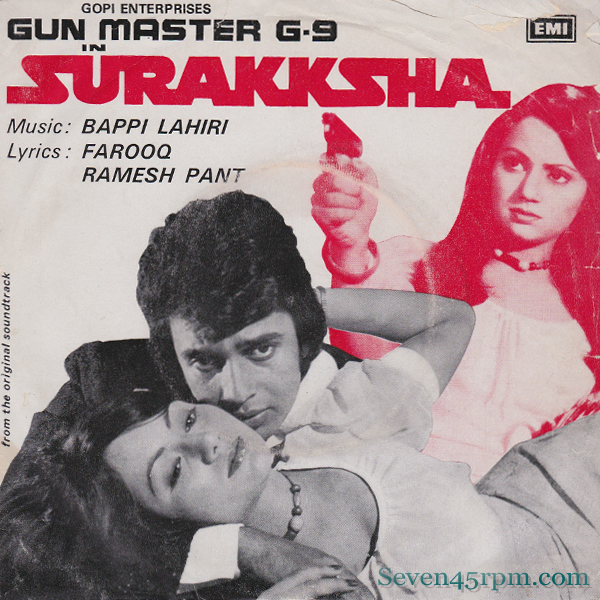 Columbia 16540 Year 1979 India
Track: Mausam Hai Gaane Ka
So I just recently returned from a short but incredible trip into country India, which I’m just refusing to let go of at the moment. The experience was one I’ll never forget because of the people I met, the things I saw, and the sounds I heard.
Somehow, in the little city known as Pushkar, a small record shop appeared, something I was not expecting to see, and a lovely man named Shashi, sat behind the counter. Now my knowledge of Indian music is very thin, especially in the Bollywood genre, which is what a lot of the shop stock consisted of. But after a few days of drop-ins, and some great recommendations from the shop keeper, I started to comprehend the realisation that there were certainly some records that needed to come back home with me! While most of my wins were marvelous, colourful outlandish soundtrack LP’s, I did also manage to bring home a few 7″s, including this one by prolific and renowned “disco king” Bappi Lahiri, that I thought I should share.
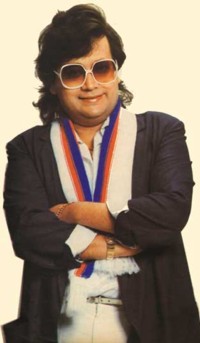 Bappi Lahiri was born in Calcutta, West Bengal in 1952 into a family with a rich tradition in classical music. His father, Aparesh Lahiri was a famous Bengali singer and his mother, Bansari Lahiri was a musician and a singer who was well-versed in classical music and Shyama Sangeet. His parents were determined to teach their only child in every aspect of music, and by the tender age of three, Bappi began to play the tabla. At the young age of 19, Bappi began his career as a music director, and received his first opportunity in a Bengali film, Daadu in 1972. The first Hindi film he composed music for was Nanha Shikari in 1973, and only 2 years later it was Tahir Husain’s Hindi film, Zakhmee that brought him to the heights of Bollywood fame, also bringing forth a new era in the Hindi film industry. Bappi rose from strength to strength, and the music for his subsequent films Chalte Chalte and Surakksha were tremendously popular, placing Bappi on the pedestal of stardom, and making him the youngest music director of his time to have attained such intense success in such a short duration.
Surakksha, which I think translates as “Protection” in Hindi, was directed by Ravikant Nagaich and released in 1979. The film stars Mithun Chakraborty as CBI Officer Gopi, Ranjeeta Kaur, Jeevan, Jagdeep, Iftekhar, and Aruna Irani. Based as a spy thriller (with the hero’s code of Gunmaster G9, as opposed to 007), it was the first of a two of such films with Chakraborty in the lead, the other being the sequel Wardat. The success of Surakksha made Chakraborty a huge commercial star.
 I have yet to watch this film in it’s entirety, so I’m just summarising the plot through other sources here. The evil Shiv Shakti Organization (SSO) intends to spread terror in India. The trouble starts when a plane manned by Captain Kapoor is attacked by a stream of deadly signals forcing the plane to land. The missing agent gets replaced by a look alike, but Officer Gopi, aka Gunmaster G-9, who was assigned by the Central Bureau of Investigation, is on to it! But there are obstacles, including Priya Varma, played by Ranjeeta Kaur, who’s out to investigate her father’s death, supposedly by Gopi, and who’s determined to seduce and enslave him. Gunmaster G-9 must also battle other women, venomous snakes, gangsters, kidnappers and even a robot-human. The fast adventures continue with wild stunts and car chases, but of course there’s always an opportunity to dance with scantily-clad girls, before there inevitable meeting with the patchy-eyed SSO chief Doctor Shiva .
 Actress Prema Narayan who plays Maggie, is quite the attractive star who has quite an established Bollywood movie career, appearing in close to seventy films. Originally an English teacher in a convent school, she later opted for a modelling career and was crowned Femina Miss India World in 1971. Besides being noticed for her acting prowess she was also appreciated for her western-style dance numbers. A fine example of those said dance moves can be witnessed during the song Tere Jaisa Pyara Koi Nahin in Hotel. She was also a regular feature in lower-grade horror films including Mangalsutra, Saat Saal Baad and Ghabrahat. Mithun Chakraborty made his acting debut with the art house drama Mrigayaa (1976), for which he won his first National Film Award for Best Actor, and to this day has appeared in more than 350 films. Most famous for his lead role as dancer Jimmy in the 1982 super-hit film Disco Dancer, he is particularly recognised as one of the best “dancing-heroes” in Bollywood with his unique “Disco and Desi” fusion-style dancing that is immensely popular among the masses. The 1981 Gunmaster sequel Wardat, was even more high action with giant locust plagues attacks (brought on by evil men who plan to black market farmer’s grains), a new hunch backed super villain called Jambola, more gadgets and even flying cars!
 The title track Mausam Hai Gaane KaAlong, includes the popular singer Annette Pinto, who would provide her voice talents on the Gunmaster sequel a few years later as well. Her dynamic voice really delivers a huge cinematic, almost Morricone-like characteristic quality to this opening titles track, and has to be the perfect introduction director Nagaich could have wished for! She went on to release many more sizzlers with other producers also, including Handsome Man from Mr. Bond in 1992 (composer-duo Anand-Milind and brother Anand Chitragupth), the hot disco Love Me Now for Hemant Bhosle and the film Barrister in 1982, and the cheeky Hello Darling with Rajesh Roshan, from the film Telephone in 1985. She also stars on the absolute incredible title track for The Burning Train from composer Rahul Dev Burman, where you feel like she’s channeling Yma Sumac! I will feature that one soon!
Surakksha also marked Bappi Lahiri’s entry as a singer, where he would provide his voice talents onto four of films compositions, including the second track on this EP, Dil Tha Akela Akela, which incredibly sounds like The Stones’ As Tears Go By! In fact throughout his career Lahiri has been accused of plagiarizing music produced by other composers without giving them any credit or royalties. I was actually surprised at first, when listening to a bunch of his records, at just how many covers he did, not realising that they were apparently original compositions. Ironically portions of his song Thoda Resham Lagta Hai were included in the song Addictive by American R&B singer Truth Hurts in 2002. Copyright holders sued Interscope Records and its parent company, Universal Music Group to the tune of more than $500 million. But lets not take any praise away from this talented producer/musican. His interpretation can sometimes be wonderful takes on well worn classics (have a listen to Meri Jaisi Mehbooba from Baadal) that can only make you squeal with delight.
 Bappi Lahiri would go on to release literally stacks and stacks of LP’s, and so far my standouts-latest discoveries include Karate, Wanted Dead or Alive, Morchha and Dance Dance…or big sounding soundtracks! Along with Biddu (who had the international breakthrough in 1974 with Kung Fu Fighting with eleven million records sold), Lahiri helped popularise disco music Indian style. The pioneer of disco beats with his refreshing, vibrant, and rhythmic music had the entire nation dancing for decades. He has also worked with renowned singers like Lata Mangeshkar and Asha Bhosle, had paved the path to fame for Alisha Chinai and Usha Uthup through his compositions, and has sung alsongside Mohammed Rafi and Kishore Kumar. In fact a barrage of popular singers have sung songs composed by Bappi Lahiri in a career spanning for 40 years in over 600 films in over 5000 songs. Bappi received an award in 1990 from the then Indian President Giani Zail Singh for the best musical score in the film Thanedaar and was invited by Ex-Prime Minister of India, H.D. Deve Gowda, to compose a song for the World Football Tournament in Calcutta.
Lahiri disappeared from the Indian film industry in the 1990s though he tried a brief comeback in the Prakash Mehra produced Dalal starring Mithun Chakraborty with the song Gutur Gutur which was a big hit although it had its share of controversies due to its suggestive lyrics. Thereafter he focused on bringing out albums with remixes of his earlier songs, and to this day appears on guest spots for popular TV shows, with the occasional film role. Lahiri is famous for his constant desire to reinvent himself and face the challenge to keep up with the rapidly changing preferences of current generations. He is the complete entertainer and superstar with his multiple talents as a singer, music director, and percussionist! I feel I have only scratched the surface of what this man has done for Bollywood music, and the damage to dance floors he is responsible for all around India.
Christy – Deep Down (Danger: Diabolik OST)


Parade PRC 5052 Italy 10 Jan 1968
TRACK : B Deep Down
For many years I’ve been a huge fan of those dark Italian cinematic soundtracks from the 60’s and 70’s, but If I had to specify a period in my life where it all started, I have to honestly say it was way back in my childhood. Growing up in the 70’s, occasionally those great spaghetti westerns were screened on the TV, if very late, on a Saturday night. And while I was most of the time permitted to sit alongside and experience these great films with my papa, I somehow doubt I would have lasted the distance at that time of night. However the dramatic opening titles definitely pulled me in, and they stuck and still are quite memorable for me today. The Good, The Bad And The Ugly was one of those films, and it so happened that my papa also owned the picture sleeve 45 (the Hugo Montenegro version) which I would play over and over.
But it wasn’t until many years later, as I was growing up and started to dig deeper into the heart and soul of music, did I start realising the great names and achievements of these composers. Nino Rota, Armando Trovajoli, Piero Umiliani, Piero Piccioni…these and many more were true masters of the genre. But there is no argument that it is Ennio Morricone who is the ruler of the castle, who stands tallest without a doubt, on that high cinematic mountain.
One of Morricone’s strongest elements of his work has to be depth and atmosphere, and in the 60’s, there was a plenty of it. Many of his compositions and film scores were immersed with very deep, haunting and many times sensual flavours. Moody female vocals would be key, and were often used as background instruments rather than lyrically. Now while this Morricone sound is famous today, and those vocals are such an important and recognisable ingredient, it’s still difficult to find out a real lot about these incredible singers, as is the case with Christy (and also Edda Dell’Orso from previous post). Luckily I have a few friends who are big fans (such as Brendan Young aka dj Diabolik) who have been able to give me a few leads to follow.

Maria Cristina Brancucci was born in Rome on April 20, 1940. In 1966 Morricone took her into the recording studio to lay down some vocal tracks for Sergio Sollima’s feature La Resa Dei Conti. It was a big spaghetti western that deserved a big opening title track, which she provided so appropriately with Run Man Run. The film falls under the subgenre called Zapata Westerns (spaghetti westerns with some political context usually concerning the Mexican revolution) and was co-written by long time Sergio Leone collaborator Sergio Donati. With Tomás Milián who plays Cuchillo and bounty hunter Jonathan Corbett, who is played by Lee Van Cleef, it is today considered as one of the best Italian Westerns ever made due to its tightly directed staged scenes and genius score. The English release, The Big Gundown, would also provide an alternate English version of “Run”, but I definitely lean more towards the more pure Italian version.

In 1967, Christy calibrated with Morricone for the spy spoof OK Connery (re-titled Operation Kid Brother for the US). The plot involves an evil criminal named Thanato, who is bent on taking over the world, using a magnetic wave generator that will cause all metal-based machinery to grind to a halt. However, the secret agent normally assigned to such tasks isn’t available, so they engage his civilian brother, Neil, who is a world class plastic surgeon, hypnotist, and lip reader, which turn out to be precisely the skills required for thwarting Thanatos. Sean Connery’s brother Neil, actually plays the role of the surgeon, and the film includes a bunch of familiar bond faces including Bernard Lee, the original M from the Bond series, and the original Moneypenny, Lois Maxwell. Former Miss Rome and Miss World 1960 runner up Daniela Bianchi, is also starring in the wild romp and she sizzles just as you would hope and expect from an Italian beauty queen!
In 1968 Christy would be called upon again for another western, Tepepa (also known as Long Live the Revolution and Blood and Guns), this time directed by Giulio Petroni. The film stars Tomas Milian as the Mexican revolutionary leader, Jesus Maria Moran a.k.a. Tepepa, and in opposing roles, Orson Welles as Colonel Cascorro, and John Steiner as Doctor Henry Price, who saves Tepepa from the firing squad in order to exact personal revenge for the death of his fiancée. Christy provides the fitting dramatic Al Messico Che Vorrei, again with Morricone at the wheel.

In the late sixties, Christy’s 7″ release Deep Down was recorded for Mario Bava’s diabolical Danger: Diabolik masterpiece. If you happen to be a fan of pop mod spy action films, then this is your movie! It’s bizarre Italian cult cinema at it’s best, and needless to say, it’s legendary with Italian genre film buffs. But even before the 1968 cinematic hero existed, the myth was well and truly alive in the form of a long running controversial pocket sized publication entitled Diabolik. It was created by former secretary, editor and model Angela Giussani, who founded the Astorina publishing house, a company that was limited to board and Western card games. Angela really studied the market and concluded that many commuters liked to read mystery novels. She imagined a magazine commuters could read during their trips, that was entertaining yet intriguing, with breathtaking action.

Inspired by Marcel Allain and Pierre Souvestre’s Fantomas, Angela and her younger sister Luciana, who had now started working with her, came up with the handsome masked criminal, who would be seen really as an anti-hero for grown-ups of both sexes. The first issue had a dark yet vibrant cover of a masked man in the background and a woman screaming in the foreground, with the subtitle “Il fumetto del brivido” (The comic book of terror). This really highlighted that the publication was aimed at an audience of grown-ups, who likely preferred noir novels, something rather unique for those times when comics were considered as light entertainment for kids. Luciana collaborated with her on the series’ stories starting from issue #13, and the exciting adventures evolved. Diabolik was soon a successful working man’s super hero which has sold more than 150 million copies since he made his first appearance.
In the Dino De Laurentiis produced feature film, John Phillip Law plays the “master sports car racer, master skin diver, master lover”, Diabolik, and the stunning Austrian Marisa Mell plays his girlfriend Eva Kant. The movie is a real trip. It’s got that great 60’s vibrant Technicolour palette, over the top action and charismatic characters, and like its De Laurentiis companion Barbarella, it’s damn sexy! (1*)

So the plot in a nut shell is. After an armored car leaves the bank with ten-million dollars, Diabolik manages to attack and steal the money, escaping with his partner. He heads back to his secret underground electronic hideout where he decides to steal the famous Aksand emerald necklace for Eva’s birthday from the Saint Just Castle. He out smarts the law, as he has done so many times before, and succeeds, but gangster Ralph Valmont finds a way to kidnap Eva and holds her up for ransom. With the ten million dollars and emerald necklace for trade, Diabolik sets off to the rescue. Eva makes her escape and Diabolik kills Valmont, but this time he is trapped and faces a shiny gold plated death. The police find Diabolik and proclaim him dead, but soon it is revealed that he has in fact faked his death through a technique taught to him by Tibetan lamas. He returns to life, however if he does not get the antidote within 12 hours, he will die. I think I’ll leave it there and keep you all hanging, so you can go out and find a copy to see how it all unfolds for the anti hero.

The film is typical of a De Laurentiis production, and while some just can’t see the beauty in this genre, tagging it as camp and cheese, I seriously love this kind of film making. For me everything works as it only could have, in that late sixties era of cinema history. And when the psychedelic spiraling open titles kick in, again we have the great Christy-Morricone collaboration with Deep Down. This time, as opposed to her previous more expressive soundtrack recordings, Christy is far more subtle with her approach. It’s actually very sensual and her vocals riding nicely up alongside the distorted whaling guitar that brands the composition. Don’t get me wrong, she stills sings with her gusto and passion, but this time it’s the whispery voice that really draws you in here. The genius of Morricone shines in this perfect collaboration. Some may find this surprising, but this Parade 1968 single featured, is the only vinyl to be officially released from this infamous underground cult film. The word on the street is that all masters and recordings of Morricone’s work for the film were destroyed in a studio fire. An “unofficial” soundtrack on Sycodelic in 2001 was released but it is believed that these recordings may have been ripped from a laser disc edition of the film, as some sound effects and dialogue are evident throughout. What you will find on this release are 3 alternate versions of Deep Down performed by Edda Dell’Orso (featured on my last post) and the incredible psychedelic Valmont’s Go Go Pad and Underwater Wah-Wa. Crazy fabulous stuff! This featured isolated Diabolik single is flipped with the unconnected Amore Amore Amore, which was produced by Piero Piccioni for Alberto Sordi’s 1967 film Un italiano in America.

Deep Down is such a great little 7″ and a bit of a shining gem in my collection, obviously because it’s an important piece of Diabolik history, but also because I just love this song so, so, so very much. It’s not too difficult to find and it plays nicely for those early cocktail sets. Deep Down was recently covered by Mike Patton on his Mondo Cane Lp, and there’s some great clips online, in particularly the live footage at the Holland Festival in Amsterdam, you may want to search. Whether fans agree if Patton gives the song it’s deserved justice or not, I don’t know, But I have to say, once those horns kick in on that live version, the hairs do rise!
In the late 60s Christy recorded more pop songs (including a great version of Quando Quando Quando) and ended up a popular Italian TV variety artist for a number of years. Today she’s now a well known voice actor, who dubbed Barbara Streisand’s voice for the Italian version of Funny Girl, and has worked on countless animated films including The Princess and the Frog, Anastasia, Bambi, Beauty and the Beast, The Three Musketeers and The Lion King 3.
(1*) The release of Barbarella and Danger: Diabolik lead to a minor trend of adaptations of comic strips that emphasized mild sado-masochism and late 1960s fetish gear. These films were followed up with Piero Vivarelli’s Satanik (1968), Bruno Corbucci’s Isabella, duchessa dei diavoli (1969) and Corrado Farina’s Baba Yaga (1973) which had a Piero Umiliani soundtrack.
Black and white photo. Angela and Luciana Giussani, the creators of the comic book Diabolik, in their studio, 27th September 1966 (photo credit unknown).
Danger: Diabolik! Trailer
Recommended reading… Anna Battista’s irenebrination
Edda Dell’Orso – Kukumbe (Le montagne della luce)
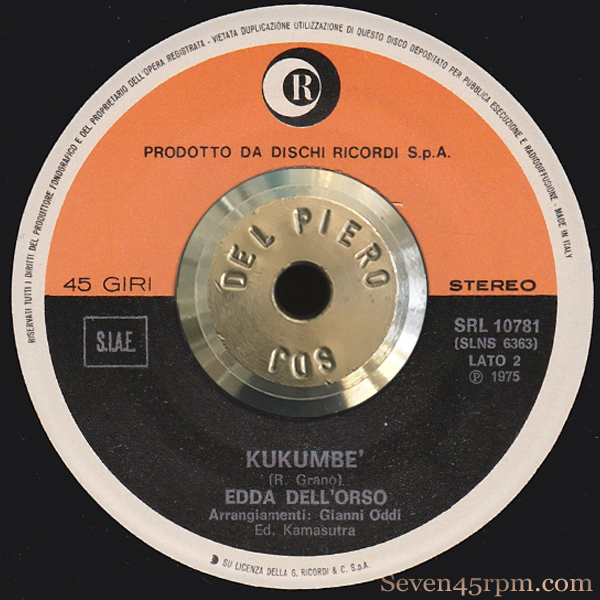
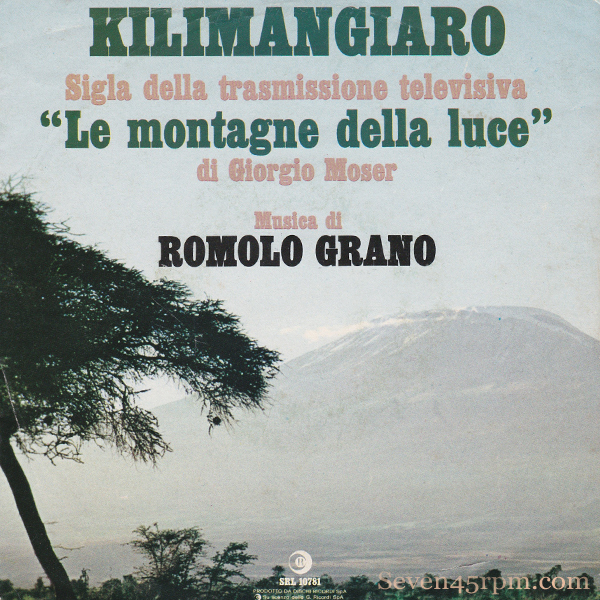
Ricordi SRL 10781 Italy 1975
Track 2 – Kukumbe (Le montagne della luce)
As that saying goes, behind every great man, there is a great lady, but there was more than one that strengthened one particular composer’s work if we’re talking about Morricone. A key element so important to his sound, Morricone would expose and you could even say, flaunt his leading ladies up front in the mix down, even if they were at the time providing background sounds or atmospheric vocals.
I’m going to parallel two posts celebrating two important women with names that are synonymous with Morricone, particularly from the 60’s and 70’s, when that era of his film scores were infamous for that beautiful sensual psychedelic and at some times haunting sound. But I also want to present other composer’s that all contributed to that now distinctive classic Italian cinematic sound if that time. This post I’ll be looking into an Edda Dell’Orsa composition she undertook for one of those other composers, and with a follow up post, I will pursue a journey into the works of Maria Cristina Brancucci, also known as Christy. As always, I wish I was able to enlighten you all with more information about Dell’Orso’s musical journey, but facts and life details are a little mysterious and not too easy to come by. However I will go through a bunch of my favourite Edda tracks and touch on some of those great composer contributions.
Edda Lucia Sabatini, was born in Genoa, Italy on February 16, 1935 and married pianist Giacomo Dell’Orso in 1958. She studied singing and piano at the National Academy of Santa Cecilia in Rome from around 1958, and in time she would possess a beautiful soprano voice with a three octave range that would stamp many now legendary composers work.

Around the mid sixties, Morricone was the first composer and conductor to use her astonishing voice for a feature film, and with immense artistry, he created unforgettable innovative vocal lines and sound effects. One of those early soundtracks was for Sergio Leone’s 1966 Il buono, il brutto, il cattivo (The Good, the Bad and the Ugly) and it includes one of the most celebrated Morricone’s themes, The Ecstasy of Gold, which is played while Tuco is frantically searching a cemetery for the grave that holds $200,000 in gold coins. This amazing piece of cinematic music has been covered from Yo Yo Ma to Metallica, but as famous as this soundtrack is today, Edda was actually was uncredited for her part. The soundtrack album was on the charts for more than a year, reaching No. 4 on the Billboard pop album chart and No. 10 on the black album chart. The main theme was also a hit for American musician Hugo Montenegro, whose rendition on the was a No. 2 Billboard pop single 2 years later in 1968.
This was an incredibly busy period for Dell’Orso recording from film to film, studio to studio. Westerns were of course very popular after the success of A Fistful Of Dollars, and the hard working Dell’Orsa kept providing the goods, including the very moving titled track C’era una volta il West (Once Upon a Time in the West) for Sergio Leone in 1968, another Morricone partnership (1*). Again in ’71, another fitting title track with the quirky Giù la testa for Leone’s Duck, You Sucker! (also known as A Fistful of Dynamite and Giù la testa), but she also worked far beyond the Italian West.

In 1967 Dell’Orso scores the opening swinging title song Seli, for the Italian science fiction film Mission Stardust (…4 …3 …2 …1 …morte), composed by Antón García Abril & Marcello Giombini. Some fans of the genre consider this offbeat film so appallingly bad that they playfully deny its very existence, however this rare soundtrack is also called a masterpiece by many jazzy lounge aficionados, which I tend to support. The next year Dell’Orsa contributes to the infamous Danger: Diabolk soundtrack, offering 3 alternate versions of Deep Down…The Shower, Eva’s Holy Dress and the tripped out, whimsical Emerald Bikini version. The title track was performed by Christy, another female legend of the Italian cinema soundtrack that Morricone liked to work with. 1969 offered up a true classic Dell’Orso-Morricone cooperative, with Metti una sera a cena for the Italian drama film of the same name, directed by Giuseppe Patroni Griffi. One of my favourites.
Dell’Orso moved into another film genre with the thriller La stagione dei sensi (Season of the Senses), bringing with her the lovely bossa styled Una Voce Allo Specchio. The title track for Giuseppe Patroni Griffi’s 1969 drama, Metti, Una Sera A Cena, is classic and rich in Dell’Orso spices, and was covered a few years later quite nicely by Milva. The 1967 chilling score for Bruno Gaburro sci-fi post-apocalyptic Ecce Homo I Sopravvissuti, which gave Morricone an alternate opportunity to get down low into the darker side of Dell’Orso’s vocal soul, and the outcome is a soundtrack which offer varied versions of Venuta dal mare throughout, that all raise the hairs. Staying on the horror theme, Dell’Orso contributed to two films by Italian shock horror director Dario Argento, the first in 1970 called L’uccello Dalle Plume di Cristallo (The Bird With Crystal Plumage), and then for Perche Si Uccidono? (Why Do They Kill Themselves), a film essay about drugs and self-destruction. For the latter 1976 film, the score was a collaboration with composer Fabio Frizzi and instrumental band Goblin (often used by Argento), under the pseudonym of Il Reale Impero Britannico.

Dell’Orso was also providing her voice for other prominent, mostly Italian composers of those times, and was also a key figure of the I Cantori Moderni choir, which was founded by Morricone’s childhood friend and composer Alessandro Alessandroni (2*)(3*). Piero Umiliani was one composer that regularly worked with Edda & I Cantori Moderni, and some of the best Dell’Orso work came from this collaboration. One of Umiliani’s most recognised tracks is Mah Na Mah Na, which he did for Svezia, Inferno E Paradiso, a 1968 pseudo-documentary about sexuality in Sweden, which ironically was later popularized by Sesame Street and The Muppet Show. Another Umiliani-Dell’Orso standout is the fuzzed up Le isole dell’ amore, for the 1970 film with the same title, which to be honest I know absolutely nothing about! Another soundtrack worth mentioning from the same year, is the impossible to find whacked out 5 Dolls for an August Moon, originally titled 5 Bambole per la Luna d’Agosto, and directed by Mario Bava (4*). Also check out the very chic Luna Di Miele, which was recorded for the documentary directed by Mino Loy and Luigi Scattini called Questo Sporco Mondo Meraviglioso, and includes whistling by Alessandro Alessandroni.
So lets now move on to the feature 7″ which was recorded for Giorgio Moser’s TV special Le Montagne Della Luce. Kilimangiaro is a beautifully produced composition with Dell’Orso’s trademark atmospheric artistry. Arranged by Gianni Oddi and composed by Romolo Grano, this track alone is well worth the effort it will take to find this rare thing. However while the titled A side was probably the selling point, it’s the magnificent B-side Kukumbe, that I think is the dynamic and most grooviest track she’s worked on. Big breaks, fender rhodes, jazzy trumpet, congas and top scat vocals by Edda, all amount up to a very sizeable and rhythmic killer production. I’ve been fortunate enough to play this on a big sound system and it was real fun! That bass drive grooves very nicely with that back beat. Now if you’re hoping that there’s a few Dell’Orso 7″s that you need to get a hold off, well in fact as far as I know there are only a few officials, one other being an earlier release from ’69 titled Sospendi Il Tempo, for the psychodrama La stagione dei sensi.

Dell’Orso would continue to record for many soundtracks and collaborate with many musicians. There was a very pertinent chemistry delivered in 1974 when Dell’Orso voice was utilized quite significantly on Italian master guitarist Bruno Battisti D’Amario’s album Samba Para Ti, which includes the beautiful spaced out Show Samba and the frantic upbeat Playa Sin Sol. The following year proceeded with a second team-up album called Granada and includes the standout upbeat latin dancer Su Delicia and a very cool version of Ipanema. In 1976 she worked alongside her hubby’s brother Gianni Dell’Orso, and laid down the sexy discotheque track Night Magic for Mondo Di Notte Oggi (directed by Gianni Proia), a soundtrack which has some nice funk moments, in particular on Soul Meeting.
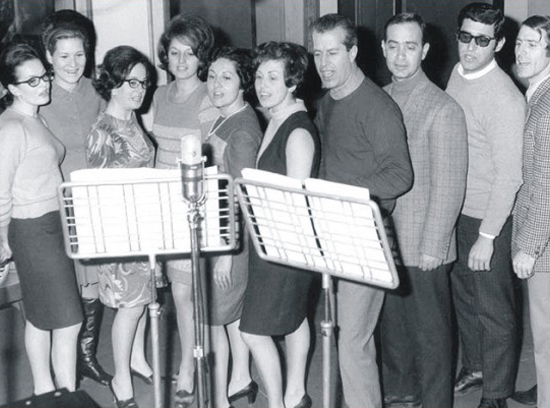
Many years later in 2011, Danger Mouse and Daniele Luppi released Rome, a soundtrack for a non-existent movie, that took five years to record. Obviously die hard fans of that era of Italian cinematic sound, the producers had their hearts set to develop the sound and process as authentic to that time as possible. The album was recorded using only vintage analogue recording equipment and musical instruments from the 1960s and 1970s. They also took the opportunity to reunite Alessandroni’s Cantori Moderni choir, who had not performed together since the early 1980s. Dell’Orso’s beautiful voice can be heard on the Theme of Rome track. The album also features vocals by Norah Jones and also Jack White who also provided the lyrics for his three songs. Even more recent, Dell’Orso was picked up by Alex Puddu, another true devotee of Italian vintage sound, to work on his 2013 album Registrazioni Al Buio, where she laid down 3 very smooth tracks (5*).
To try and cover all the composers, producers and productions Edda Dell’Orso worked with especially in the specific 60′ to 70’s period, would be a bit of a feat, and true fans will agree that I’m really only scratching the surface here. Her work is the epitome of intelligence and sophistication and she is the sound of Italian cinema, and remarkably she still continues to perform today with her strong distinctive voice. And obviously there’s a lot more we can talk about, regarding those great Italian composers that she worked with, that thankfully are now getting the praise they have always deserved. In time I’m hoping to cover a special selection of favourite cinematic Italian 7’S, but for now, stay tuned because there will be a follow up post tomorrow, celebrating another Italian female legend of the cinema soundtrack, Christy.
(1*) Edda Dell’Orso performing C’era una volta il West live in 1982.
(2*) Alessandroni was an accomplished whistler, and he can be heard quite famously on numerous Leone’s western soundtracks, and also was responsible for THAT twangy guitar riff that is central to the main theme for The Good, the Bad and the Ugly.
(3*) I Cantori Moderni, was an eight-to-sixteen person vocal group featuring Edda Dell’Orso, Giulia De Mutiis (Alessandroni’s first wife), Gianna Spagnuolo, Augusto Giardino, and Franco Cosacchi.
(4*) Mario Bava’s work from the “golden age” of Italian horror films is said to have kick-started the giallo film genre and the modern “slasher film”. He was also a special effects artist and had all director, screenwriter, and cinematographer credits for many movies including Danger: Diabolik, Planet of the Vampires, The Whip and the Body, Black Sabbath and Kill, Baby, Kill to name but a few.
(5*) Dell’Orso with Alex Puddu band captured live in Copenhaghen.
Research and referencing…
Meco – Star Wars Title Theme

 RCA Victor – Aus Cat# 102975 1977
Track 1 – Star Wars Title Theme
Track 2 – Funk
Okay, so I may need to explain something here. I’ve just had a very significant birthday (a number which really relates to this blog content) and thought I really should post something that is quite special to me, for this momentous occasion. Star Wars was one of the biggest and influential things to happen to me as a young kid. It inspired me, it strengthened my imagination, and it let me dream…and it also introduced me to the 7″ record.
Meco’s take on the Star Wars Theme was the first 45 I ever owned! I remember vividly when my papa wanted to reward me for scoring a rare soccer goal…I asked if we to go to that little record shop in Beverly Hills to see if they had the music to that science fiction movie which all us young boys were going space nuts over! At the time I didn’t realise (or care) that the version I had in my hands, wasn’t actually the original John Williams score, but in fact a “dance” take by an Italian named Domenico Monardo.
Meco was born on November 29th, 1939 in Johnsonburg, Pennsylvania, and had a passion for building model ships and science fiction movies. He got his first musical education from his father who played the Valve trombone in a small Italian band. Although at 9, Meco wanted to play the drums, his father convinced him that the trombone was the right instrument, which he stayed with (he did however opt for the Slide Trombone, troublesome as it was for the small-statured boy to extend the slide fully at first). He joined the high school band while still attending grammar school and at 17, won a scholarship to the Eastman School of Music in Rochester, New York which provided him with some solid classical & jazz skills. There, together with his two friends Chuck Mangione and Ron Carter, he started the Eastman School of Music Jazz Band. He attended West Point, where he played in the Cadet Band, and learned about arranging from an Army sergeant.
Meco worke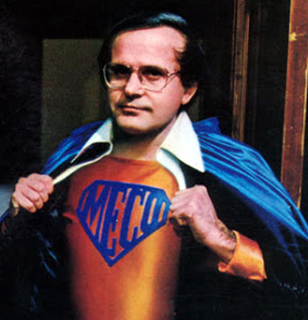 d from 1965 to 1974 as a studio player and arranger, and also earned a nice living arranging commercials, however his breakthrough arrived in 1974 when he co-produced the Gloria Gaynor’s smash Never Can Say Goodbye, followed by the Carol Douglas’ Doctor’s Orders. Having aligned himself with Broadway arranger Harold Wheeler and producer Tony Bongiovi, Meco was now on his way to producing several early disco hits.
On May 25th, 1977, Meco, along with many hundred others, lined up at the New York City theatre for the the opening day screening of this new science fiction film starring Mark Hamill, Carrie Fisher and Harrison Ford. He was amazed by the film and loved the score (he went back to see it eleven times in all), but he couldn’t help but feel there was an opportunity for a commercial hit combining Williams’ dramatic score along with the other big phenomenon of the time, disco!
 He conceived of a 15-minute disco treatment of several themes in the movie, including the music played by the Cantina Band in the bar on Tatooine, and also really wanted to include R2-D2 sound effects. He called Jimmy Ienner at Millennium Records and Neil Bogart at Casablanca Records and explained his idea. Based on the tremendous success of Star Wars, Bogart and Ienner agreed to Meco’s idea without hearing any of the music. Meco was thinking grand and hired 75 musicians to play on the track, which was just unheard of for a pop production, (all credited on the lp sleeve) and played trombone and keyboards himself. The complete composition was released as part of an album, Star Wars And Other Galactic Funk, and on a 12″ single. The original main title theme by The London Symphony Orchestra was released by 20th Century Records and entered the Hot 100 on July 9th, 1977, less than two months after the film opened. It raced up to #10 on the charts, however Meco’s electro-disco medley, which debuted on the chart on August 6th, 1977, raced past it to go to #1 the week of October 1st, 1977 where it stayed for two weeks and received endless airplay.
So on the flip of this 7″ we have the percussive track simply titled Funk. It actually holds up okay, Mandingo-esque, some nice horns and rhythms, and quite odd to find it here on this B side. Obviously this 7″ got released in every corner of the globe, but I have to say it’s the Italians that scored the best cover artwork, which is a simpler stylised version of that fab album cover art.
A few years later the Italian was eager to do it all again with the release of the SW sequel, however Meco Plays Music From The Empire Strikes Back was a different sounding album. Disco was out and the new sound was rock-oriented instead. First Harold Wheeler was replaced by Lance Quinn, who was a guitarist on the previous Meco releases, giving the arrangements a totally different sound. And this time it was going to be released on RSO Records instead of Millennium/Casablanca Records and importantly, it was endorsed by George Lucas which meant he could finally use the very real sound effects.
And then things started to get even weirder! With the success of the album, Lucas gave the green light for Christmas In The Stars (The Star Wars Christmas Album). Once again on RSO Records, this time Harold Wheeler was back with his arrangements. Lucas not only allowed the use of special effects of R2D2, but also the voice of Anthony Daniels as leading vocals for C-3PO. There was also a vocalist that appeared on a track by the name of John Bongiovi, who had not yet achieved fame as Jon Bon Jovi. The great album cover is by Ralph McQuarrie, the designer who made most of the artwork for the “Star Wars” trilogy.
And then in 83, we got the Ewok Celebration, which was to be Meco’s last movie-based album. The album features other film and television themes as well as sax and lyricon solos by, dare I say, Kenny G! The Ewok Celebration Theme includes a rap by C-3PO (performed by Duke Bootee).
So yes, in hindsight, Meco’ Star Wars Title Theme is simply disco with lasers and beep boops, not a genre I really go crazy over these days, but I have to remind you, the impact this movie and it’s soundtrack had on me, would shape the person I was growing into (I even joined the school band after see Star Wars just to learn the cornet, hoping I could play the main theme). And to play so many memorable soundtrack moments including the Cantina “movement” all within 3.28 seconds was just fantastic. As a kid with a Star Wars obsession, it was pefect! I would play it over and over again, reliving the exciting space adventures Lucas had implanted into me, which will last a life time.
Referencing http://www.discomuseum.net/BioMeco.html
The Kane Triplets – Theme from “Mission: Impossible”
 United Artists 50328 US Year 1968 The Kane Triplets were a three piece vocal sensation made up of the sweet identical triplets Lucille, Jeanne and Maureen Kane, and started their professional show business career very early in life. As children, they were discovered by the McGuire Sisters after performing on the Arthur Godfrey Talent Scout Show, and were asked to join with them in their act on the road and on several television shows. As you can imagine, these little ladies must have been so overly cute and wholesome, but from the footage that you can track down on the net, you cannot deny them of their harmony abilities!Reaction to the girls was amazing! The triplets established their own act and with their growing success, worked in very renowned venues throughout the country, and making Vegas their second home. They even got to work with huge celebrities like Tony Bennett, Andy Williams, Sergio Mendes, Smokey Robinson and the Temptations
The ladies released a few 45’s but it was in 1968 when this little monster was unleashed to the world! Easily their most stin ging and thrilling recording, which really does give justice to Lalo Schifrin’s original 66′ master piece. While writing credits go to Fred Milano and Angelo D’Aleo of The Belmonts, I can’t tell you if this was in fact the first vocal release, but it’s by far the best I’ve heard. The fact that these now adorably blossomed but still innocent looking ladies are behind this big composition and production makes it even more tastier!
 The Kane Triplets were in show business for more than 20 years and made dozens of television appearances, but sadly another sad ending to this story learning that Jeanne Kane was found murdered at a Staten Island (New York City) commuter rail station parking lot, murdered by her ex-husband and retired sergeant John Galtieri in 2007. But on a nicer note, this song always get a great reaction on the dance floor when played and will keep these three little sisters shining on together for many more years.
 Seven45rpm
Recent Comments